If you want to redesign my dining room online from a single photo, start by testing the big decisions first: table placement, traffic flow, lighting, rug size, wall color, and the overall style direction. AI room design tools are useful because they let you preview several versions before you move furniture, buy a light fixture, paint a wall, or order a new dining set.
The best online redesigns are not just pretty images. They solve practical dining room problems: where people walk, how chairs pull out, whether the table fits, how the room feels at night, and whether the design connects with the kitchen, living room, or entry nearby.
Key takeaways
- Use a straight, well-lit photo to generate more realistic dining room ideas online.
- Decide the table location before choosing paint, rugs, art, or decorative lighting.
- Leave enough clearance around chairs so the room works during real meals, not only in a render.
- Use AI previews to compare styles, wall colors, rug sizes, and lighting moods quickly.
- Treat the AI result as a planning draft, then verify measurements before buying furniture.
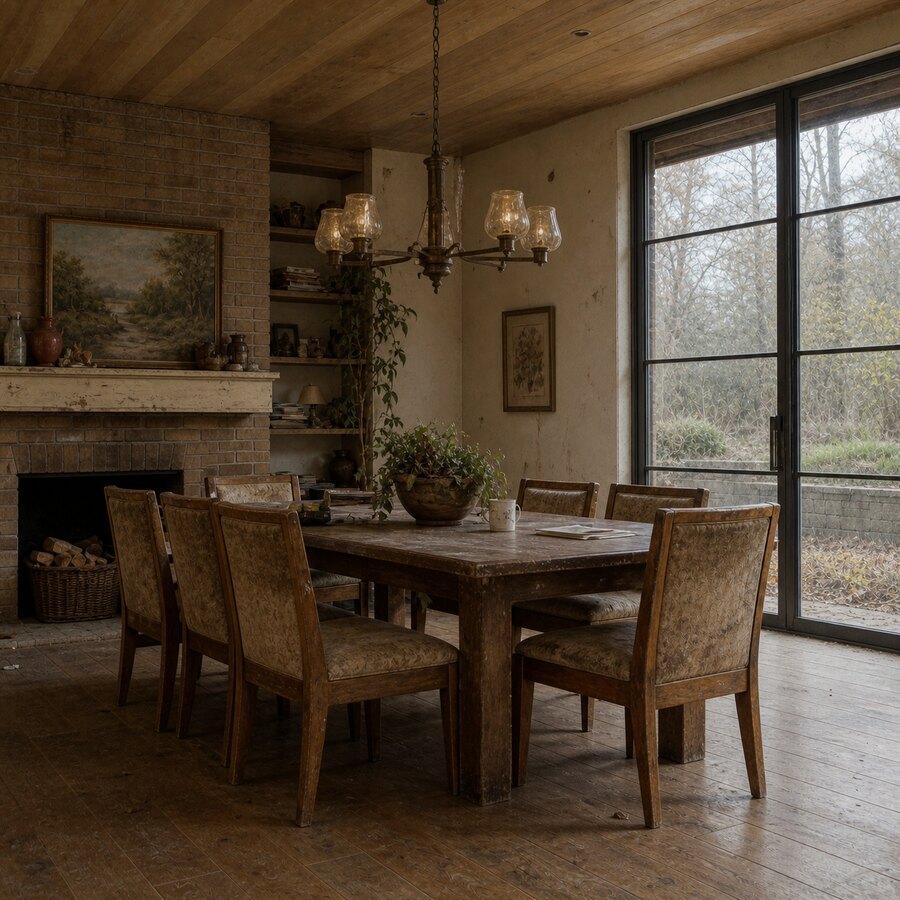
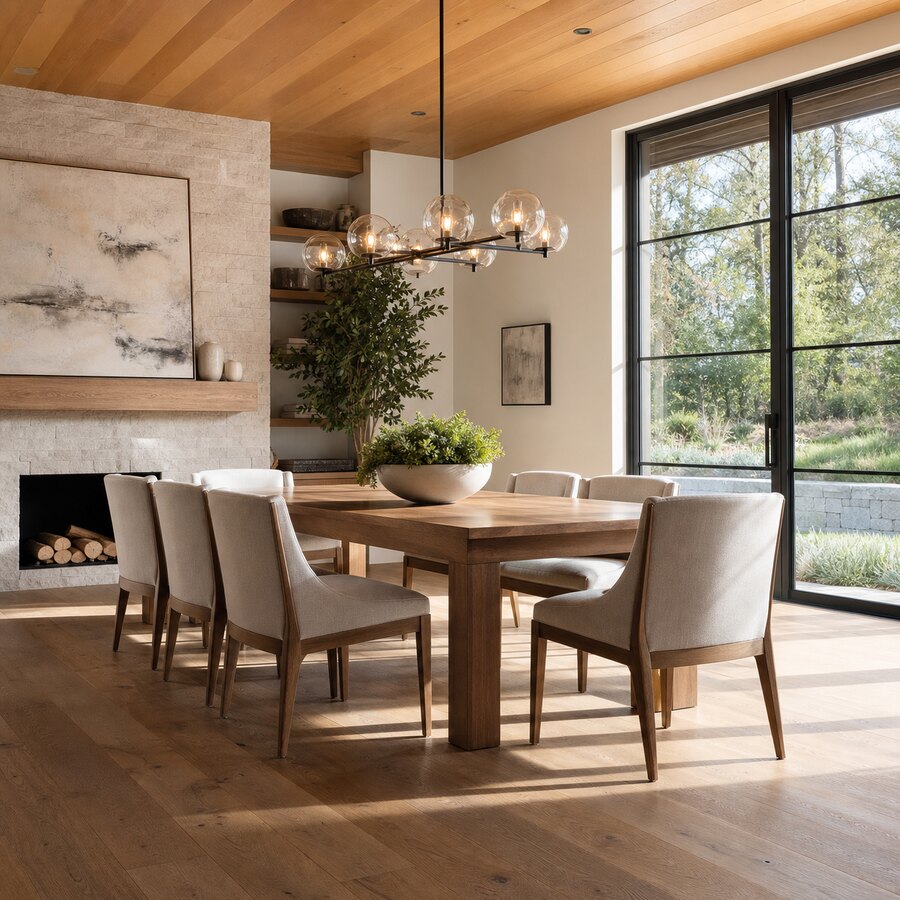
Why redesign a dining room online first?
A dining room can be deceptively hard to redesign because the room has to look finished and function under pressure. It may host everyday dinners, holiday meals, homework, remote work, and guests. A chair that looks fine in a product photo can become annoying if it blocks a walkway.
When you redesign online, you can make those decisions in a lower-risk order. Uploading a photo and generating ideas lets you see whether your room wants a round table, a longer rectangular table, a bench, a lighter wall color, warmer lighting, or a bolder rug. You are not replacing a designer, contractor, or measuring tape. You are creating a visual plan before money and effort go into the wrong items.
This is especially helpful if your dining room is connected to another space. Open-plan dining areas often need to coordinate with a sofa, kitchen cabinetry, flooring, or an entryway.
Start with the photo: what makes an AI redesign work better?
The quality of the input photo has a major effect on the result. Take the photo from a corner or doorway where the table, main wall, window, light fixture, and flooring are visible. Keep the camera level.
Remove clutter that you do not want included in the concept, but do not empty the room completely unless you are planning a full refurnish. Existing chairs, windows, built-ins, trim, flooring, and doorways help the tool understand scale.
A good prompt is specific without being rigid. For example: “Redesign my dining room online with a warm modern style, keep the rectangular table, add a larger rug, improve lighting, use soft greige walls, and make the space feel inviting.” That gives the AI a clear direction.
Table placement comes before style
The table is the anchor of the dining room. Before choosing a color palette or decor style, decide whether the current table shape and location are right. Most dining rooms need enough space for chairs to slide back and for people to pass behind seated guests. As a practical rule, aim for about 36 inches between the table edge and a wall or major furniture piece when possible.
Rectangular tables work well in long rooms, but they can make narrow spaces feel tighter. Round tables soften traffic flow and can be a smart choice for small or square dining rooms. If your online redesign keeps producing awkward layouts, the problem may be the table shape rather than the wall color.
When to move the table
Move the table in your concept if it is too close to a doorway, off-center under a pendant, blocking a kitchen path, or making one side of the room feel unused.
When to change the table
Consider a new table shape if chairs cannot pull out comfortably, the room feels visually crowded, or the table does not match how many people actually eat there. AI previews are useful here because you can compare a round pedestal table, a slim rectangular table, and a built-in bench layout without moving anything first.
Lighting: the fastest way to change the mood
Dining rooms depend heavily on lighting. A room that feels flat in the daytime can become warm and intimate with the right fixture, bulbs, and secondary light sources.
The main fixture should relate to the table, not the entire room. A chandelier or pendant usually looks best centered over the tabletop. For rectangular tables, linear fixtures or grouped pendants often feel balanced. For round tables, a single chandelier, globe pendant, or drum shade can work well.
Do not rely only on overhead light. Wall sconces, buffet lamps, picture lights, and dimmable bulbs can make the dining room feel finished. In an AI prompt, try phrases like “warm layered lighting” or “cozy evening dining room lighting.”
Wall color ideas for dining rooms
Wall color sets the emotional temperature of the dining room. If the space is small, dark, or used every day, lighter warm neutrals can make it feel more flexible. If you want more drama, deeper greens, blue-gray, burgundy, charcoal, or chocolate brown can work well with good lighting and lighter artwork.
Online previews help because paint colors behave differently depending on flooring, daylight, trim, and nearby rooms. Generate several versions with the same layout but different wall colors so you can compare them honestly.
If you are nervous about painting the whole room, test a feature wall, painted wainscoting, wallpaper above chair rail, or a darker color only behind a buffet.
Rugs, chairs, and scale
A dining room rug should be large enough for chairs to stay on the rug when pulled out. In many dining rooms, that means the rug should extend roughly 24 inches beyond each side of the table. In very small spaces, it may be better to skip the rug than use one that is clearly undersized.
Use AI previews to test pattern and contrast. A subtle rug can quiet a busy room, while a patterned rug can bring life to a plain table and chairs.
Chairs also change the room more than many people expect. Upholstered chairs feel comfortable and formal, while slim wood chairs are lighter visually and often better for compact rooms.
AI style options to try from one dining room photo
If you are using an online room redesign tool, generate several style directions before narrowing down. You can try the AI studio with your dining room photo and compare options before committing to a direction.
Warm modern
Warm modern dining rooms use clean lines, wood texture, soft neutrals, and simple lighting. Ask for natural wood, linen chairs, warm white walls, black or brass lighting, and minimal clutter.
Modern farmhouse
Modern farmhouse works well when the room already has wood floors, traditional trim, or a family-focused feel. A solid table, simple chairs, textured rug, warm metal fixture, and a few natural accents are usually enough.
Japandi or calm minimal
Japandi-inspired dining rooms emphasize quiet surfaces, pale woods, low contrast, and thoughtful negative space. Ask for light oak, soft beige or warm white walls, paper or fabric lighting, and simple ceramics.
Moody traditional
Moody traditional dining rooms use deeper wall colors, classic chairs, framed art, richer rugs, and warm lighting. Ask the AI for layered lighting and balanced contrast so the room does not become too heavy.
Small-space contemporary
If the room is tight, test a round table, armless chairs, wall-mounted storage, a mirror, and a simple pendant. The goal is a dining area that feels intentional and easy to move through.
How to judge an AI dining room redesign
A good AI image should give you direction, not final measurements. Before buying anything, check whether the furniture could realistically fit. Look at chair clearance, doorway swings, fixture placement, rug size, and whether the view makes sense from more than one angle.
It helps to save two or three concepts and identify what you like in each. Maybe one has the right wall color, another has better lighting, and a third has the best table shape. For more examples, browse the before and after gallery.
You can also compare dining room ideas with adjacent-room makeovers. If your dining room opens to a sitting area, see how the site handles a small living room makeover. If your dining area connects to a compact kitchen, review small kitchen renovation ideas. For broader style direction, the guide to interior design trends you can preview with AI can help you choose a look that feels current without chasing every trend.
A simple workflow to redesign your dining room online
- Take a clear photo from a corner or doorway with the table, walls, lighting, and floor visible.
- Decide what must stay: table, chairs, flooring, built-ins, art, or light fixture.
- Generate a layout-focused version first, asking for better table placement and traffic flow.
- Generate color and lighting variations after the layout feels right.
- Compare rug sizes, chair styles, and wall treatments in separate versions.
- Measure the room before buying anything shown in the concept.
Used this way, AI is a practical planning partner. It helps you see options quickly, avoid expensive mismatches, and move from a vague idea to a plan you can execute. When you are ready, upload your photo and try the AI studio before you shop.
FAQ
Can I redesign my dining room online from just one photo?
Yes. One clear photo is usually enough to generate useful style and layout ideas, especially for wall color, lighting mood, rug direction, table shape, and chair style. For final buying decisions, you should still measure the room and check clearances.
What should I include in the photo?
Include the dining table, chairs, main wall, window, ceiling light, flooring, and any furniture you plan to keep. A wide photo from a corner or doorway gives the AI more context than a close-up of the table.
Can AI choose the right dining table size?
AI can suggest a table shape or visual scale, but it should not be treated as a precise measuring tool. Use the image for direction, then confirm the table length, width, chair clearance, and walkway space with real measurements.
What dining room styles work best with AI previews?
Warm modern, modern farmhouse, Japandi, moody traditional, and small-space contemporary styles usually preview well because they have clear visual cues. The best style depends on your existing flooring, light, trim, and adjacent rooms.
Should I test wall color or layout first?
Test layout first. Table placement, traffic flow, and chair clearance affect whether the room works. Once the layout is right, wall color, rugs, lighting, and art become easier to choose.
