Small living room makeover ideas do not have to start with demolition, new flooring, or a full furniture replacement. The fastest improvements usually come from changing the layout, reducing visual clutter, using lighter color relationships, improving lamps, choosing the right rug size, and previewing changes before you spend money. For renters and homeowners, the goal is simple: make the room feel calmer, brighter, and easier to use without making permanent changes.
Key takeaways
- Start with layout before buying anything; furniture placement often has the biggest impact.
- Use color to reduce visual noise, not just to make the room look trendy.
- Layer lighting with table lamps, floor lamps, and warm bulbs instead of relying only on one ceiling light.
- Choose a rug that connects the seating area; too-small rugs make small rooms feel more cramped.
- Use closed storage for everyday clutter and open shelves only for items worth displaying.
- Preview ideas with AI before committing to paint, furniture, or decor purchases.
Start with the room’s main job
Before moving furniture or shopping for accessories, decide what your living room needs to do most often. A small living room used for movie nights should be arranged differently from one used for conversation, reading, remote work, or hosting guests. Pick one primary function and one secondary function so every later design choice supports real daily use.
Rework the layout before you buy new furniture
The most useful small living room makeover ideas are often free. Start by testing a better layout. Pull the sofa a few inches away from the wall if the room allows it, angle a chair toward the seating area, and make sure the path from the doorway to the main seat is clear. A room feels larger when movement through it is obvious.
Create one clear seating zone
Small rooms can feel messy when every chair or side table looks like it belongs to a different zone. Try to make the sofa, chairs, coffee table, and rug read as one group. The simplest rule is to keep the front legs of the main seating pieces on the rug, or at least close enough that the rug visually connects them.
Float small pieces instead of blocking corners
A common mistake is pushing every piece tightly against the wall. If your floor plan allows it, float a slim armchair, nesting table, or ottoman near the conversation area. Choose pieces with visible legs so you can see more floor underneath them.
Remove one item for a week
If the room feels cramped, remove one nonessential piece for a week and live with the change. Try the extra accent chair, a bulky side table, a storage bench, or an unused bookcase. If you do not miss it, the room probably needed breathing space more than it needed another object.
Use color to make the room feel calmer
A small living room does not have to be white, but it does benefit from a controlled palette. Choose one base color, one supporting neutral, and one accent color. That is usually enough for walls, upholstery, pillows, art, and accessories.
Renters can still make strong changes without painting. Use curtains, pillow covers, throws, art, and removable wallpaper panels to bring the palette together. Homeowners who can paint may get the biggest improvement from refreshing trim, doors, or one wall rather than repainting the entire room.
Try low-contrast combinations
High contrast can be beautiful, but in a small room it can also chop the space into pieces. If your sofa is dark, soften the room with lighter curtains and a medium-tone rug. If your walls are bright white, add warm wood or woven textures.
Repeat colors deliberately
One easy design trick is to repeat a color at least three times. A soft green pillow, a small green detail in artwork, and a plant can make the room feel intentional. This works better than adding five unrelated accent colors because the eye understands the pattern.
Improve lighting with layers, not renovation
Lighting can change a small living room more than most decor purchases. Instead of relying on one overhead fixture, layer light at different heights: a floor lamp by the sofa, a table lamp on a side table, and a small accent light on a shelf or console. For a warmer room, use bulbs in the 2700K to 3000K range.
Light the corners
Dark corners visually shrink a room. A slim floor lamp, plug-in wall sconce, or small uplight can make the room feel wider without taking much floor space. Renters can use plug-in sconces or adhesive cord covers instead of hardwiring anything.
Use lamps as design anchors
A lamp is not only functional. It can also give height to a room full of low furniture. If your living room has a low sofa, low media console, and low coffee table, a taller floor lamp helps balance the proportions.
Choose a rug that makes the seating area feel bigger
A rug that is too small is one of the easiest ways to make a living room feel unfinished. In a small space, the rug should define the seating area rather than float like a mat under the coffee table. If a full-size rug is not realistic, choose the largest size that allows at least the front legs of the sofa to sit on it.
Use rug direction to guide the room
If the living room is long and narrow, place the rug so it reinforces the main seating zone rather than exaggerating a hallway feeling. In a square room, a rectangular rug can create direction and make the layout feel more organized.
Add storage that hides the right things
Storage matters more in small living rooms because everyday clutter has nowhere to disappear. Open shelves can look stylish, but they also display visual noise. Use closed storage for remotes, chargers, toys, paperwork, blankets, and anything you use often but do not want to see all day.
Look for double-duty pieces: an ottoman with storage, a media console with doors, baskets under a bench, or a side table with a drawer. The goal is not to hide every sign of life. The goal is to decide what deserves to be visible.
Edit surfaces before buying organizers
Clear the coffee table, media console, and side tables. Put back only what supports the room: a lamp, one tray, one useful object, and maybe a small plant or book. If a surface needs five containers to look organized, the issue is probably too many items, not too few organizers.
Make windows and walls work harder
Curtains can make a small living room feel taller when they are hung high and wide. Mount the rod closer to the ceiling than the window frame, and extend it beyond the sides of the window so curtains can open fully. This lets in more daylight and makes the window feel larger.
Walls can also carry storage and personality without using floor space. Try a slim picture ledge, a pair of wall-mounted shelves, or one large piece of art instead of many tiny frames.
Preview changes with AI before spending money
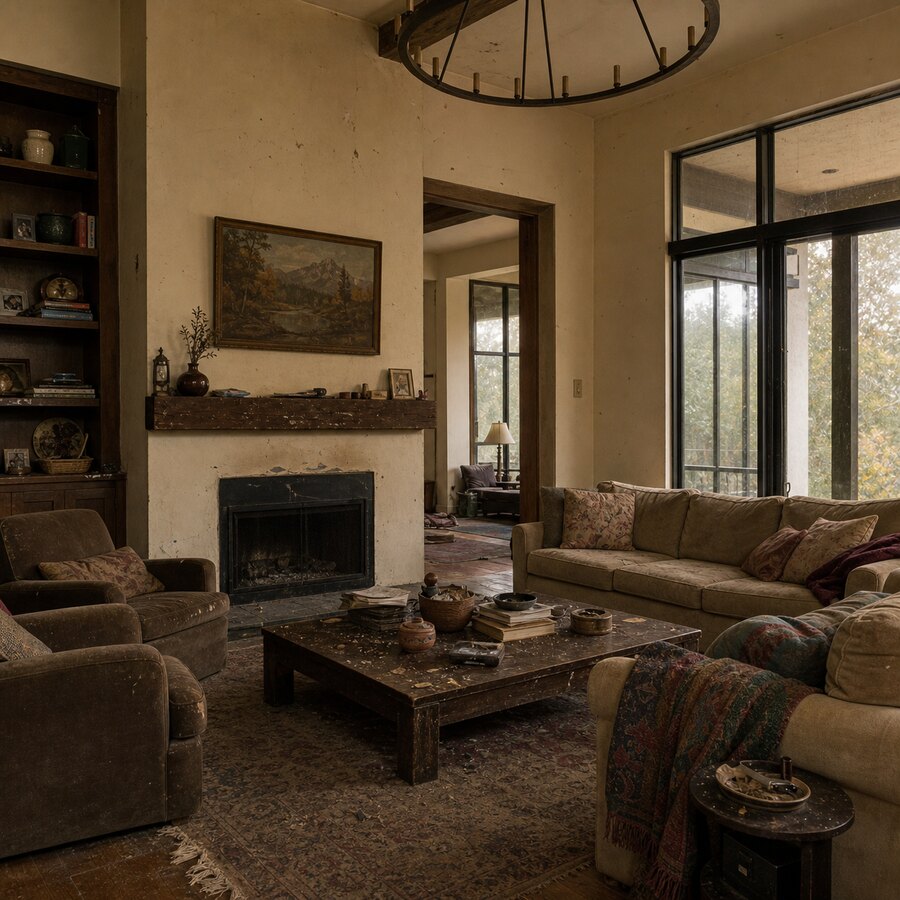
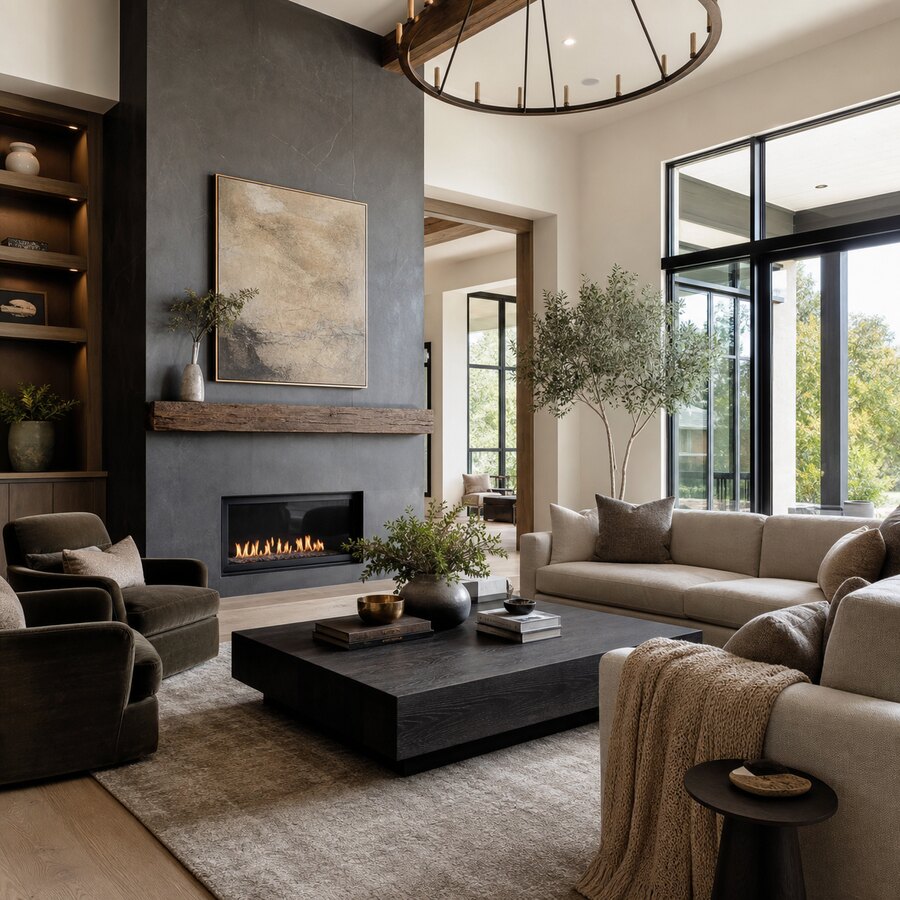
AI before-and-after previews are useful when you are deciding between layouts, color palettes, rug styles, or storage ideas. They are not a substitute for measuring your room, but they can help you see which direction is worth testing.
You can try the AI studio with a photo of your living room and test ideas such as a lighter rug, warmer lighting, slimmer furniture, built-in-looking storage, or a calmer color palette. Keep the prompt realistic: mention that you want a no-renovation makeover, existing windows and doors preserved, and renter-friendly changes only.
For more visual reference, browse the before and after examples. You can also compare related ideas such as small bedroom makeover ideas, renter-friendly living room ideas, and living room color ideas when planning a consistent home style.
A realistic weekend makeover plan
If you want a simple order of operations, use this weekend plan. First, remove clutter and take photos of the room from the doorway and from the main seating position. Second, test one or two furniture layouts without buying anything. Third, decide on a three-color palette and remove decor that fights it. Fourth, improve lighting with at least two lamps. Fifth, evaluate the rug size and storage gaps before you shop.
FAQ
What is the cheapest way to makeover a small living room?
The cheapest approach is to rearrange furniture, remove one or two bulky pieces, declutter visible surfaces, and improve lighting with lamps you already own or can buy affordably. New pillow covers, curtains, and a larger rug can help, but layout and editing should come first.
How can I make a small living room look bigger without renovation?
Use a clear furniture layout, keep walkways open, choose a rug that connects the seating area, hang curtains higher and wider, and light dark corners. A calmer color palette and less visible clutter also make the room feel larger.
What colors work best for a small living room makeover?
Soft neutrals, warm whites, muted greens, light taupes, gentle blues, and layered natural tones usually work well. The exact color matters less than keeping the palette consistent and repeating accent colors intentionally.
Should all small living room furniture be small?
No. Too many tiny pieces can make the room feel busy. It is often better to use one appropriately scaled sofa, a compact coffee table, and a few flexible pieces such as nesting tables or an ottoman.
Can renters use these small living room makeover ideas?
Yes. Most of these ideas are renter-friendly because they focus on layout, lighting, textiles, storage, removable decor, and AI previews. Avoid permanent changes unless your lease allows them.
How can AI help with a living room makeover?
AI can create before-and-after previews from your room photo so you can test color palettes, rug styles, lighting moods, furniture scale, and storage ideas before buying anything. Use it as a planning tool, then confirm measurements before purchasing.