Small home office makeover ideas work best when they solve three problems at once: where the desk goes, where clutter disappears, and how the workspace looks on video calls. In a small room, alcove, guest bedroom, or living room corner, the biggest wins usually come from a slimmer desk, vertical storage, layered lighting, and a calm background you can preview before moving furniture or buying decor.
This guide focuses on practical changes you can make in real homes, not oversized showroom offices. Use it to plan layout, storage, lighting, color, and style decisions, then try the AI studio with one photo to preview the makeover before committing.
Key Takeaways
- Start with the desk position, because it controls walking space, camera background, outlets, glare, and storage.
- Use vertical storage, closed boxes, and wall-mounted pieces so the floor stays open.
- Good lighting needs layers: daylight control, a task lamp, and soft background or video-call light.
- Choose one clear style direction, such as warm minimal, modern traditional, Japandi, or compact creative studio.
- Previewing from a photo helps you test desk placement, shelf scale, wall color, and background style before buying anything.
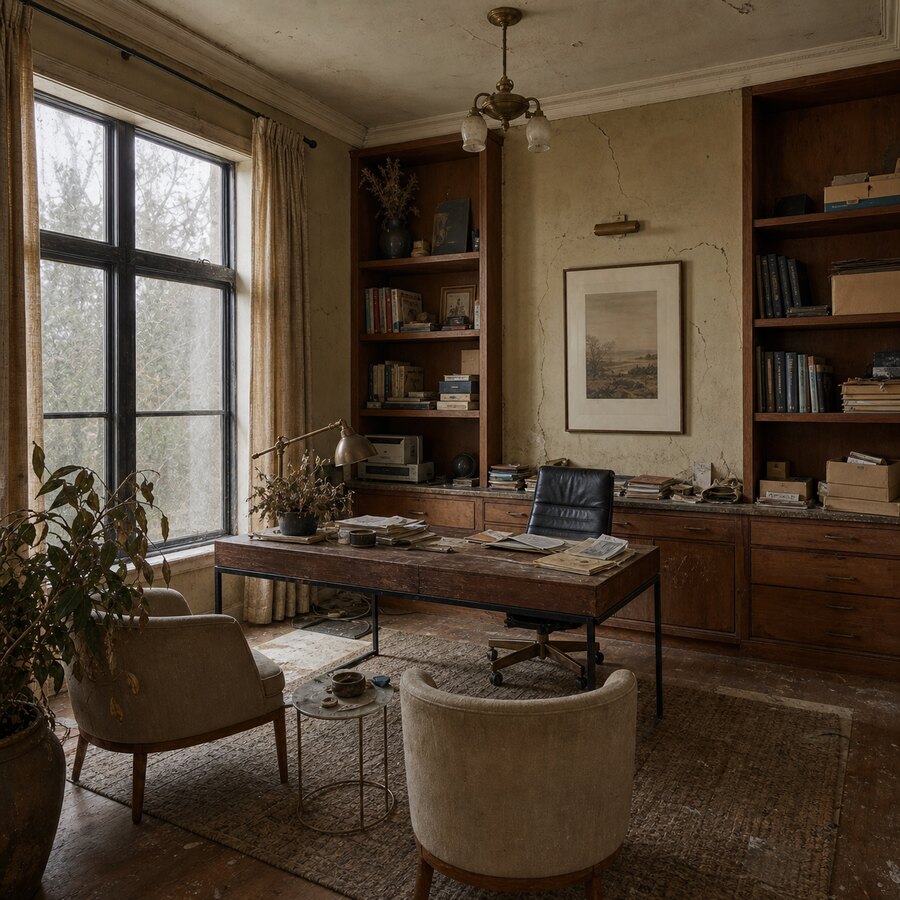
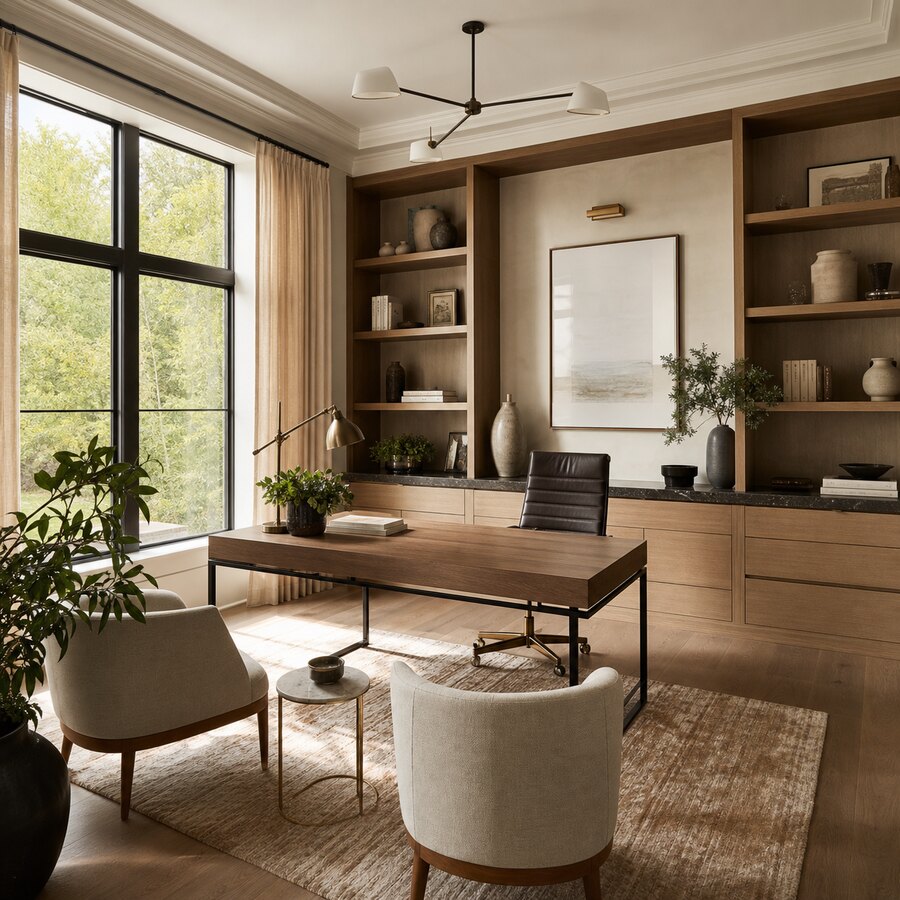
Start With the Real Constraints of the Room
Before choosing a desk or paint color, measure the space as it actually functions. A small home office may be a spare bedroom, a hallway nook, a section of the living room, or one wall of a bedroom. Each version has different limits: door swings, radiators, windows, sockets, noise, and the need to hide work at the end of the day.
Write down the non-negotiables first. Do you need two monitors? Do you take video calls every day? Does the room also need to host guests, storage, or exercise equipment? A good makeover respects these answers instead of forcing a picture-perfect setup that is hard to use.
Choose the Best Desk Placement
The desk is the anchor of every small office makeover. In tight rooms, the best position is usually the one that gives you a comfortable chair path, avoids harsh screen glare, and creates a tidy background behind you.
Against a Wall
A wall-facing desk is often the most space-efficient choice. It keeps the chair path predictable and leaves the rest of the room open. To stop it from feeling cramped, use a shallow desk, then add a wall shelf or peg rail instead of a bulky floor bookcase.
Near a Window
A window can make a tiny office feel more pleasant, but direct light behind or in front of a screen causes glare. If possible, place the desk perpendicular to the window. Add a light-filtering shade so daylight stays soft.
Inside a Closet or Nook
A closet office is useful when the room must switch back to another purpose. Remove doors if they block movement. Use a shallow worktop, wall-mounted lighting, and shelves that do not crowd your seated head height.
Pick a Desk That Fits the Work, Not the Fantasy
Many small offices fail because the desk is either too large for the room or too small for the actual work. A compact laptop setup can work on a 36 to 42 inch desk. A monitor, keyboard, notebook, and lamp need more width.
For small home office makeover ideas that stay practical, consider these desk types:
- Wall-mounted desk: Best for narrow rooms, occasional work, and clean floor space.
- Writing desk: Best for a bedroom or living room office where the desk must look like furniture.
- Compact sit-stand desk: Best if you work long hours but still need a small footprint.
- Corner desk: Best when two short walls can create a work zone without taking over the room.
- Built-in worktop: Best for awkward alcoves and long-term use, especially with custom shelving above.
Leave room for a real chair. A beautiful desk is not useful if the chair hits the bed, sofa, cabinet, or wall every time you sit down.
Make Storage Vertical, Closed, and Easy to Reset
Small offices look messy fast because every cable, notebook, charger, and paper stack is close to eye level. The goal is not to own nothing; it is to give everything a home that is easy to use during the workday and easy to reset afterward.
Use the Wall Above the Desk
Install one or two shelves above the desk for books, bins, small decor, and work supplies. Keep the lowest shelf high enough that it does not crowd your head or monitor. If open shelves become visually noisy, use matching boxes or magazine files so the wall reads as organized.
Add One Closed Storage Piece
A small cabinet, drawer unit, or low credenza can do more for a tiny office than a large open bookcase. Closed storage hides cables, printer paper, documents, and supplies that do not need to be visible. Choose a piece that is shallow enough to preserve walking space.
Design a Better Video Call Background
In many small offices, the background matters almost as much as the desk. A useful video-call background should look calm, show a little personality, and avoid private clutter. It should also be easy to maintain, because a background that takes ten minutes to fix before every meeting will not last.
Good options include a framed print, a narrow shelf with a few objects, a plant, a textured curtain, or a simple painted wall. Avoid placing an open laundry area, unmade bed, busy kitchen, or overloaded bookcase directly behind your chair if you can.
For more inspiration on compact rooms, the same visual principles from small living room makeover ideas apply here: fewer competing focal points, better lighting, and furniture that fits the room’s scale.
Layer Lighting for Work, Screens, and Style
Lighting is one of the highest-impact upgrades in a small office because it affects productivity, eye comfort, photos, and video calls. One ceiling light is rarely enough. Aim for three layers: ambient light, task light, and soft accent or background light.
Task Lighting
A focused desk lamp helps with reading, writing, sketching, and paperwork. Choose an adjustable arm or shade so the light lands on the desk, not directly in your eyes or on the screen. If the desk is tiny, use a wall sconce or clamp lamp to keep the surface clear.
Video Call Lighting
For calls, the brightest light should usually be in front of you or slightly to the side, not behind your head. A small diffused light near the monitor can improve your face on camera without turning the room into a studio. If you wear glasses, test angles to reduce reflections.
Choose a Style Direction That Makes the Room Feel Larger
Style is not just decoration. In a small office, style decisions control visual noise. A clear palette and material direction can make inexpensive furniture look intentional.
Warm minimal works well with pale wood, simple black accents, and woven storage. Modern traditional uses a darker desk, classic lamp, framed art, and a richer wall color. Japandi pairs light wood, matte finishes, warm neutrals, and low-clutter styling. Compact creative studio can include color, pinboards, art rails, and open supplies, but it needs strong organization.
If you are unsure which direction fits, preview two or three options from the same photo. The difference between “cozy and focused” and “crowded and busy” is easier to judge when you can see the desk, wall, lighting, and storage together. You can also compare broader decor directions in interior design trends you can preview with AI.
Use Color to Define the Office Zone
Color can separate a home office from the rest of a small room without adding walls. A soft green, warm gray, muted blue, or clay tone behind the desk can create a calm backdrop. In a very small room, paint only the desk wall rather than wrapping every wall in a dark shade.
Keep the Makeover Budget Focused
You do not need to replace everything. The highest-return upgrades are usually a better desk size, one closed storage piece, cable management, a good lamp, and a cleaner background. Paint, a rug, and framed art can help, but they should support the work setup.
If the budget is tight, spend first on ergonomics and daily function: chair comfort, screen height, lighting, and storage. Then use style upgrades to make the workspace feel like part of the home. The same budget discipline is useful in other rooms too, as shown in this guide to renovating a small kitchen on a budget.
What to Preview From One Photo
A single clear photo can help you test more than wall color. For a small office, preview desk orientation, shelf height, cabinet scale, rug size, background treatment, lighting mood, and style direction. Take the photo from the doorway or main viewing angle, including the floor, ceiling line, window, and nearby furniture.
Then compare a few practical variations: wall desk versus corner desk, open shelves versus closed cabinet, light walls versus a colored backdrop, and minimal styling versus a warmer layered look. When a design looks good in the preview, check whether it also leaves space to move, sit, open drawers, and manage cables.
For a low-risk next step, upload one room photo and try the AI studio to preview small home office makeover ideas before shopping for furniture or decor.
FAQ
What is the best layout for a small home office?
The best layout usually places the desk against a wall or perpendicular to a window, with enough space to pull out the chair comfortably. Prioritize glare control, cable access, and a calm background for calls before choosing decorative pieces.
How can I make a small office look less cluttered?
Use closed storage, matching bins, cable channels, and one clear surface reset routine. Keep only daily-use items on the desk, then move papers, chargers, and extra supplies into drawers, boxes, or a shallow cabinet.
What desk is best for a very small home office?
A wall-mounted desk, slim writing desk, compact sit-stand desk, or built-in alcove worktop can all work. The best choice depends on your equipment, chair clearance, and whether the room also needs to function as a bedroom, living room, or guest space.
How do I improve lighting in a small home office?
Combine daylight control, an adjustable task lamp, and soft ambient lighting. For video calls, place diffused light in front of you or slightly to the side, and avoid sitting with a bright window directly behind your head.
Can AI help with a home office makeover?
Yes. AI room previews can help you compare desk placement, storage, lighting mood, wall color, and background style from one photo. Use the preview as a planning tool, then confirm measurements before buying furniture.
