Short answer: An AI interior designer is usually better when you want fast, affordable room makeover ideas and enough visual confidence to choose a direction. A human designer is usually better when the project involves structural changes, bespoke sourcing, complex measurements, contractor coordination, or a high-budget finish where mistakes are expensive.
The useful choice depends on the stage: inspiration, planning, buying, or execution.
Key Takeaways
- AI wins on speed: you can explore several room styles in minutes instead of waiting days or weeks for concepts.
- AI wins on early cost control: it helps you avoid buying the wrong sofa, paint color, rug, or layout before you have a visual direction.
- Human designers win on execution: they can measure, specify, coordinate trades, manage budgets, and catch practical problems AI may miss.
- Creativity depends on the brief: AI is excellent for exploring directions, while a skilled designer is better at deeply personal, custom, or architecturally sensitive work.
- The best workflow is often hybrid: use AI to clarify taste and compare options, then bring in a human designer if the makeover is expensive, technical, or permanent.
AI Interior Designer vs Human Designer: The Real Difference
The phrase AI interior designer vs human designer can sound like a competition, but they solve different parts of the same problem. Most people do not start a room makeover because they need a perfect technical specification. They start because a room feels wrong, dated, cluttered, unfinished, or disconnected from the life they want to live in it.
An AI interior designer turns a photo of your room into visual alternatives. It can show your living room as Japandi, warm minimal, modern farmhouse, coastal, industrial, hotel-inspired, or colorful eclectic in a very short time. That makes it powerful for the messy early stage where you are asking, “What could this room become?”
A human interior designer does more than produce pretty images. A good designer learns your habits, budget, constraints, measurements, material preferences, light conditions, and tolerance for maintenance. They can translate a vision into a real shopping list, floor plan, construction note, and sequence of decisions.
Speed: AI Is Hard to Beat
If you need momentum, AI is the clear winner. A traditional designer may need an intake call, a site visit, a mood board, a revision round, and a sourcing phase before you see a direction. That process can be valuable, but it is not instant.
AI tools are different. You can upload a room photo and test many design directions quickly. That matters because most makeover decisions are comparative. You may not know whether you prefer warm wood, white oak, black accents, a statement wall, built-ins, or a softer neutral palette until you see them side by side.
This is where a tool like RoomRenovation.ai can be especially useful. You can try the AI studio with your own room photo and use the results as a visual shortlist before spending serious money.
Cost: AI Is Cheaper, But Not a Complete Replacement
AI interior design is usually far cheaper than hiring a full-service designer. That is why it is attractive for renters, first-time homeowners, DIY decorators, short-term rental hosts, and anyone who wants a better room without committing to a large design fee.
The cost advantage is strongest when your goal is visual planning: choosing a style, comparing wall colors, testing furniture direction, or deciding whether a room can feel brighter, calmer, more luxurious, or more functional. In that context, AI can prevent wasted purchases by giving you a preview before you buy.
Human designers cost more because they provide labor that AI does not fully replace: meetings, measurement checks, product sourcing, trade coordination, samples, revisions, installation planning, and accountability. For a large renovation, those services can save money by avoiding rework.
A practical rule: if the decision is reversible, AI may be enough. If the decision is permanent or expensive, human review becomes more valuable.
Creativity: AI Generates Range, Humans Build Meaning
AI is excellent at range. It can show you a room in ten styles before lunch. That makes it surprisingly creative in the exploration stage, especially if you are stuck in the same Pinterest loop or cannot explain what you like.
But range is not the same as meaning. Human designers can notice personal details that make a room feel like yours: the inherited chair you want to keep, the fact that your child does homework at the dining table, the afternoon glare on your TV, the dog bed that always ends up in the walkway, or the art you bought on a trip.
The most creative results often come from combining both. Use AI to break out of obvious choices, then use human judgment to keep what fits your life.
Realism: AI Looks Convincing, But You Still Need Checks
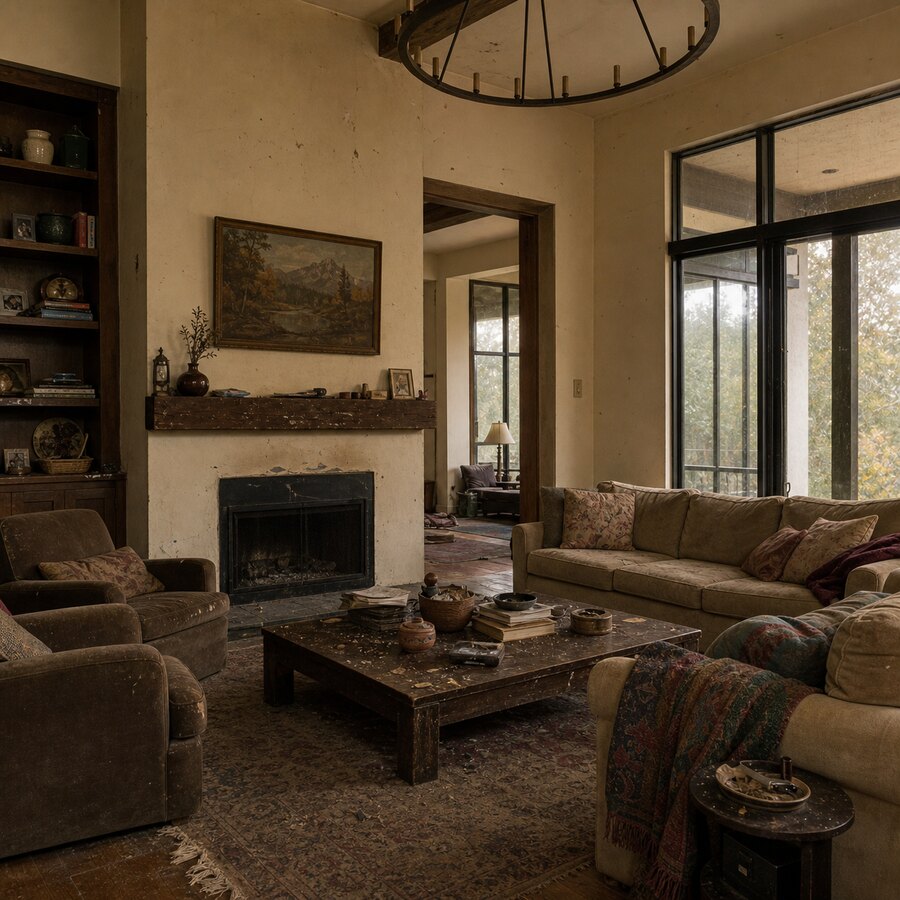
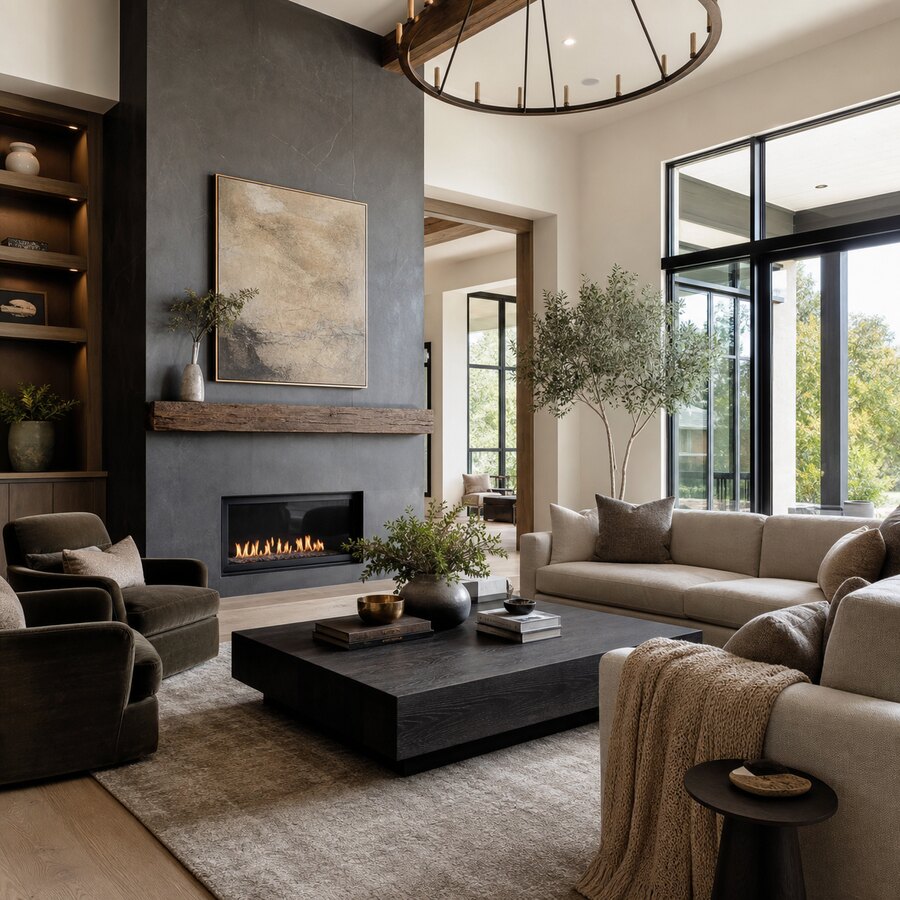
Modern AI room makeovers can look realistic, but they are still visual concepts. An image may show a beautiful built-in cabinet without knowing the wall depth, outlet placement, local carpenter pricing, or whether the door swing creates a problem. It may show a larger rug, but not tell you the exact size to order.
This does not make AI useless. It means you should treat AI images as a design direction, not a construction drawing. You still need to verify dimensions, materials, codes, and product availability.
For visual proof of how much a room direction can change, browse more before and after room makeovers.
Decision Confidence: AI Helps You See Before You Spend
One of the biggest advantages of AI is emotional clarity. Room makeovers are full of doubt: Will dark green feel cozy or small? Is a beige sofa too safe? Should the room be brighter, moodier, cleaner, or more layered?
AI reduces that uncertainty by turning vague preferences into visible options. You can show the images to a partner, roommate, landlord, client, or contractor and have a more concrete conversation. Instead of debating abstract taste, you compare actual room directions.
A human designer can also build confidence, but through a different route. They validate decisions through experience, measurements, samples, vendor knowledge, and a coherent plan. AI gives fast confidence about direction. Humans give deeper confidence about execution.
When an AI Interior Designer Is the Better Choice
Choose AI first when you are still exploring. It is ideal if you want to refresh a bedroom, living room, kitchen corner, home office, nursery, dining space, or rental without a major renovation.
AI is especially useful when:
- You want several style directions quickly.
- You are choosing paint, furniture mood, lighting style, or decor direction.
- You need a low-cost starting point before hiring anyone.
- You are trying to align with a partner or client before shopping.
- You want to make a small room feel bigger, brighter, calmer, or more premium.
- You need inspiration for a DIY update, staging project, or short-term rental refresh.
When a Human Designer Is the Better Choice
Choose a human designer when the room makeover has high stakes. If you are moving walls, changing plumbing, designing custom cabinetry, ordering expensive furniture, managing contractors, or coordinating several rooms, expert oversight matters.
A human designer is usually better when:
- The budget is high enough that a mistake would be painful.
- You need precise space planning or furniture sizing.
- The room has difficult architecture, poor natural light, awkward openings, or unusual proportions.
- You need custom millwork, electrical changes, plumbing changes, or contractor coordination.
- You want a highly personal design that blends old pieces, new purchases, art, family needs, and long-term durability.
- You do not have time to manage sourcing, ordering, returns, and installation.
Human designers are also valuable for editing. AI may generate many attractive possibilities. A designer can tell you which ones will actually work in your room, budget, and lifestyle.
The Hybrid Workflow: Best of Both
For many homeowners, the strongest workflow is hybrid. Start with AI, then bring in a human if the project becomes bigger than a simple refresh.
A practical sequence:
- Upload a clear room photo to an AI studio and generate several styles.
- Save the two or three concepts that feel most realistic for your taste and budget.
- Use those concepts to identify repeated patterns: lighter rug, warmer lighting, built-in storage, simpler palette, bolder art, better curtains.
- Check measurements before buying anything large.
- If the plan involves custom work, construction, or expensive purchases, ask a human designer or contractor to review the concept.
This workflow keeps the early stage affordable and visual, while still respecting the practical details that make a room succeed in real life. You can also review RoomRenovation.ai’s AI room design features and pricing options to compare fit by project size.
So, Which Is Better?
If you want instant inspiration, fast comparison, and a low-cost way to decide what your room could become, an AI interior designer is better. If you want a fully specified, measured, sourced, and managed design for a complex or expensive makeover, a human designer is better.
For most people considering a single-room makeover, the smartest first step is AI. It helps you see possibilities, sharpen your taste, and avoid spending money in the wrong direction. When the project grows beyond visual planning, human expertise can turn the chosen direction into a reliable plan.
Soft next step: upload your room photo and try the AI studio before you commit to paint, furniture, or a full design consultation.
FAQ
Is an AI interior designer better than a human designer?
An AI interior designer is better for fast inspiration, visual comparisons, and early room makeover planning. A human designer is better for complex execution, measurements, custom sourcing, contractor coordination, and high-budget decisions.
Can AI replace an interior designer?
AI can replace some early design tasks, such as mood boards, style exploration, and visual brainstorming. It does not fully replace a skilled designer for technical planning, site-specific constraints, construction details, or project management.
Are AI room makeover images realistic?
They can look realistic and be very useful for choosing a direction, but they should not be treated as exact specifications. Always verify dimensions, materials, product availability, lighting, and installation requirements before buying or building.
When should I hire a human designer instead of using AI?
Hire a human designer when the makeover includes construction, custom cabinetry, expensive furniture, awkward architecture, multiple rooms, or decisions that are hard to reverse. Human expertise is also useful when you need someone to manage vendors and details.
What is the best way to use AI for a room makeover?
Use AI to generate several visual directions from your actual room photo, compare them, and identify the design elements that consistently improve the space. Then measure carefully, source real products, and get professional review for anything permanent or costly.