
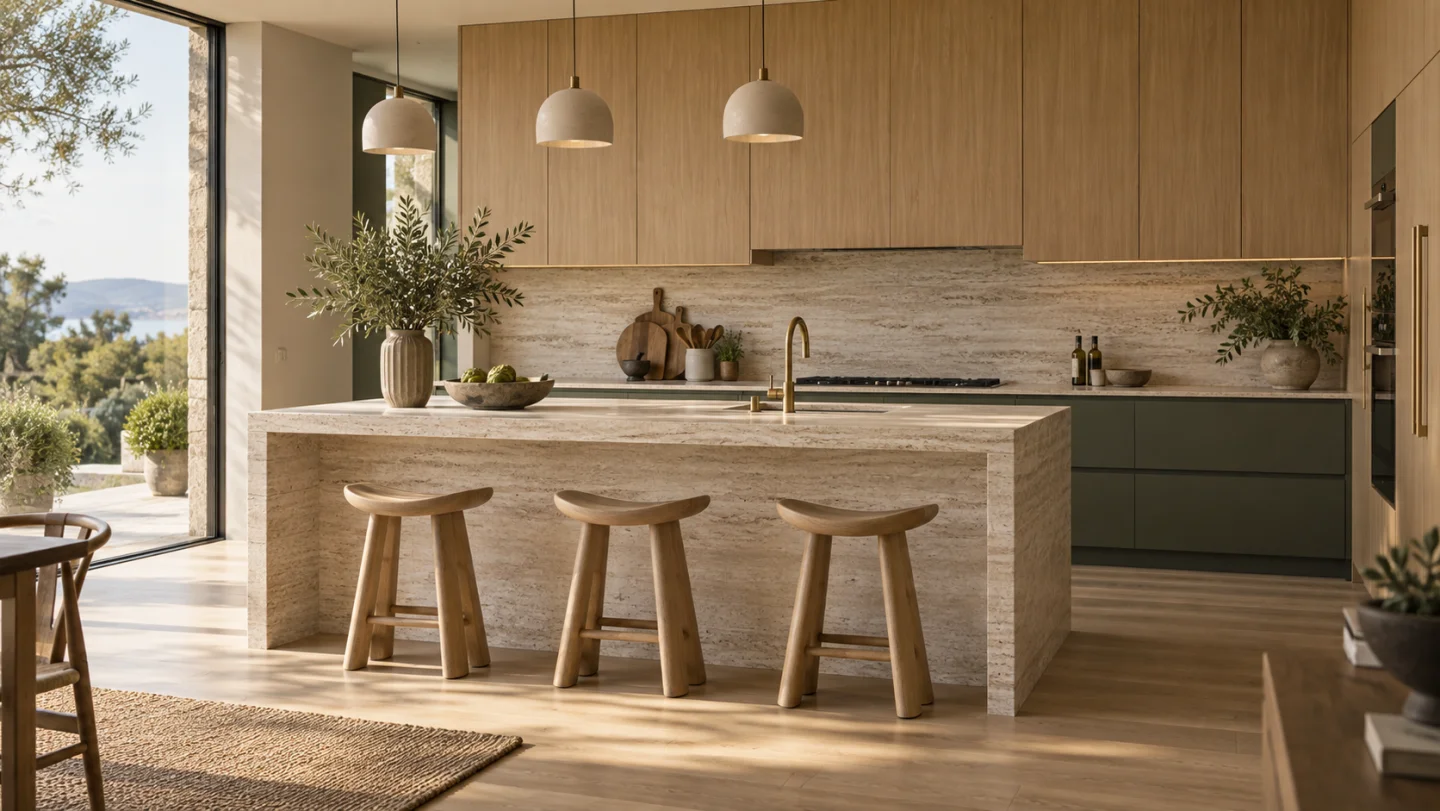
A Japandi kitchen pairs warm oak or ash flat-front cabinets with plaster-look walls, matte stone or honed quartz counters and a clear, uncluttered counter, using three to four materials at most and hiding appliances behind panels.
The Japandi palette and where each colour goes
The preset starts from plaster white (#e7e0d4) on the walls, a mid oak floor (#c9ab84), a muted moss accent (#5f6b55) and dark iron hardware (#3a3631). Use the accent in one place: a single shelf, plant or stool.
Materials and finishes
| Surface | Choose | Avoid |
|---|---|---|
| Cabinets | Flat-front oak, ash or a matte painted finish with a slim pull or finger groove | Glossy lacquer, ornate profiles |
| Counter | Honed quartz, matte porcelain or solid-surface in warm grey or oat | High-sheen granite with heavy veining |
| Backsplash | Same slab as the counter or textured plaster-look tile | Busy mosaics |
| Floor | Light to mid oak, wide planks | Dark glossy tile |
| Hardware | Matte black, iron or brushed brass in small sizes | Chrome bars |
Layout and proportions
- Keep the run unbroken: tall appliance columns at one end and low base cabinets elsewhere.
- Leave about 40 to 50 percent of the counter surface empty; the style reads as calm because of the space between objects.
- Use open shelves sparingly, 1 or 2 runs, and style them with ceramics rather than packaged goods.
- Pick one pendant with a paper or linen shade over a table or island.
- Add a low wooden stool or bench for a lower seating line.
Mistakes that make it look off
- Mixing three wood tones. Pick one oak tone and repeat it.
- Too much white. The floor and a wooden element must carry warmth.
- Cold LED strips. Choose 2700 to 3000 K to keep surfaces warm.
- Leaving every utensil visible. Japandi hides utility and shows craft.
What it costs to get the look
Japandi relies on good joinery and calm surfaces, which tends to push a kitchen toward the mid-range or premium point. In the 2026 planning model the unadjusted kitchen points are $12,000 cosmetic, $35,000 mid-range and $80,000 premium before the city factor; a repaint plus new hardware and a light fixture sits at the cosmetic end.
Try it on your own room
In the studio, open your room and apply the Japandi preset: walls, floor and every catalogue piece change together while the layout stays put, so you can compare it with two or three other presets before buying paint or flooring. Start from the Scandinavian preset and the Japandi preset on the same kitchen and compare how much warmer the wood and walls feel.
Keep planning
Frequently asked questions
What is a Japandi kitchen?
A kitchen blending Japanese minimalism with Scandinavian warmth: natural wood, muted earth tones, flat-front cabinets and very little visible clutter.
What colours work for a Japandi kitchen?
Plaster white, oat, warm grey, oak, with one muted green or charcoal accent.
Is Japandi expensive?
It can be, because joinery and surfaces are plain but well made. The look is achievable at the cosmetic level with paint, hardware and lighting.
Can I do Japandi in a small kitchen?
Yes; it suits small rooms because it limits objects and uses light surfaces.
Colours are illustrative. Check samples in your own light, and confirm products, structure and permits with local professionals.