
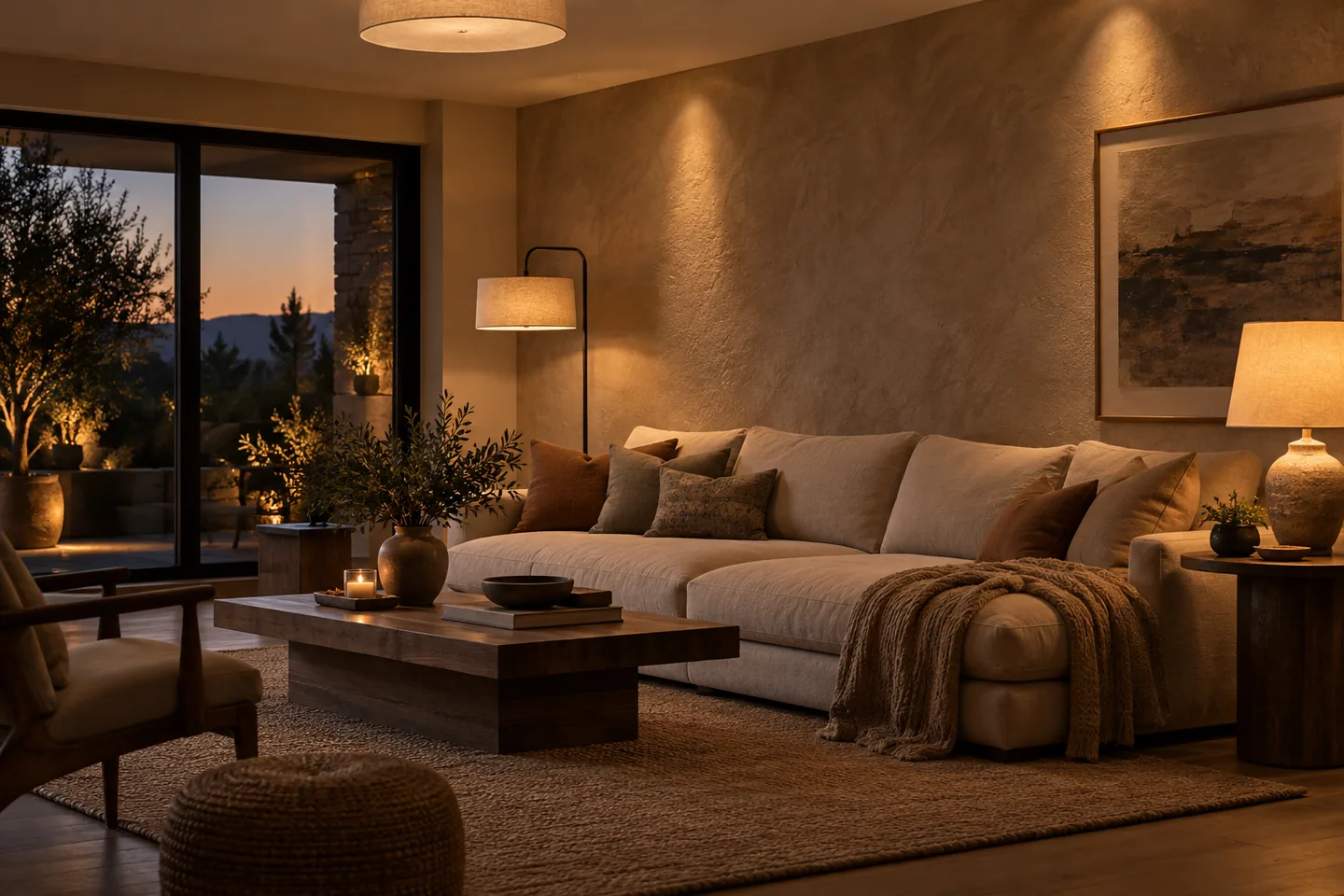
The three layers
Ambient light fills the room gently, using ceiling fixtures, cove lighting or several lamps. Task light covers reading, working and hobbies, which usually means floor lamps, swing arms and table lamps. Accent light adds depth through wall washes, picture lights and shelf lighting. A good plan uses at least two layers in every seating zone.
Most living rooms fail on this point alone: one ceiling light in the middle of the room lights the carpet and leaves the people in shadow.
Plan light positions with the furniture
Draw the furniture first, then place light where people sit, read and walk. Avoid a single ceiling light in a large or irregular room, and put a lamp beside every seat so light arrives from the side rather than from behind a head. Keep circulation routes lit but keep the source out of the eyeline.
- Mark where a reader's shoulder will be, then put the lamp there.
- Leave the middle of the floor clear if possible.
- Use two smaller sources instead of one large one.
- Check the room from the doorway as well as from the sofa.
Color temperature and mood
Warm white around 2700K suits living spaces, while cooler light suits utility areas. Keep one color temperature per space where possible, especially for lamps that are switched on together, and use dimming to change the mood rather than changing the color. Warm dimming increases the amber tone as the light level falls, which works well in the evening.
Mixing a warm table lamp with a cool ceiling light is the fastest way to make a well-designed room feel uncomfortable.
Brightness without glare
More light sources at lower intensity beat one bright source. Shade and diffuse bulbs so you do not see the source directly, and use light to wash walls and ceilings rather than pointing it at people. Match the light level to the task: reading needs more than conversation.
If a room feels harsh, the problem is usually glare rather than brightness. Move the fitting, change the shade or lower the intensity before adding more light.
Fittings and finishes
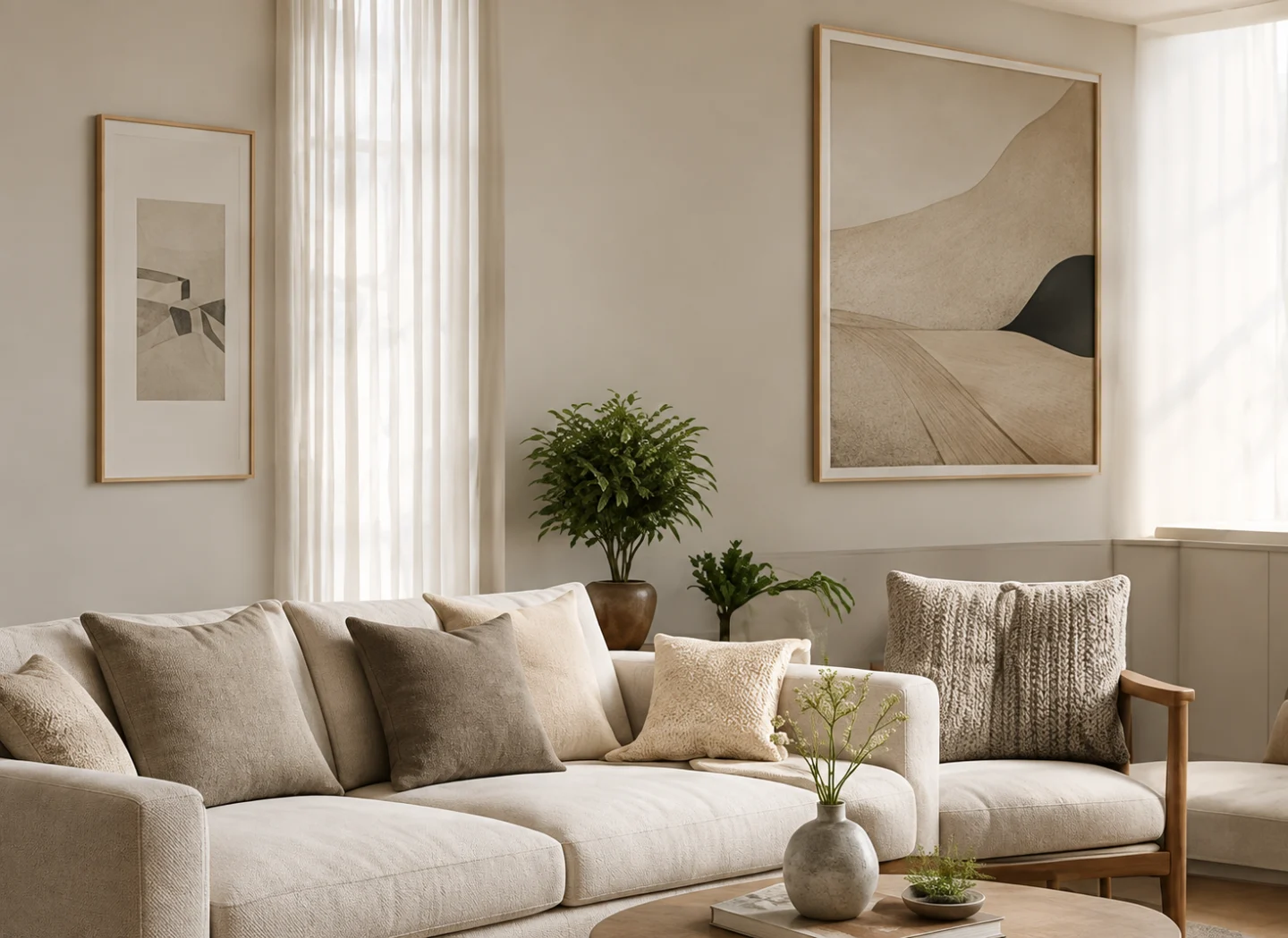
Fabric shades soften light; metal and glass direct it. Wall lights save floor and table space in a small room, and track or twin spotlights can be angled to avoid glare but need discipline. Check the beam angle and output, not just the look, because two fittings that appear similar can light a room very differently.
Consider how each fitting will be cleaned and how the bulb is replaced. High ceilings make this a real consideration rather than a detail.
Plan the electrics early
Decide switch positions and dimmer types before the plastering. Consider a switched floor socket and cable routing for a freestanding lamp, and leave enough circuits so lamps and ceiling lights can be controlled separately. Smart bulbs and smart switches solve different problems, so choose deliberately rather than by habit.
If you are renovating, this is also the moment to add a ceiling point where you actually want one, rather than working around the position the builder installed years ago.
Preview it before you commit
Use a photo of the room and a render to test lighting moods, then try a temporary layout with the fittings you already own. Look at the room at night with only the proposed layers on, and adjust the plan while changes are still cheap, before the walls are finished.
A lighting plan that looks good on paper and is tested in the actual room at night is one of the most reliable ways to make a living space feel considered.

Frequently asked questions
How many lights should a living room have?
There is no fixed number; the goal is layered light. Most living rooms work well with an ambient source, two or more lamps for task light and one or two accent sources, controlled in groups.
What color temperature is best for a living room?
Warm white around 2700K is a common choice because it flatters skin tones and materials. Keep one temperature within the room and use dimming to change the mood rather than mixing colors.
Are smart bulbs worth it?
They are useful where you want scene control without rewiring, but they can be less reliable than a wired dimmer and are not ideal for every fixture. Decide whether you need scenes or simply better light.
Light is the cheapest way to change how a room feels and the easiest thing to under-plan. Sketch the furniture, layer the light, and decide the electrics before the plaster reveals the plan.
This guide is general information. Have electrical work designed and installed by a qualified electrician and check ratings for bathroom and wet areas.