A strong small bathroom remodel before and after usually comes from three changes: brighter surfaces, better lighting, and a cleaner layout. In a dated bathroom, replacing heavy tile colors, bulky vanities, dim fixtures, and undersized mirrors can make the room feel larger without moving plumbing. The best before-and-after ideas focus on visual impact first, then use compact fixtures and storage to make the room easier to live with.
- Start with the biggest visual blockers: dark tile, yellow lighting, cluttered counters, and dated mirror cabinets.
- Use light or mid-tone tile, a floating or narrow vanity, and layered lighting to make a small bathroom feel open.
- Keep layout changes modest unless the current toilet, door swing, or shower placement wastes usable space.
- Before choosing materials, compare several visual directions with a quick mockup or try the AI studio.
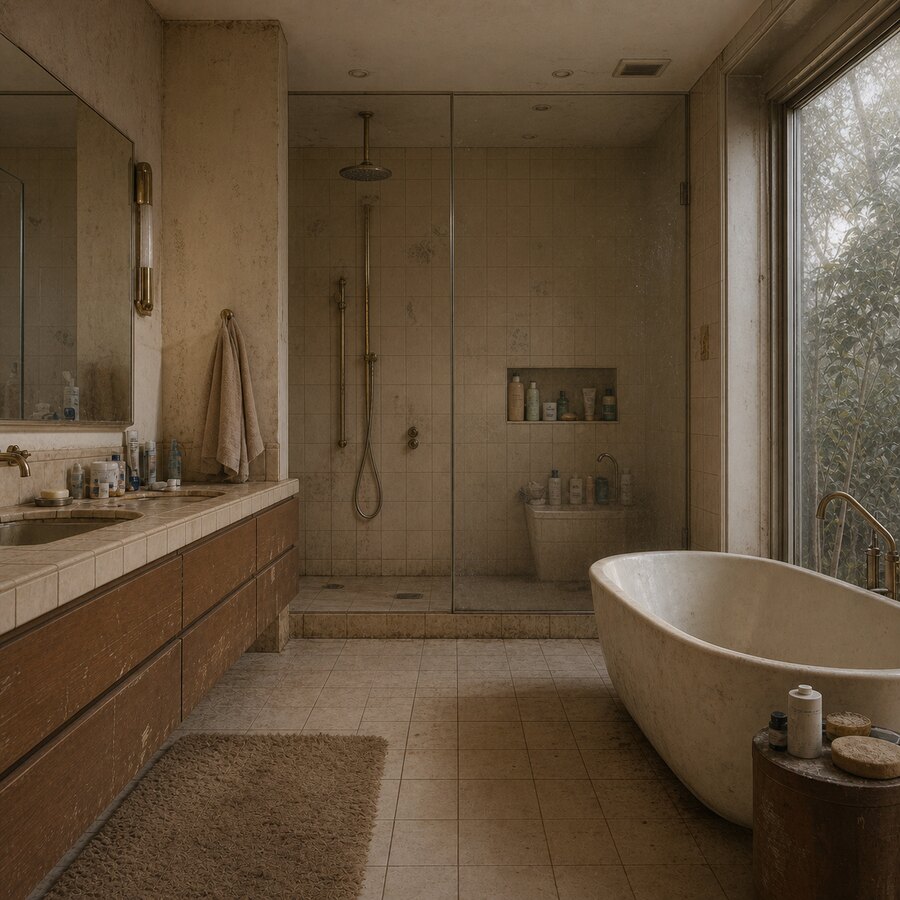
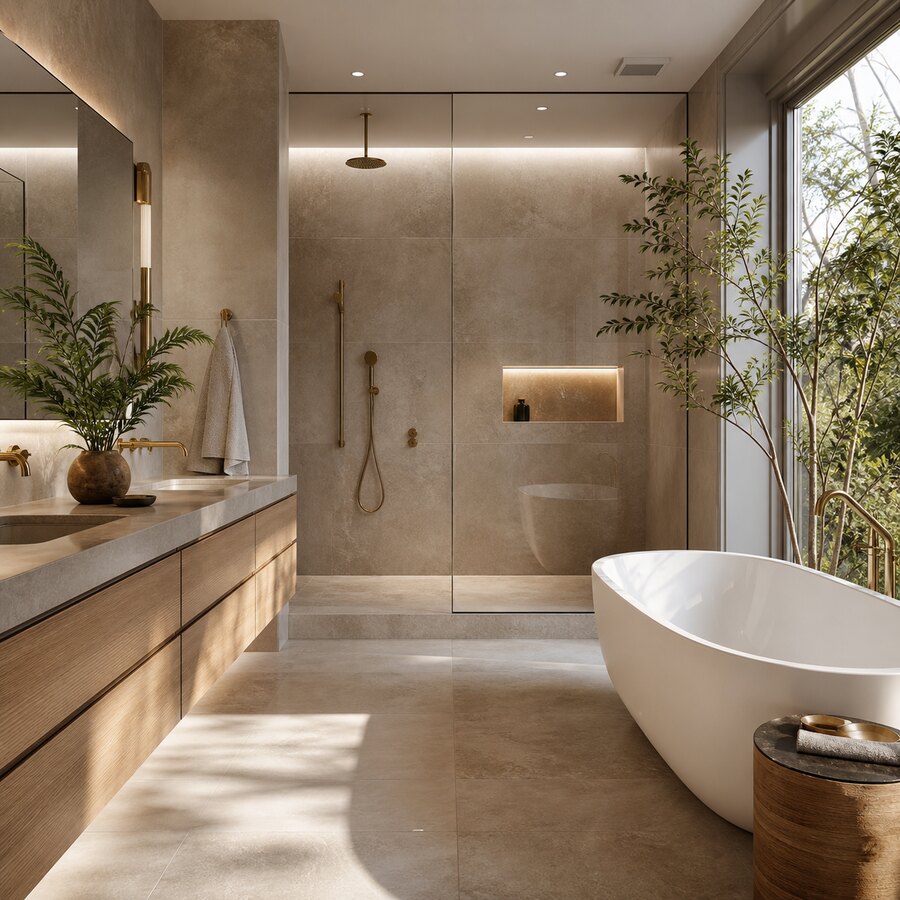
What Makes a Small Bathroom Remodel Look Dramatic?
The most dramatic transformations rarely depend on adding square footage. They come from removing visual weight. In older bathrooms, that weight often shows up as beige tile, dark grout, a bulky vanity, harsh lighting, a tired shower curtain, or floor tile that chops the room into small pieces.
For a dated bathroom, the goal is not to make every surface bright white. The goal is to create a clearer visual path. When the floor, vanity, mirror, and lighting all feel intentional, the bathroom reads as cleaner and larger. That is why many successful small bathroom before-and-after projects change fewer things than expected, but change the right things.
If you want more examples before choosing a direction, browse the before and after gallery and compare how much of the improvement comes from color, proportion, and light rather than a larger footprint.
1. Replace Dark or Busy Tile With Calmer Surfaces
Tile is usually the largest visible surface in a small bathroom, so it has an outsized effect. Dark brown, peach, burgundy, or heavily patterned tile can make the room feel smaller because every wall and floor edge becomes more noticeable. Replacing it with a calmer tile instantly changes the mood.
Best tile colors for small, dated bathrooms
Soft white, warm gray, limestone, pale greige, muted sage, and light taupe are reliable choices because they brighten the room without looking sterile. If the bathroom has no natural light, avoid cold gray tile with blue undertones; it can make the room feel flat. A warmer neutral usually photographs better and feels more inviting in daily use.
For floors, medium-value tile can be easier to maintain than pure white. A small bathroom floor sees water, hair, dust, and product residue. Lightly textured porcelain in stone, terrazzo, or concrete tones can hide everyday marks while still looking fresh.
Where to use accent tile
Accent tile works best when it has a clear job. Use it inside a shower niche, on one shower wall, or as a floor pattern. Avoid covering every wall with a bold pattern unless the room is intentionally maximalist. In a compact bathroom, one strong moment is usually more effective than four competing surfaces.
2. Update the Vanity Without Overcrowding the Room
The vanity is often the second-biggest visual change in a small bathroom remodel before and after. Older vanities tend to sit heavily on the floor, have thick toe kicks, or use orange-toned wood that dates the room. A new vanity can make the bathroom feel cleaner even if the footprint stays the same.
For a very small bathroom, consider a floating vanity, a narrow-depth vanity, or a furniture-style vanity with open space below. Seeing more floor makes the room feel less cramped. If storage matters, use drawers instead of deep cabinet doors. Drawers make toiletries easier to reach and reduce counter clutter.
Color matters too. White oak, walnut, matte white, charcoal, and soft green vanities can all work, but they send different signals. White oak feels warm and modern. Matte white nearly disappears. Charcoal adds contrast but should be balanced with bright walls and strong lighting. Soft green or muted blue can give a dated bathroom personality without making it feel busy.
3. Improve Lighting Before Judging Paint or Tile
Many dated bathrooms look worse because the lighting is poor. A single ceiling fixture or old vanity bar can cast shadows under the eyes, make tile look yellow, and exaggerate every corner. Before finalizing colors, think about how the room will be lit in the morning, at night, and during cleaning.
A practical lighting plan for a small bathroom usually includes a ceiling light for general brightness and a vanity light for the face. Sconces on both sides of the mirror are ideal when there is room. If not, choose a clean horizontal fixture above the mirror with warm, even light. Aim for a color temperature around 2700K to 3000K for a comfortable residential feel.
If the shower is enclosed or feels dim, add a rated recessed light in the shower area. This one detail can make the after photo look significantly better because the back of the room no longer disappears into shadow.
4. Use a Larger Mirror to Stretch the Space
A mirror can do more for a small bathroom than almost any decorative item. Many older bathrooms have a small medicine cabinet centered over the sink, leaving blank wall on both sides. Replacing it with a wider mirror can reflect more light and make the vanity wall feel deliberate.
For a clean before-and-after effect, choose a mirror that is nearly as wide as the vanity but not wider than it. Round mirrors soften hard tile lines and work well above compact vanities. Rectangular mirrors feel more architectural and can visually widen the room. If storage is a concern, a recessed medicine cabinet with a simple frame gives you function without the dated look of older mirrored boxes.
Pay attention to mirror height. A mirror hung too high makes the vanity area feel disconnected. One that starts closer to the backsplash and rises high enough for taller users feels more custom.
5. Choose a Compact Layout That Solves the Real Problem
Small bathrooms do not always need a new layout. Moving plumbing can be expensive, and a cosmetic remodel may be enough if the existing toilet, shower, and vanity are in sensible places. The layout should change only when the current plan creates daily friction.
Common layout problems include a door that swings into the vanity, a toilet squeezed too close to a cabinet, a shower entry blocked by the sink, or a tub that nobody uses taking up most of the room. In these cases, a pocket door, narrower vanity, glass shower panel, or tub-to-shower conversion can make the bathroom feel much more functional.
Before committing to a remodel, sketch the door swing, fixture clearances, and storage zones. Then test visual options with a mockup. RoomRenovation.ai can help you compare tile, vanity, lighting, and mirror ideas quickly; use the AI room design studio as a low-pressure planning step before you buy materials.
6. Make the Shower Feel Open, Not Exposed
In many before photos, the shower is the darkest and most cramped part of the room. A heavy curtain, frosted door, or metal-framed enclosure can divide the bathroom into smaller blocks. Replacing it with clear glass, a lighter curtain, or a simpler frame can make the whole room feel larger.
If privacy is important, use textured glass thoughtfully. Reeded or fluted glass can look current and still pass light through the room. For tile, carrying the same or related tile from the bathroom floor into the shower can reduce visual breaks. A vertical stacked tile pattern can make the shower feel taller, while large-format tile can reduce grout lines and create a calmer surface.
Add a niche only where it will be useful. A niche that is too small, too low, or outlined with high-contrast trim can look fussy. A full-width ledge or a niche that blends with the wall tile often looks cleaner in a compact remodel.
7. Keep the Final Styling Simple
The after photo should not depend on heavy styling. A small bathroom works best when the permanent choices carry the design. Use one good hand towel, a simple soap dispenser, and a small tray. Avoid counter clutter that competes with the tile and vanity.
Hardware is a good place to add polish. Chrome, nickel, black, brass, and bronze can all work, but too many finishes in a small room can look accidental. Pick one main finish and repeat it where practical.
For more remodeling inspiration by room, compare bathroom ideas with other transformations in the before/after library, then review planning features on the RoomRenovation.ai features page.
Small Bathroom Before-and-After Checklist
Use this checklist before you finalize the design:
- Will the new tile brighten the room without glare?
- Does the vanity add storage without blocking floor space?
- Is the mirror wide enough to balance the vanity?
- Will the lighting make the room look good in real life, not only in photos?
- Can the door, shower entry, toilet, and vanity be used comfortably?
- Are the hardware finishes consistent enough to feel intentional?
FAQ
What is the easiest way to make a small dated bathroom look bigger?
The easiest visual upgrade is to brighten the largest surfaces and improve lighting. Lighter tile or paint, a wider mirror, a cleaner vanity, and better vanity lighting can make the bathroom feel larger without changing the footprint.
Should I keep the same layout in a small bathroom remodel?
Keep the same layout if the fixtures are usable and the problem is mostly style. Change the layout only when the door swing, vanity depth, toilet clearance, tub, or shower entry makes the bathroom frustrating to use.
What tile size works best in a small bathroom?
There is no single best size. Large-format tile can reduce grout lines and make the room feel calmer, while smaller mosaic tile can work well on shower floors. The best choice depends on slip resistance, slope, style, and how busy the overall design already is.
Is a floating vanity better for a small bathroom?
A floating vanity can help because it exposes more floor and makes the room feel lighter. It is not always the best option if you need maximum storage, but it is a strong choice for powder rooms, guest baths, and tight layouts.
How can I preview a bathroom remodel before buying materials?
Take clear photos of the current bathroom, gather a few tile and vanity ideas, and create visual mockups before purchasing. You can try the AI studio to compare different before-and-after directions quickly.
