
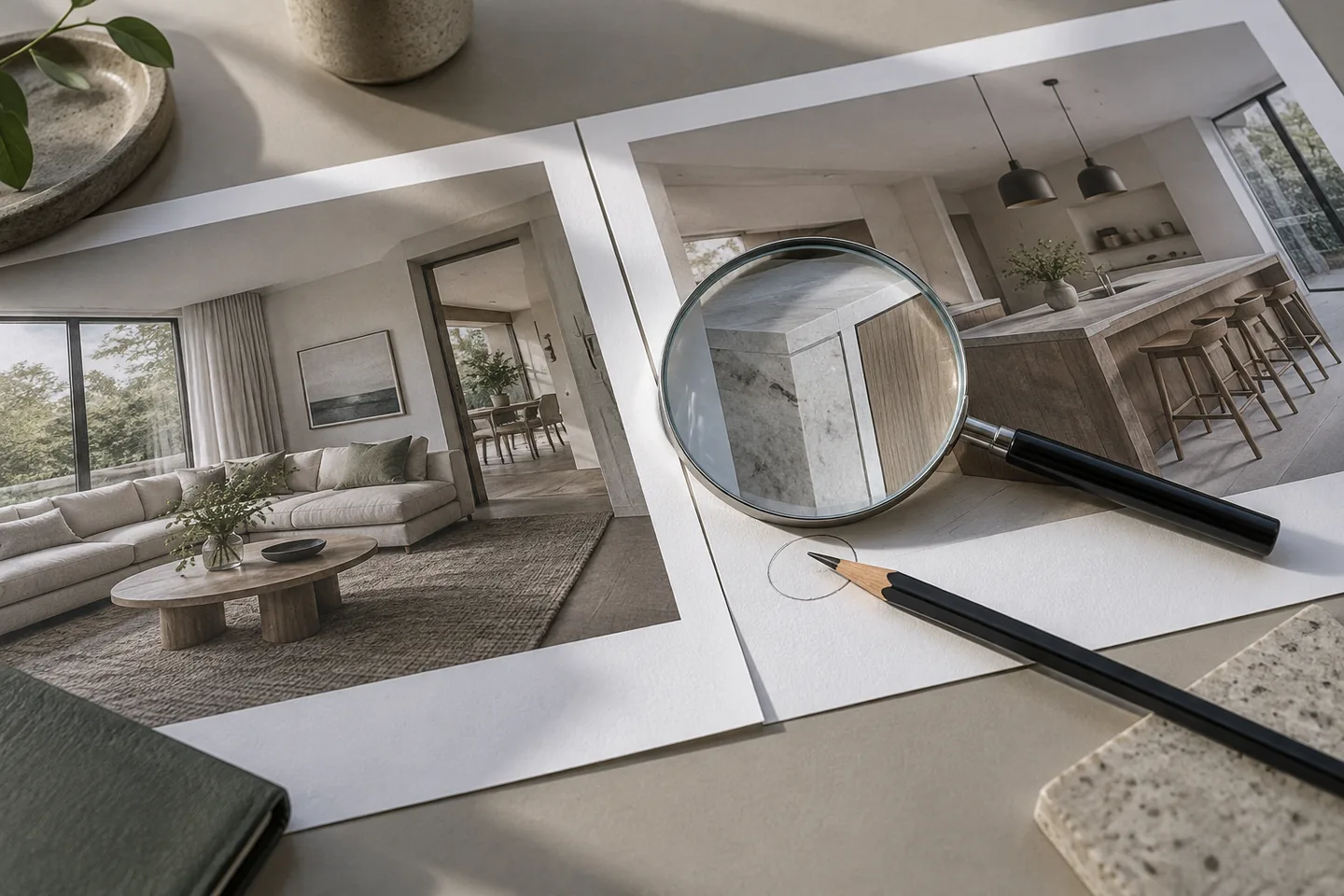
Why renders fail
Image models predict what a room usually looks like, not what your room is. They can quietly change walls, windows and doors to make the composition work, and they infer scale from the image itself, so furniture can float or grow. The lighting often looks beautiful and is physically inconsistent.
None of that makes renders useless. It makes them proposals rather than evidence, and proposals have to be checked the same way you would check a drawing.
Structure and architecture
Count the windows and doors and compare them with your photo. Check that walls are in the same place and that alcoves, chimney breasts and recesses have not moved. Look for extra openings, vanishing radiators or a window that has changed shape.
- Photograph the room before you start so you always have the reference.
- Compare the render and the photo side by side at the same size.
- If the architecture changed, regenerate with stronger keep instructions rather than accepting it.
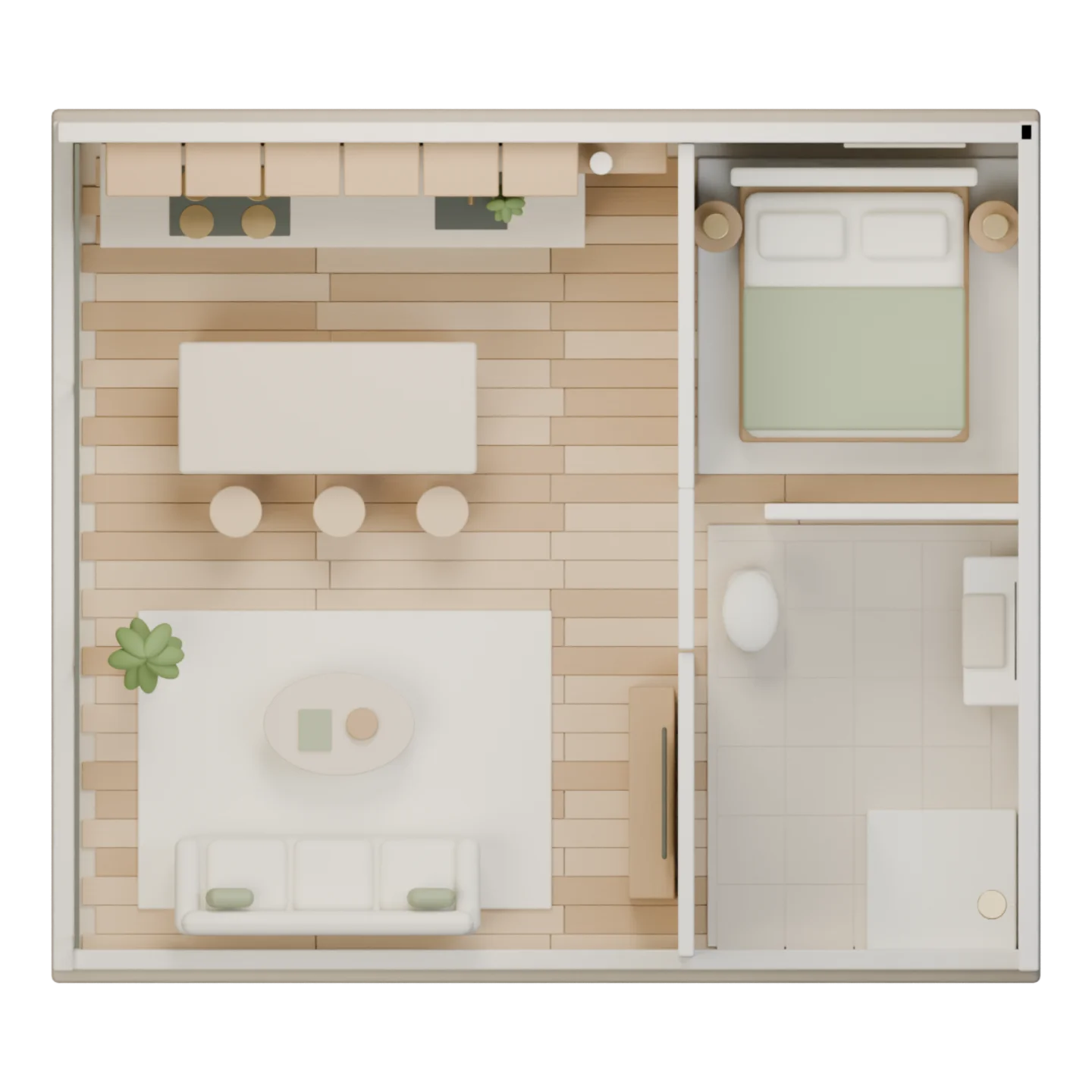
- Put the plan next to the render when you review it.
Scale and proportion
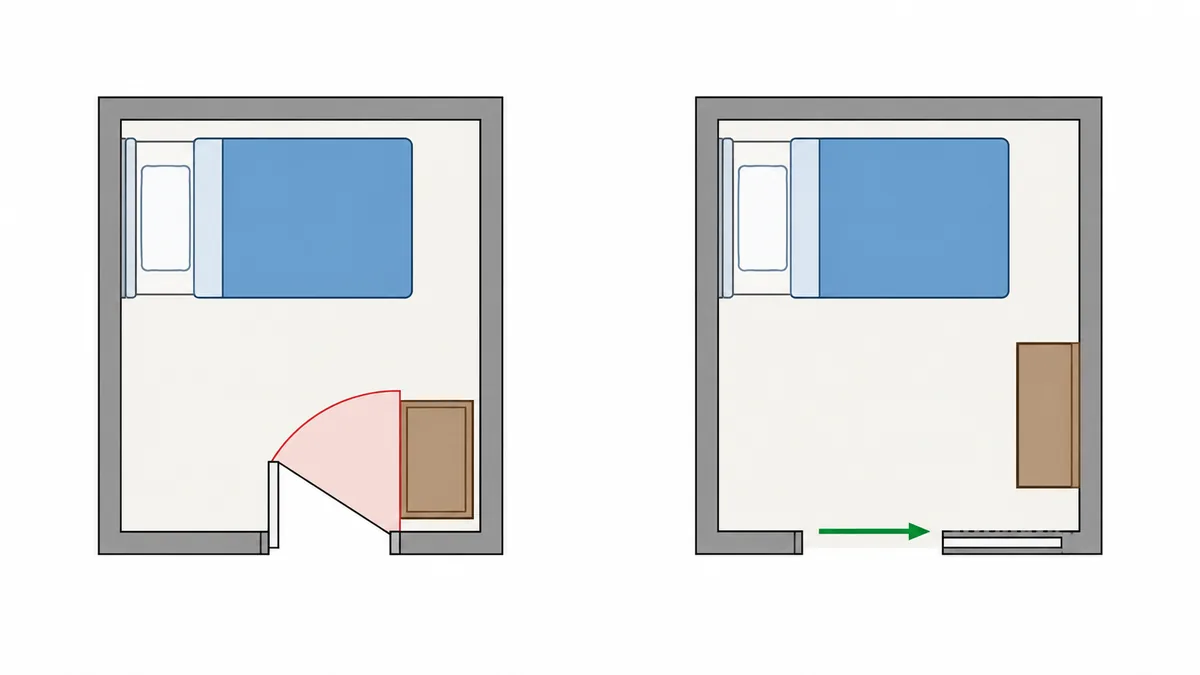
Compare furniture to door height and ceiling height. Check that sofas, beds and cabinets could physically fit the room, and watch for tiny rugs, oversized lamps and chairs that intersect the floor or wall. A piece that fits the render may be 30 cm too wide for the room.
Use measurements to confirm the layout separately. A tape measure, a floor plan and a list of the furniture you actually own will catch more errors than any amount of staring at a render.
Light and shadow
Shadows should agree with the direction of the window light. Multiple light sources should not create contradictory shadows, and a room should not glow evenly as if lit by a studio rig. Aim for a realistic exposure rather than a dramatic one, and check how the palette behaves in daylight and in the evening.
If you are testing lighting layers, ask for a version with the lamps on and the ceiling light off. That is closer to how the room will feel at night, and it is where most lighting plans succeed or fail.
Materials and details
Wood grain, stone veining and fabric texture can look synthetic or repeat in obvious patterns. Metal and glass reflections are frequently wrong, and printed patterns may change scale across different surfaces. Treat decorative details as suggestions rather than specifications.
Order physical samples of anything that matters: flooring, paint, tile, fabric. The render narrows the field; the sample makes the decision.
A realistic review process
Put the render next to the original photo and the plan, then list what changed and decide whether each change was intentional. Fix the layout first, then the palette, then the details. Keep the renders that answer a real question and discard the ones that only look impressive.
Use the render to make decisions you can actually execute. If the direction depends on a wall being removed or a window being added, that is a construction conversation, not a design one.
What renders are genuinely good for
Renders are excellent for comparing directions: warm versus cool, open versus zoned, light versus dark. They are good for testing a paint or material palette before you buy samples, and for communicating a direction to a partner, a designer or a contractor. They are also surprisingly good at revealing a layout problem before you move a single piece of furniture.
That is a lot of value for a few minutes of work, as long as you keep the measurements in charge and treat the image as a proposal.
Frequently asked questions
Can I trust an AI render for measurements?
No. Renders are visualizations, not measured drawings. Use them for direction and comparison, and check dimensions, clearances and fit separately with a tape measure and a plan.
Why does the AI keep changing my windows?
Image models tend to redraw architecture unless they are told not to. Repeat the fixed elements in the prompt, use any preservation control the tool offers, and regenerate if the openings move.
Do AI renders predict what a real renovation will look like?
They predict a plausible direction, not the finished result. Real light, materials, workmanship and furniture choices will differ, so treat the render as a design conversation rather than a photograph of the future.
A render is a fast, cheap way to test a direction. It is not evidence. Judge it with the same skepticism you would apply to a mood board, and keep your measurements in charge.
This guide is general information. Results depend on the tool and the source photo; verify designs professionally before committing to construction.