
Small Apartment Design: How AI Makes Tiny Spaces Feel Huge
Small apartment design tips powered by AI visualization. See how to maximize tiny spaces with smart layout, color tricks, and multi-functional furniture.
RoomRenovation.AI Team
Updated March 14, 2026
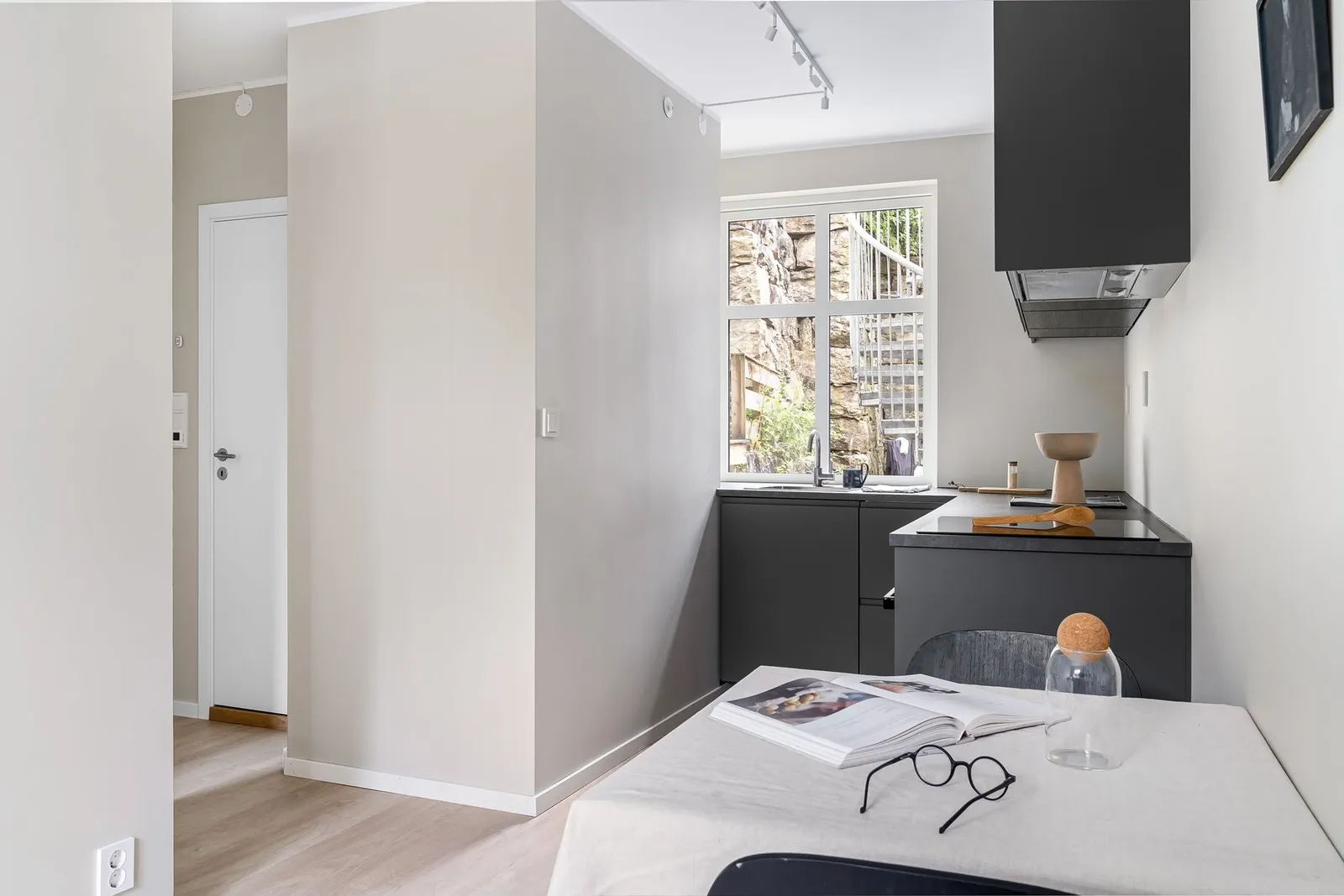
Great small apartment design isn't about cramming a full-size home into 500 square feet — it's about making a handful of high-leverage decisions and getting each one exactly right. In a 400-to-700-square-foot studio or one-bedroom, every choice carries outsized weight: the wrong sofa eats a third of your living area, the wrong paint color flattens the whole room, and one misplaced bookshelf can wall off the light you depend on. The margin for error is thin, which is exactly why the smartest move you can make today is to see your space transformed before you buy, paint, or rearrange anything. This guide walks through the specific, architect-tested strategies that make tiny spaces breathe — and how AI visualization lets you test each one on your actual apartment.
The Real Challenge of Urban Small Apartments
The defining problem of a small apartment isn't square footage — it's the number of jobs that footage has to do. A 450-square-foot studio is at once a living room, bedroom, home office, dining room, entryway, and kitchen. In a house, each function gets its own walls; in a studio they share one continuous visual field, so clutter, scale mistakes, and conflicting "zones" compound on each other instead of staying contained behind doors.
That overlap is also the opportunity. When a space does six things at once, fixing one element — light, color, or a single piece of furniture — ripples through everything. The leverage is enormous — but only if you know which lever to pull.
Paint and Color: The Strategy Most People Get Half-Right
"Go light" is correct but incomplete. Light walls reflect more daylight and read as airier — but the real gains come from how you handle the boundaries between surfaces, because visible edges are what tell your eye "this room stops here."
Specific Color Moves That Expand a Room
- Paint the ceiling one shade lighter than the walls. A barely-lighter ceiling makes the room read taller without the stark "cap" of a bright white ceiling over colored walls.
- Match trim and walls in the same color. Painting baseboards, casings, and window trim the same hue as the wall (a "monochromatic envelope") erases the dark lines that chop up and shrink a small room.
- Choose a warm off-white over a cool pure white if your light is limited or north-facing — cool whites read gray and cold, making a space feel smaller, not bigger.
- Follow the accent-wall rule: put the accent on the wall you see when you enter, never one broken up by windows or doors. One quiet accent wall adds depth; two or more close the room in.
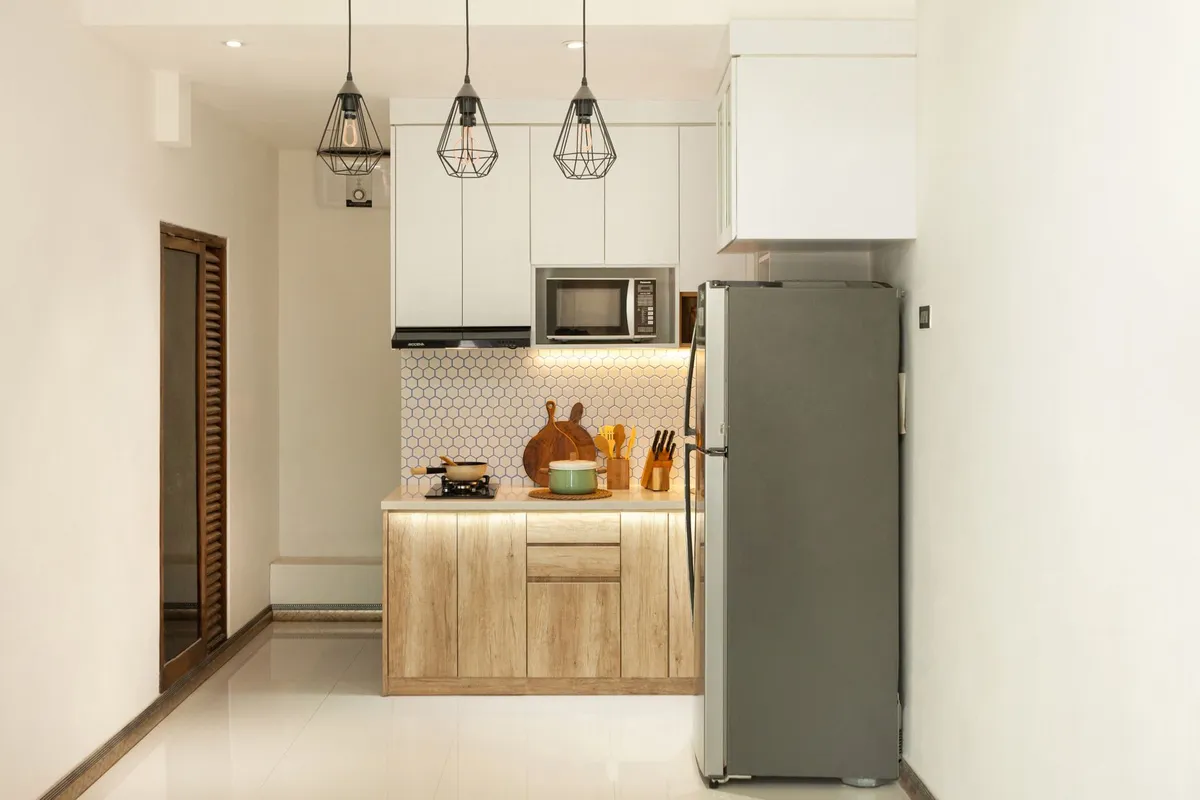
Mirror Placement Is a Science, Not a Decoration
A mirror doesn't make a room bigger because it's shiny — it works because it reflects depth and light back into the space. Placement decides everything.
- Hang it directly across from a window, not beside it. A mirror facing your main window doubles your daylight and reflects the view, reading as a second opening rather than a wall.
- Reflect something worth doubling. A mirror facing a blank wall or cluttered corner just doubles the dead space — aim it at the room's most open sightline.
- Use one large mirror over several small ones. A floor-leaning mirror or a large piece above a console reads as architecture; a gallery of tiny mirrors reads as busy.
- In a studio, a mirror at the end of the longest sightline pulls the eye through the space and softens the boundary between zones.
Furniture Scale: The Most Common (and Most Expensive) Mistake
The number-one error in small living room design is the oversized sofa. People buy the deep 90-inch sectional they'd want in a suburban den, and it swallows the room — blocking walkways, dwarfing every other piece, and forcing a cramped layout around it.
Right-sizing fixes this fast:
- Choose a sofa with exposed legs — visible floor underneath furniture reads as continuous space and makes the room feel larger.
- Cap depth and length: an apartment-scale sofa (roughly 72–80 inches, shallower seat) seats the same people while reclaiming a foot or more of floor.
- Leave at least a 30-inch walkway through the main path — if a piece breaks that, it's too big.
- Favor slim arms and legs over boxy, floor-hugging pieces. Lightness is visual as much as physical.
A full studio furniture refresh — sofa, bed system, table, and storage — typically runs $2,000–$6,000 in 2026, so getting scale right before you order is the difference between a calm room and an expensive mistake you live with for years.
Multi-Functional Furniture That Earns Its Footprint
In a small apartment, the best pieces do two or three jobs at once.
- Murphy / wall bed systems ($1,800–$4,500): a quality wall bed with integrated shelving folds flat by day, converting your bedroom into a real living room or office — the single biggest spatial unlock in a true studio.
- Storage ottomans ($150–$400): seating, footrest, coffee-table surface (add a tray), and hidden storage — all in one cube.
- Sofa beds: still the gold standard for one-bedrooms with guests; spend on the mechanism and mattress, because a thin, hard sleeper defeats the purpose.
- Console-to-dining tables: a slim wall console that extends to seat four or six, replacing a permanent dining set that would otherwise dominate the floor.
- Drop-leaf wall tables: a work or dining surface that folds flush to the wall when you're done.
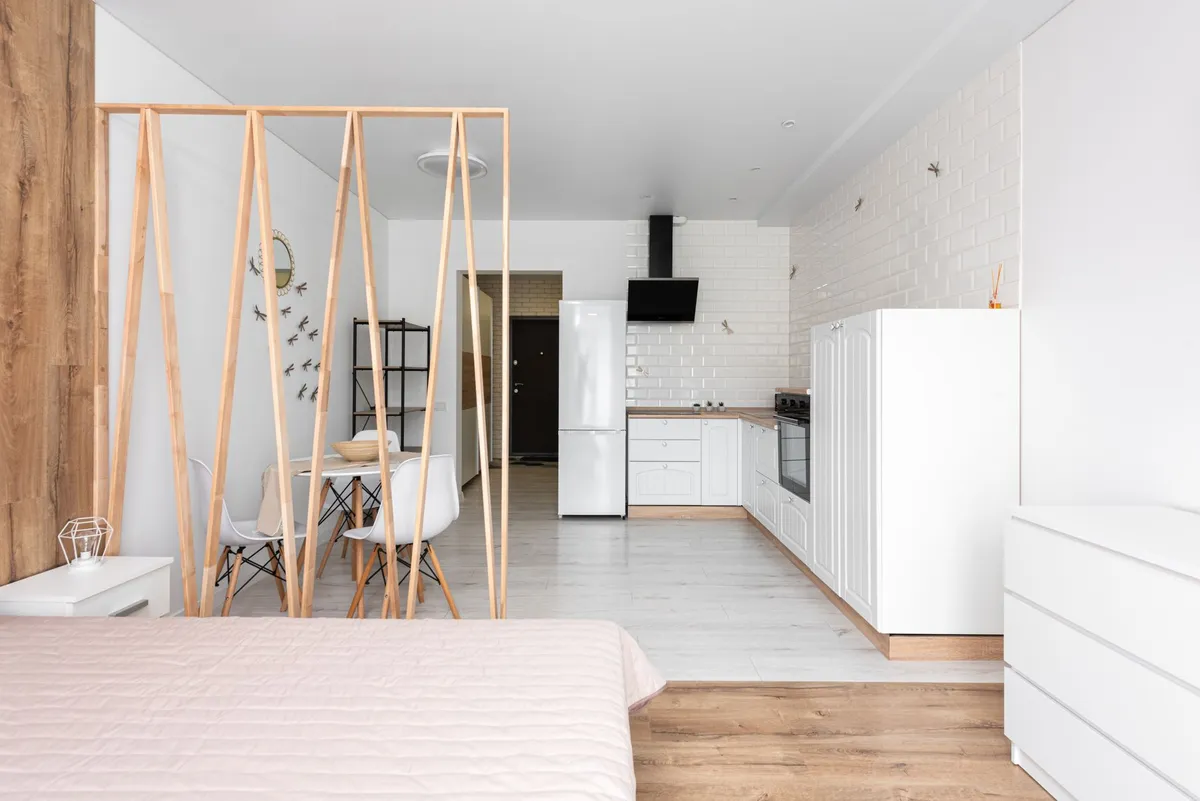
Think Vertically: The Floor Is Precious
Floor space is your scarcest resource, so move storage and display up the walls.
- Tall, narrow shelving draws the eye upward and emphasizes ceiling height while storing a surprising amount in a small footprint.
- Wall-mounted cabinets and floating shelves above sofas, desks, and beds claim otherwise-wasted space and keep walkways clear.
- Hooks and rails behind doors hold bags, coats, and everyday items without a single inch of floor.
- Mount the TV and float the nightstands — anything off the floor makes the room read larger.
Creating Zones in a Studio Without Building Walls
A studio needs distinct areas that still feel like one coherent space. Three tools do the heavy lifting:
Rugs
A large rug anchors the living zone (all primary furniture legs on it), while a coordinating — not matching — rug grounds the sleeping area, extending beyond the bed on at least two sides.
Furniture as Dividers
The back of a sofa is the classic studio room divider: float the sofa with its back toward the bed and you've created a living "room" without a wall. A console behind it adds surface and storage while reinforcing the line, and an open bookshelf can separate zones while still passing light through.
Layered Lighting
Give each zone its own light. A brighter overhead defines the living area; warm, low lamps signal the sleeping zone; a pendant marks a dining nook. Overhead, task, and ambient layers let you light each function independently — and dim, warm pools of light make a space feel intimate and larger at once.
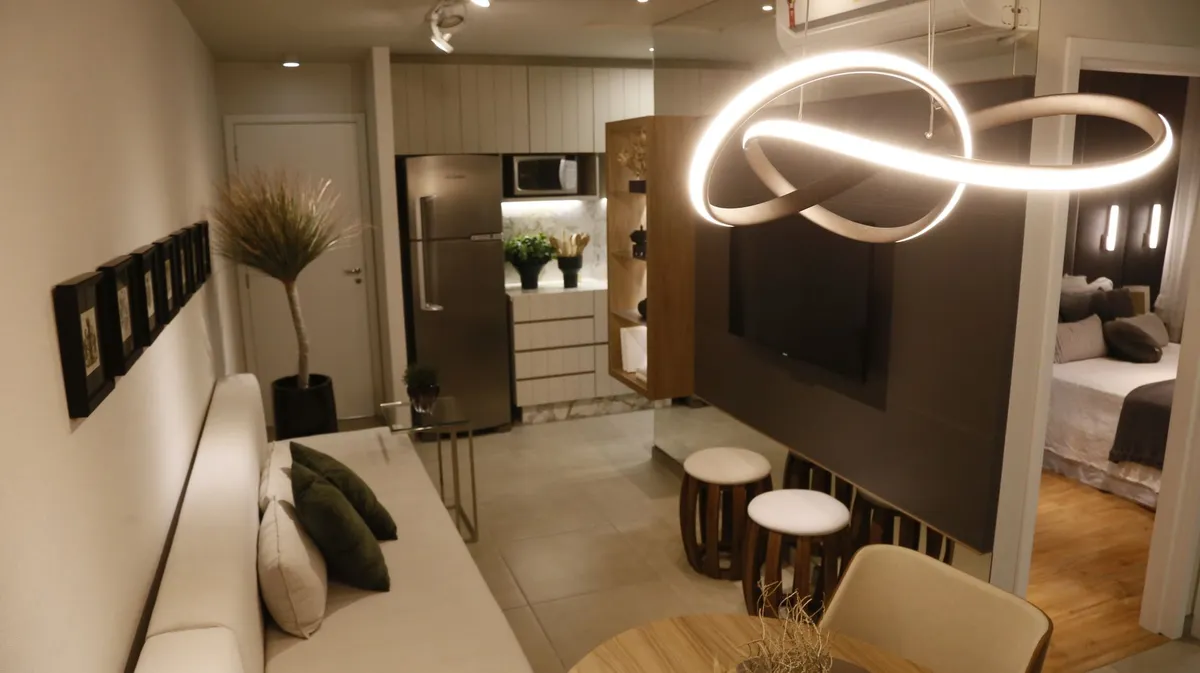
The AI Visualization Advantage
Here's where small apartment design has fundamentally changed. Every strategy above — paint shade, mirror placement, sofa scale, a wall bed, a zoned layout — used to be a gamble you only resolved after spending money and hauling furniture upstairs. Now you can test all of it on your space first.
Upload a photo of your actual apartment and an AI render shows that exact room repainted, refurnished, and restyled — using your real windows, light, and proportions, not a showroom shot. Compare a warm off-white against a cool gray, swap an oversized sofa for an apartment-scale one to see the floor it frees up, or audition Scandinavian versus Japandi side by side.
Try it free → Upload one photo and see your small space transformed in minutes, then browse real before-and-after transformation examples.
Design Styles That Work Best in Small Spaces
Some styles are built for tight footprints because their core principles — restraint, light palettes, and functional furniture — are exactly what small rooms need.
- Scandinavian: light woods, white and soft neutrals, and airy simplicity maximize reflected light and visual calm.
- Modern minimalist: clean lines and "only what earns its place" keep clutter out and sightlines open.
- Japandi: Japanese craft meets Scandinavian function — low-profile furniture, natural materials, and intentional negative space that feels serene rather than sparse.
Test two or three styles on your space before committing — see how each interacts with your specific light and layout in a bedroom or living area, then choose the one that actually makes your apartment feel bigger, not the one that looked good on a mood board.
Frequently Asked Questions
Q: Does light paint really make a room look bigger? Yes — light walls reflect more daylight and reduce contrast, so the room reads as airier. But the bigger gains come from technique: matching trim to walls and keeping the ceiling one shade lighter erases the visual boundaries that make a small room feel boxed in.
Q: Can I use dark colors in a small apartment? You can. A single dark accent wall (solid, window-free, seen as you enter) adds depth. The mistake is wrapping an entire small room in dark color with light trim, which highlights every edge and closes the space in. Keep it to one wall or a fully intentional cocoon — never half-measures.
Q: What's the single highest-ROI change? Decluttering, then right-sizing your largest piece — usually the sofa. Swapping an oversized sofa for an apartment-scale one with exposed legs instantly returns floor space and sightlines, often transforming the room for little or no cost.
Q: How much should I budget to redo a studio? A full furniture refresh — apartment-scale sofa, a wall or storage bed, a console-to-dining table, and vertical storage — generally runs $2,000–$6,000 in 2026. Individual pieces like a storage ottoman ($150–$400) or a Murphy bed system ($1,800–$4,500) let you upgrade in stages.
Q: Will AI renders match my actual apartment? They're built to. You upload a photo of your real room, so the render reflects your windows, light, and proportions rather than a generic template. Start a project and compare layouts and styles on your own space before you spend a dollar.