
Bathroom Renovation Visualization with AI
Visualize your bathroom renovation before starting construction. AI shows you spa-inspired, modern, and luxury bathroom designs in your actual space.
RoomRenovation.AI Team
Updated March 1, 2026
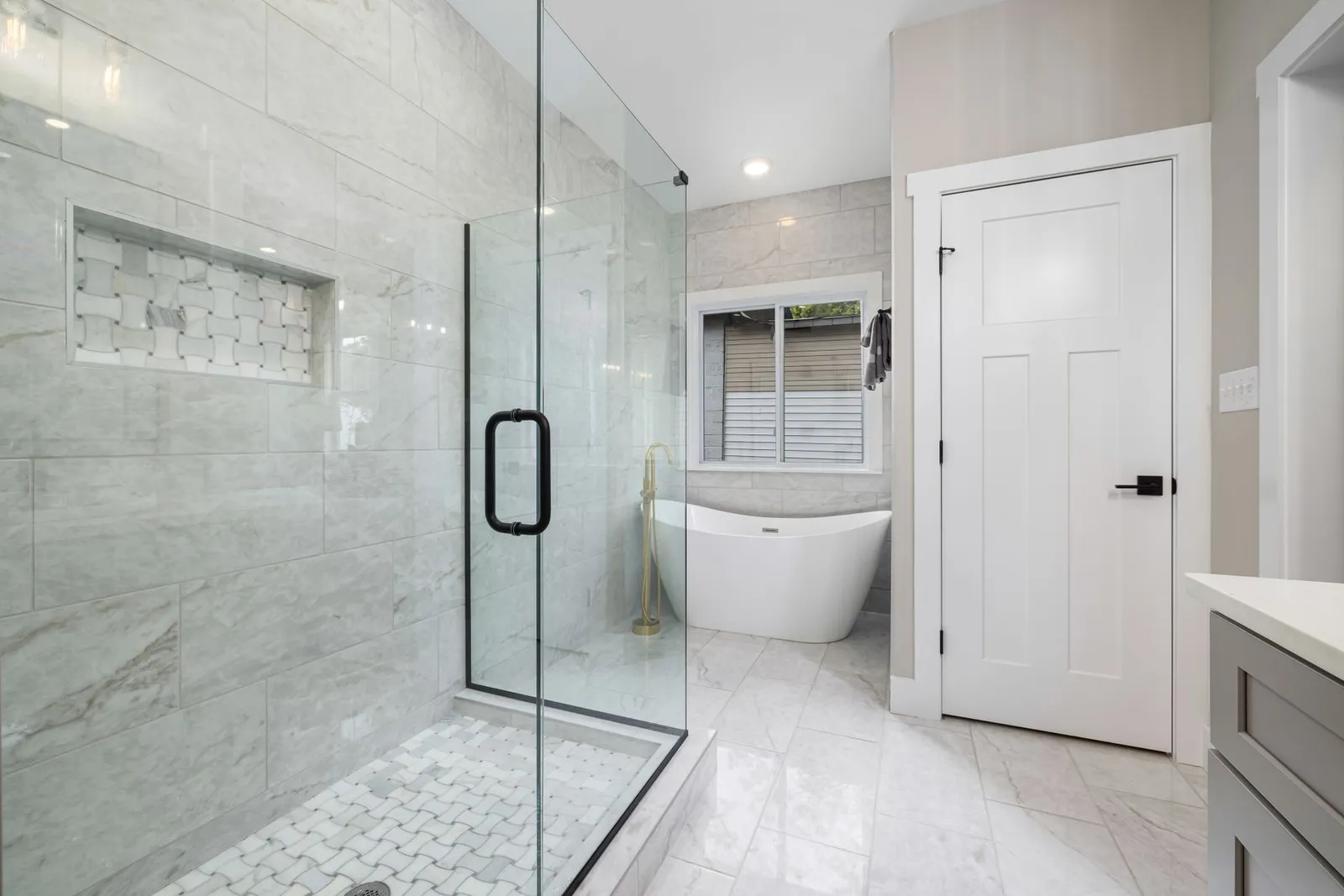
Bathroom renovations rank among the most expensive and disruptive projects a homeowner undertakes — and also among the most rewarding when they go right. The problem is that traditional planning relies on imagination: you flip through tile samples, stare at a small paint chip, and try to mentally assemble a cohesive space while standing in the middle of the existing one you desperately want to change. AI bathroom visualization breaks that cycle entirely, letting you see photorealistic renders of your actual bathroom in any style — spa-inspired, sleek modern, warm transitional — before a single tile is pulled.
Why Bathroom Renovations Fail (and How Visualization Prevents It)
The most common and expensive bathroom renovation mistakes share a root cause: decisions made without seeing the complete picture. A homeowner selects a bold floor tile they love in isolation, only to realize it overwhelms the small space. A vanity that looks right in a showroom feels too heavy against the existing window placement. The shower enclosure style conflicts with the floor plan in ways that only become apparent after the framing is up.
AI visualization addresses each of these failure modes directly. You upload your bathroom photo, select a style direction, and see a render that shows the tiles, vanity, fixtures, and lighting working together as a complete composition. That complete picture is information you simply cannot get from samples and mood boards alone.
The Most Popular Bathroom Redesign Directions in 2026
Spa-Inspired Sanctuaries
The spa bathroom trend continues to strengthen in 2026, driven by a collective desire to make daily self-care feel genuinely restorative rather than perfunctory. Key elements include large-format stone or stone-look tiles in warm neutrals (greige, warm white, soft taupe), freestanding soaking tubs as focal points, frameless glass shower enclosures that expand the sense of space, and warm-toned brushed fixtures in unlacquered brass or matte bronze.
Lighting is critical in spa bathrooms: layered sources including ceiling recessed lights, backlit mirrors, and wall sconces flanking the vanity replicate the flattering, multi-directional light of a luxury hotel without clinical brightness. Heated floors, now available in electric mat form starting around $300 for a standard bathroom, complete the sensory experience.
A convincing spa renovation in a full bathroom (5×8 feet) typically costs $8,000–$18,000 depending on tile choice and fixture quality. Primary baths with soaking tubs run $15,000–$40,000+ for full luxury treatments.
Modern Minimalist Bathrooms
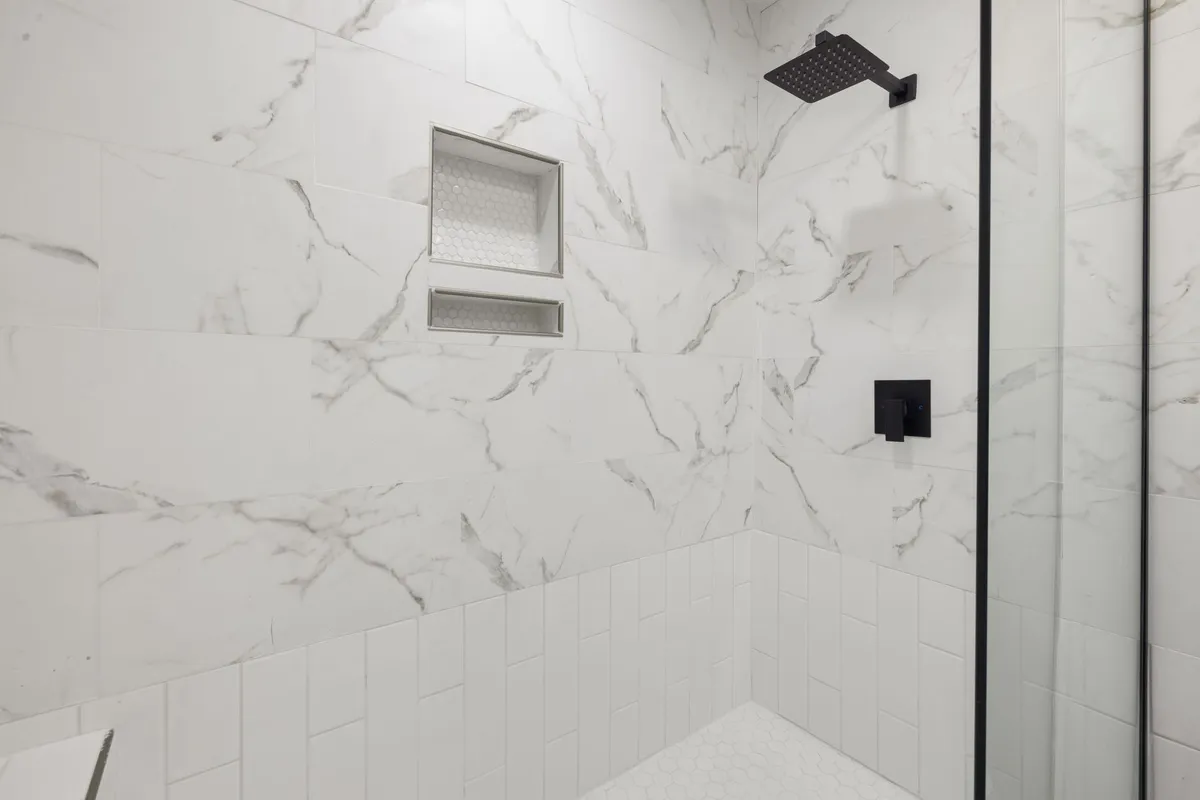
Clean geometry, matte surfaces, and the rigorous elimination of visual noise characterize modern minimalist bathrooms. Wall-hung vanities in matte white or concrete finish keep the floor plane clear, making even a compact bathroom feel larger. Concealed cistern toilets eliminate the tank bulk. Recessed niches in the shower provide storage without shelving clutter. The palette is restrained: white, warm gray, or a single contrasting dark tone like slate or charcoal.
Modern minimalist renovations are actually among the more cost-efficient directions because they avoid decorative ornamentation: fewer grout lines with large-format tiles, less hardware, simpler profiles. A well-executed minimalist bathroom renovation for a standard 5×8 room often comes in at $6,000–$14,000.
Warm Transitional with Natural Materials
Not everyone wants the austerity of strict minimalism or the commitment of maximalist pattern. The warm transitional direction combines classic proportions — shaker-style vanity doors, subway tile with a relaxed grid — with natural materials: teak bath mats, linen towels, a rattan mirror frame. The palette runs through warm whites, soft sage greens, and earthy terracottas.
This style photographs beautifully, ages gracefully, and appeals to broad buyer pools if resale is a consideration. Most components are readily available at accessible price points.
Bold and Dramatic Bathrooms
Dark-painted or tiled bathrooms — deep navy, forest green, charcoal, even black — create a cocooning intimacy that works particularly well in windowless powder rooms and primary baths where privacy is already ensured by design. Dramatic pattern plays also belong here: maximalist floral or geometric tile on a single wall or floor, creating a statement moment in an otherwise neutral room.
Bold directions benefit most from AI visualization because the risk of committing to something you end up disliking is highest here. Seeing a deep navy bathroom render in your actual space before painting is far more informative than a paint chip.
How AI Visualization Works for Bathroom Planning
The workflow is straightforward: photograph your existing bathroom with the best available natural light (open any frosted window coverings, turn off artificial light to avoid color casts). Upload the image to RoomRenovation.AI. Select a style preset or describe the direction you want. Receive a photorealistic render in under a minute.
You can then iterate: test the same layout with three different tile colors, see whether a vessel sink or undermount vanity configuration suits your counter space better, compare brushed nickel versus matte black hardware across the full room. Each iteration costs a few dollars — a fraction of what even a sample board from a tile showroom costs in time and hassle.
The renders show not just aesthetic direction but spatial relationships: how much the wall tile pattern will compete with the floor tile, whether the vanity scale is appropriate for the room, how natural light will interact with reflective versus matte surfaces at different times of day.
What to Prioritize in a Bathroom Renovation
Tile Selection: Where Most of Your Budget and Attention Should Go
Tile is the dominant material in most bathrooms — floor, shower walls, potentially feature walls — making it the single most impactful selection in the renovation. Invest time here. Consider:
- Large-format tiles (24×24 or 24×48): Fewer grout lines mean easier maintenance and a more expansive feel. Well-suited to modern and spa directions.
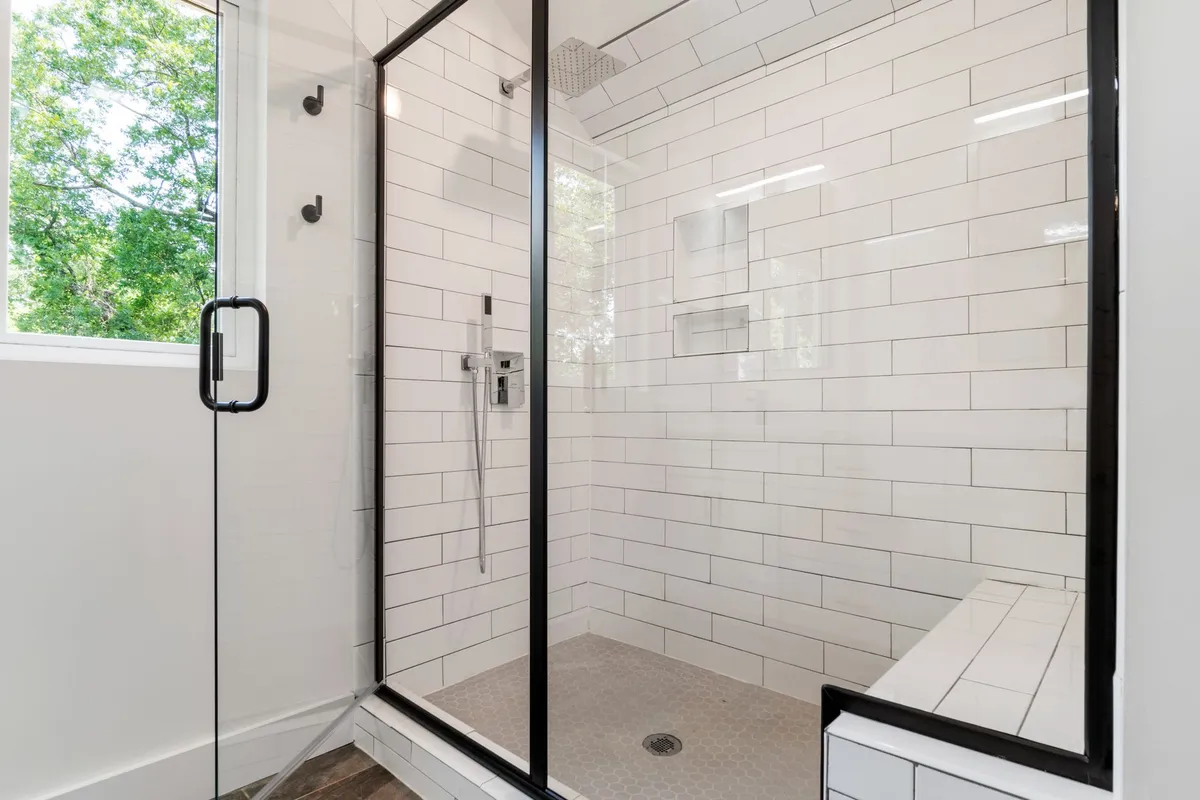
- Subway and brick patterns: Timeless, available at every price point, and forgiving in small spaces. The variation is in the finish (glossy vs. matte) and the grout color.
- Natural stone: Marble, travertine, and slate create genuine luxury but require sealing and somewhat more care. Porcelain stone-look options deliver comparable aesthetics at lower cost and maintenance burden.
- Encaustic cement tile: Adds pattern and character to floors; combine with plain walls to avoid visual overload.
The Vanity as Anchor
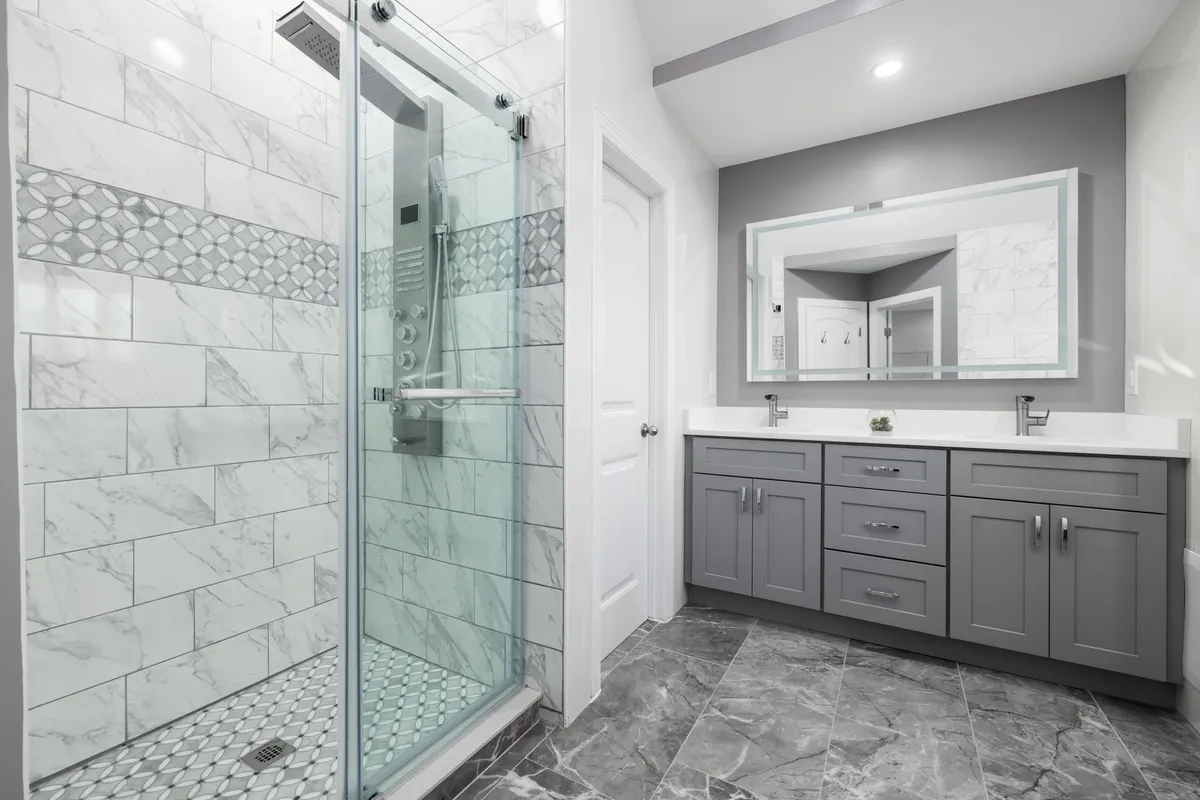
In most bathrooms the vanity occupies 30–50% of the visual field. Its style sets the tone for everything else. A shaker-door vanity reads traditional or transitional; flat-front cabinetry reads modern; a furniture-style freestanding vanity reads eclectic or vintage. Its height, finish, and hardware all ripple through the room's visual language.
Standard vanity widths run 24–72 inches. Double vanities require at least 60 inches to feel functional. Budget $400–$1,500 for quality stock vanities; semi-custom runs $1,500–$4,000; fully custom cabinetry $4,000+.
Fixtures and Hardware: the Jewelry of the Bathroom
Matte black, brushed gold, and polished chrome remain the dominant finish directions in 2026, with unlacquered brass holding strong in traditional and transitional bathrooms for its warm, aged character. The key rule: choose one finish and apply it consistently to every piece of hardware — faucet, towel bars, toilet paper holder, shower head, door hardware. Mix-and-match can work but requires deliberate intent rather than accumulated decisions.
Realistic Cost Ranges for 2026
- Cosmetic refresh (new vanity, paint, fixtures, accessories): $1,500–$4,000
- Mid-range full renovation (new tile, vanity, toilet, shower enclosure): $8,000–$18,000
- High-end primary bath (custom tile work, freestanding tub, heated floors, custom vanity): $20,000–$45,000
- Powder room (half bath, typically $1,500–$6,000 depending on finishes)
Labor accounts for 40–60% of most bathroom renovation budgets. In tight-timeline markets, material lead times on specialty tile (4–12 weeks) can significantly affect project scheduling — factor this into your planning.
Explore the bathroom renovation cost guide for detailed breakdowns by project scope, and see the examples gallery for before-and-after bathroom transformations to calibrate your expectations.
Using AI Visualization in Contractor Conversations
One underappreciated benefit of generating bathroom renders before meeting with a contractor is the improvement in communication. Instead of describing "something spa-like with warm tones," you arrive with a render that shows exactly the tile pattern, vanity style, fixture finish, and overall color temperature you are targeting. Contractors can give more accurate quotes because they understand the scope clearly; misunderstandings about finish quality are eliminated before they become budget disputes mid-project.
Start your bathroom visualization at RoomRenovation.AI's free render tool — upload your current bathroom and generate your first concept in minutes. When you find a direction worth pursuing, pricing for unlimited renders is a small fraction of what a single tile sample board typically costs.
FAQ
Can AI visualization accurately show small bathroom layouts? Yes. The AI analyzes your uploaded photo and applies redesign changes at the correct scale. Spatial relationships between fixtures, walls, and openings are preserved in the render.
What photo should I take for the best AI render? Shoot during daylight with any window blinds open. Include as much of the room as possible — ideally the full floor-to-ceiling view from the doorway. Avoid flash photography, which creates harsh shadows that distort the AI's spatial analysis.
How accurate are the cost estimates for bathroom renovations? Ranges in guides like this reflect real contractor data but vary significantly by region. Labor costs in major metros (NYC, SF, LA) run 40–60% higher than national averages. Always get three contractor quotes for your specific project.
Is it worth renovating a bathroom before selling a home? A mid-range bathroom renovation typically returns 60–70% of its cost at resale according to industry remodeling surveys — less than the renovation cost itself. The stronger case for pre-sale renovation is in homes with bathrooms significantly below neighborhood comparables, where the impact on time-to-sale and list price may justify the investment.
What style is most likely to hold its appeal over time? Neutral palettes with quality materials age the best. Crisp white or warm greige tile with timeless fixture shapes will look appropriate in 15 years; trendy deep-colored fixtures or highly specific pattern choices are harder to predict.