
Basement Renovation Cost Guide (2026): Finishing, Apartments & ROI
What a basement renovation costs in 2026 by square foot and project type, from basic finishing to legal basement apartments, plus ROI and budgeting tips.
RoomRenovation.AI Team
Updated June 10, 2026
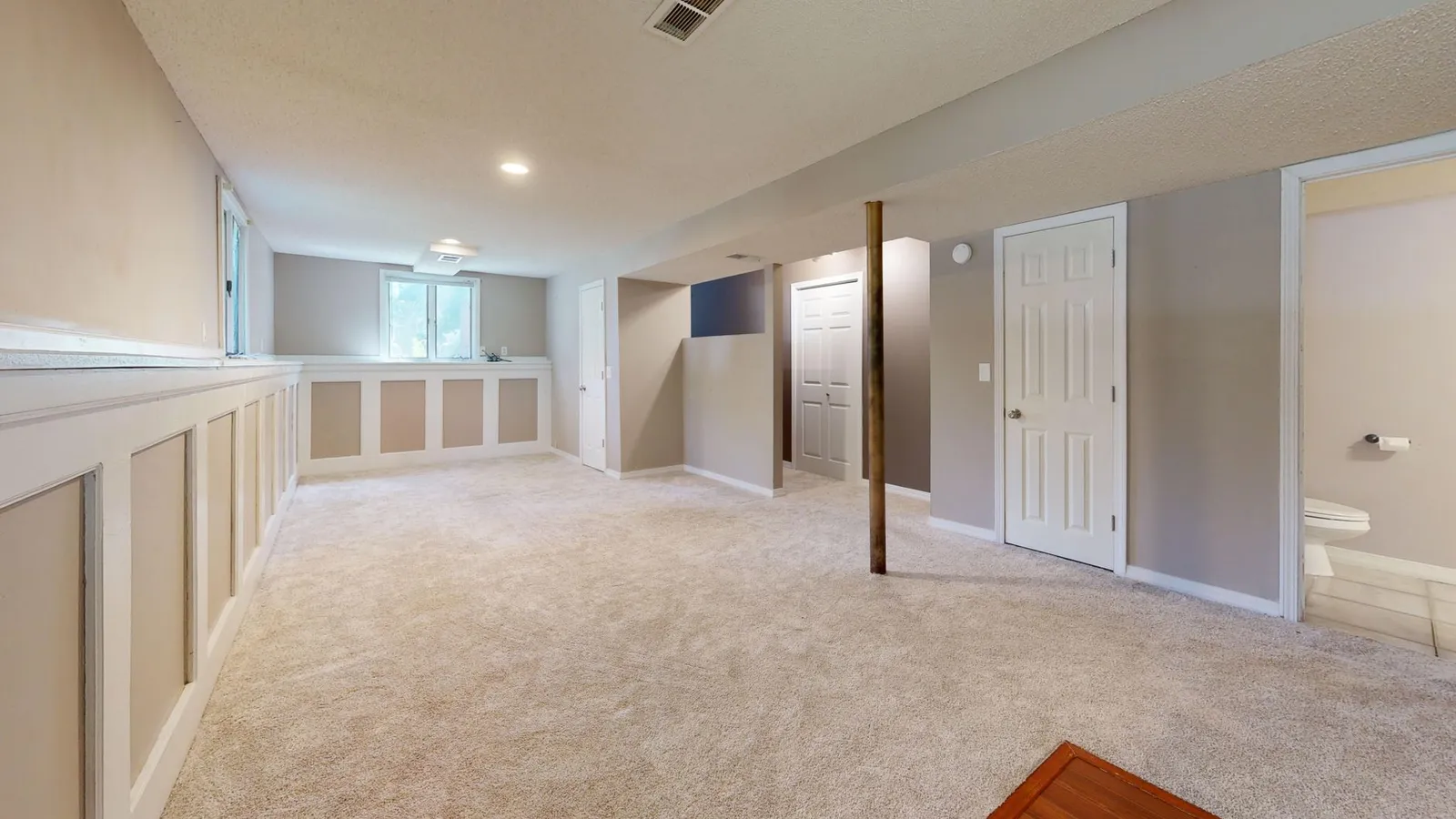
Basement renovation cost in 2026 ranges from $15,000 for a straightforward finishing project to $100,000+ for a full custom conversion with a wet bar, home theater, bathroom, and egress windows — and understanding what drives those numbers is the key to planning a project that delivers real value. This guide covers the honest cost breakdown for every scope level, what's driving prices in the current market, and how to budget realistically for your specific situation.
Why Basement Renovations Offer Strong ROI
Finishing an unfinished basement is one of the most cost-effective ways to add livable square footage to a home. The structural shell — foundation walls, floor slab, and ceiling joists — already exists. You're adding the systems (electrical, HVAC, plumbing) and finishes that make the space habitable, but avoiding the cost of new construction. According to Remodeling Magazine's 2025 Cost vs. Value report, basement finishing recovers approximately 70–80% of its cost at resale — making it one of the highest-ROI renovation categories available.
The functional benefit is immediate: a finished 800-square-foot basement can become a legal bedroom suite, home office, media room, in-law apartment, or combination of functions that genuinely changes how you use your home.
Basement Renovation Cost Tiers
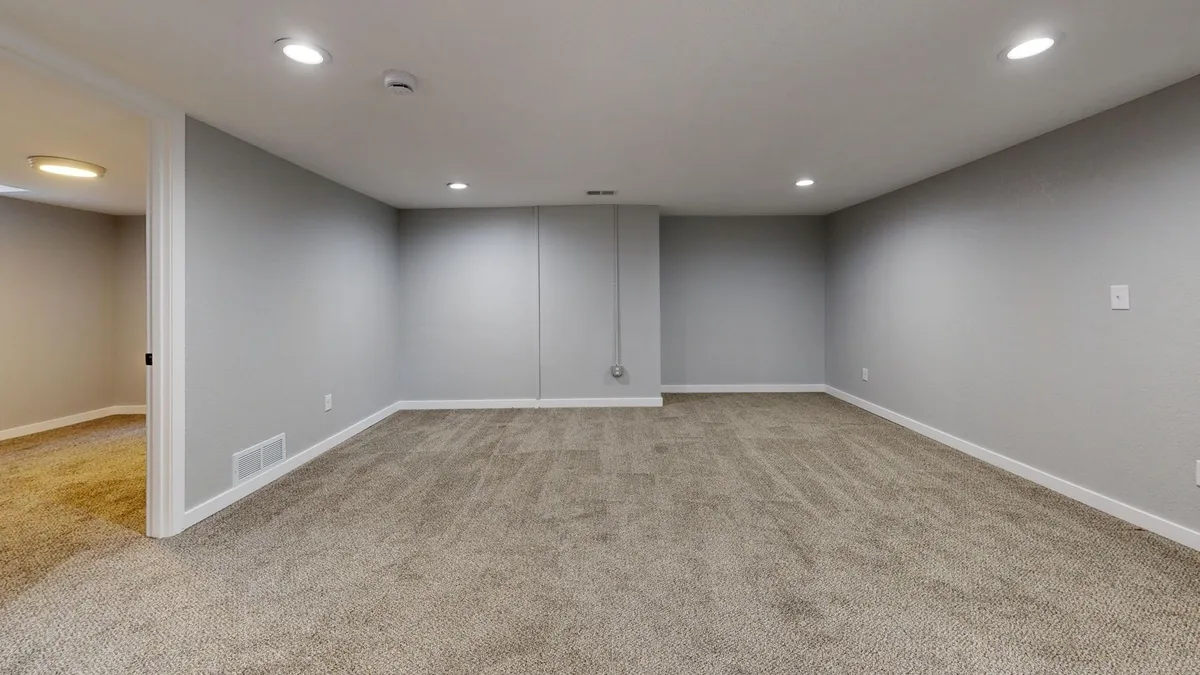
Basic Finishing: $15,000–$30,000
A basic basement finishing project covers the essentials needed to make an unfinished basement into a usable, comfortable space:
- Framing interior walls with 2×4 or 2×6 lumber
- Moisture barrier and insulation (rigid foam or spray foam on foundation walls)
- Electrical: circuits, recessed lighting, outlets per code
- HVAC extension from the main system
- Drywall, tape, and paint
- Basic flooring (LVP or carpet)
- Drop ceiling or drywall ceiling
At this level, the result is a functional open space — suitable for a playroom, exercise area, or casual media room — without a bathroom, wet bar, or significant built-ins. Material quality is standard; finishes are functional rather than luxurious.
Mid-Range Basement Renovation: $30,000–$60,000
Mid-range projects add the features that make a basement genuinely livable and multi-functional:
- A half-bath or full bathroom with shower ($8,000–$15,000 alone)
- A dedicated bedroom or sleeping area (may require egress window if not present)
- Home office with proper lighting, dedicated circuit, and built-in work surface
- Wet bar with sink, mini-refrigerator, and counter space
- LVP or engineered hardwood flooring throughout
- Higher-end lighting, dimmer controls, recessed fixtures
- Built-in shelving or entertainment center
This tier produces a space that functions as a genuine secondary living area — suitable for hosting adult children, in-law accommodations, or an Airbnb rental in jurisdictions that allow it.
High-End Basement Renovation: $60,000–$120,000+
Premium basement renovations create specialized, high-function spaces:
- Dedicated home theater with acoustic treatment, projector or large-format TV, custom seating ($15,000–$40,000 for the theater alone)
- Full kitchen with full-size appliances and custom cabinetry
- Full bathroom with spa features (steam shower, heated floor, soaking tub)
- Wine cellar or climate-controlled wine room ($8,000–$25,000)
- Professional home gym with rubber flooring, mirrored walls, ventilation system
- Legal accessory dwelling unit (ADU) with separate entrance — requires permitting and may require structural modifications
The Biggest Cost Variables
Bathroom Addition
Adding a bathroom to a basement is the most cost-impactful single decision in basement renovation planning. The plumbing challenge: basement drains are typically below the level of the main sewer line, which means waste water must be pumped up. This requires either breaking the concrete floor to run gravity-drain plumbing (a significant additional cost) or installing a sewage ejector pump system ($2,000–$5,000 for the pump; $3,000–$8,000 total with plumbing).
A standard basement half-bath runs $6,000–$10,000. A full bathroom with shower: $10,000–$20,000. A spa-level bathroom: $20,000–$45,000. These ranges include the ejector pump where required.
Egress Windows
Building codes in most jurisdictions require egress windows in basement bedrooms — windows large enough for emergency exit. If your basement doesn't have them, adding egress windows costs $2,500–$6,000 per window including excavation, concrete cutting, window unit, and the window well. This is a non-negotiable cost if you want a legal basement bedroom.
Moisture and Waterproofing
The most expensive basement renovations gone wrong are those that skipped proper waterproofing. Water intrusion can destroy a finished basement. Before finishing any basement, assess for moisture issues honestly:
- Interior waterproofing (drainage channel, sump pump): $5,000–$15,000
- Exterior waterproofing (excavation, membrane, drainage board): $15,000–$40,000 — only necessary for significant water intrusion issues
- Crack injection (for minor foundation cracks): $400–$1,000 per crack
Skipping waterproofing to save money is the most common and most expensive basement renovation mistake. A $3,000 waterproofing issue discovered after $40,000 in finishing costs results in gutting the entire renovation.
Ceiling Height
Standard finishing assumes 8-foot minimum ceiling height. Basements with 7-foot ceilings can still be finished comfortably; below 7 feet becomes challenging and may not be worth finishing as living space. Lowering the floor (underpinning) to gain ceiling height is extremely expensive ($25,000–$60,000) and rarely makes financial sense for residential renovations.
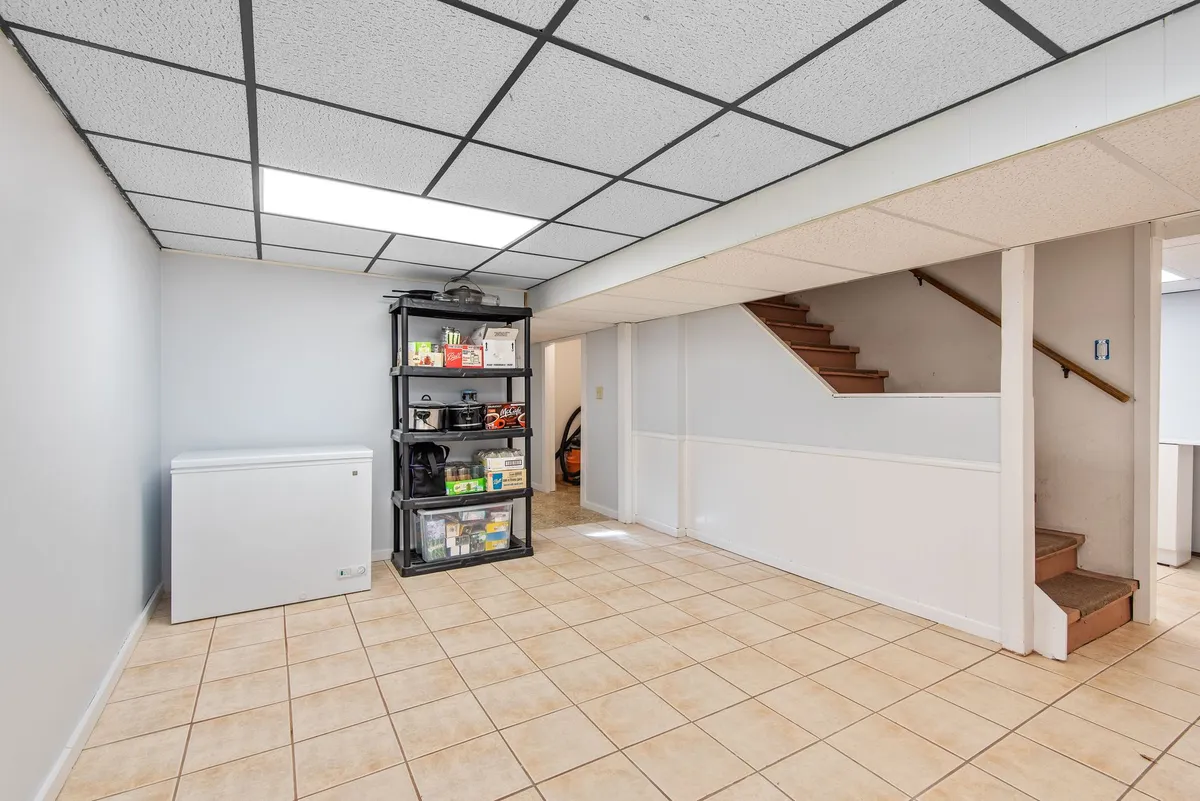
If your basement has ductwork, pipes, or beams that reduce ceiling height below acceptable levels, a drop ceiling (acoustic tile grid) can navigate around obstructions while maintaining access for maintenance. Drop ceilings have improved significantly in appearance and now include options that look nearly as finished as drywall from a few feet away.
Flooring for Basements: What Works
Basement flooring is a category where material selection matters more than in above-grade rooms, because concrete subfloors are cold, can be damp, and flex less than wood-framed floors. Best options:
- Luxury vinyl plank (LVP): Waterproof, comfortable underfoot, wide style range, can be installed directly over concrete. Best value for most basements. $3–$8/sq ft installed.
- Engineered hardwood: Warmer appearance than LVP but not waterproof; requires careful moisture management and is not appropriate for basements with any moisture history. $7–$15/sq ft installed.
- Carpet: Warmest and most comfortable, best acoustic performance. Not appropriate where any moisture risk exists. $3–$8/sq ft installed.
- Polished concrete: Industrial aesthetic, extremely durable, low-maintenance. Cold and acoustically reflective; works best in gym or utility areas. $3–$10/sq ft for grinding and sealing.
- Rubber tile or mat: Ideal for gym spaces. $1.50–$5/sq ft for quality commercial-grade rubber.
What Permits Are Required?
Almost all basement finishing projects require permits. In most jurisdictions, permits are required for framing, electrical, plumbing, and HVAC work. Permits ensure the work meets safety codes — particularly important in basements where egress, electrical, and air quality standards exist specifically for occupant safety.
Pulling permits adds $300–$1,500 to project cost and requires inspection scheduling, but also protects you: unpermitted work discovered during a home sale can cause significant legal and financial problems, and insurance claims for problems in unpermitted spaces can be denied.
Design the Space Before You Budget
One of the best pre-renovation steps for basement projects is visualizing the design before committing to scope. The choices you make about function (bedroom vs. theater vs. playroom) dramatically affect cost. Upload your unfinished basement photo to RoomRenovation.ai and explore finished basement styles to understand what direction appeals before pricing contractor bids. See design examples across different basement styles, or use the pricing page to explore render options starting at just a few dollars.
Full Cost Summary Table
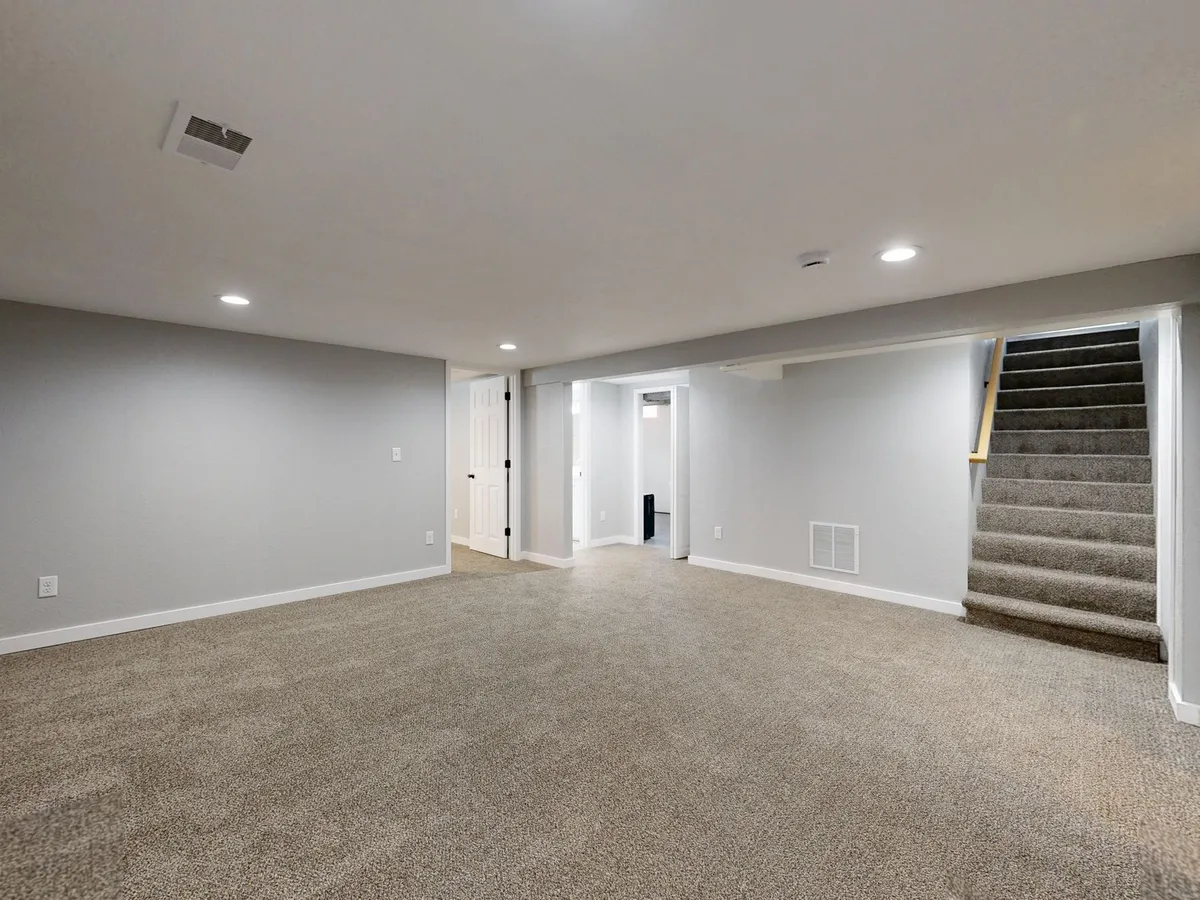
- Basic open-plan finishing (no bath): $15,000–$30,000
- Mid-range with half-bath and bedroom: $35,000–$60,000
- Full renovation with full bath, wet bar, built-ins: $55,000–$90,000
- Home theater installation: $15,000–$45,000 (as standalone scope)
- Wine cellar: $8,000–$30,000 (as standalone scope)
- ADU/in-law suite conversion: $70,000–$120,000+
- Waterproofing (if needed): $5,000–$15,000 interior; $20,000–$40,000 exterior
- Egress window installation: $2,500–$6,000 per window
For comparison costs on above-grade projects, see our guides for bathroom renovations, kitchen renovations, and living room renovations.
FAQ
How long does a basement renovation take? A basic finishing project runs 4–8 weeks for a mid-size basement. Adding a bathroom extends the timeline by 1–2 weeks. A full custom renovation with theater, wet bar, and high-end finishes can take 10–16 weeks. Add 4–8 weeks for design, permitting, and contractor scheduling before construction begins.
Does finishing a basement add to my home's appraised value? Yes, but at a lower multiplier than above-grade square footage. Finished basement space is typically valued at 50–70% of above-grade square footage value per square foot in most markets. The total value added depends significantly on the function, finish quality, and whether it includes features like a legal bedroom or bathroom.
Can I live in the house during a basement renovation? Generally yes. Basement renovations rarely require vacating the house unless the scope involves significant HVAC work that affects main living areas. Expect construction noise, dust (especially during framing and drywall), and restricted access to the basement for the project duration.
What's the most common basement renovation mistake? Skipping waterproofing assessment before finishing. The second most common: not planning for future access to HVAC, plumbing cleanouts, and electrical panels. Build in access panels and maintenance paths before closing up walls — the cost is minimal and the future convenience is significant.
Do I need an egress window if I'm not adding a bedroom? Not legally required for non-sleeping areas in most jurisdictions, but adding egress windows provides emergency exit capability that improves safety regardless. If there's any chance the space will be used for sleeping, install egress windows during the renovation rather than retrofitting later.