
Art Deco Interior Design: The Complete 2026 Guide
A complete guide to Art Deco interior design in 2026: history, colors, materials, furniture, and how to bring glamorous Art Deco style into a modern home.
RoomRenovation.AI Team
Updated June 6, 2026
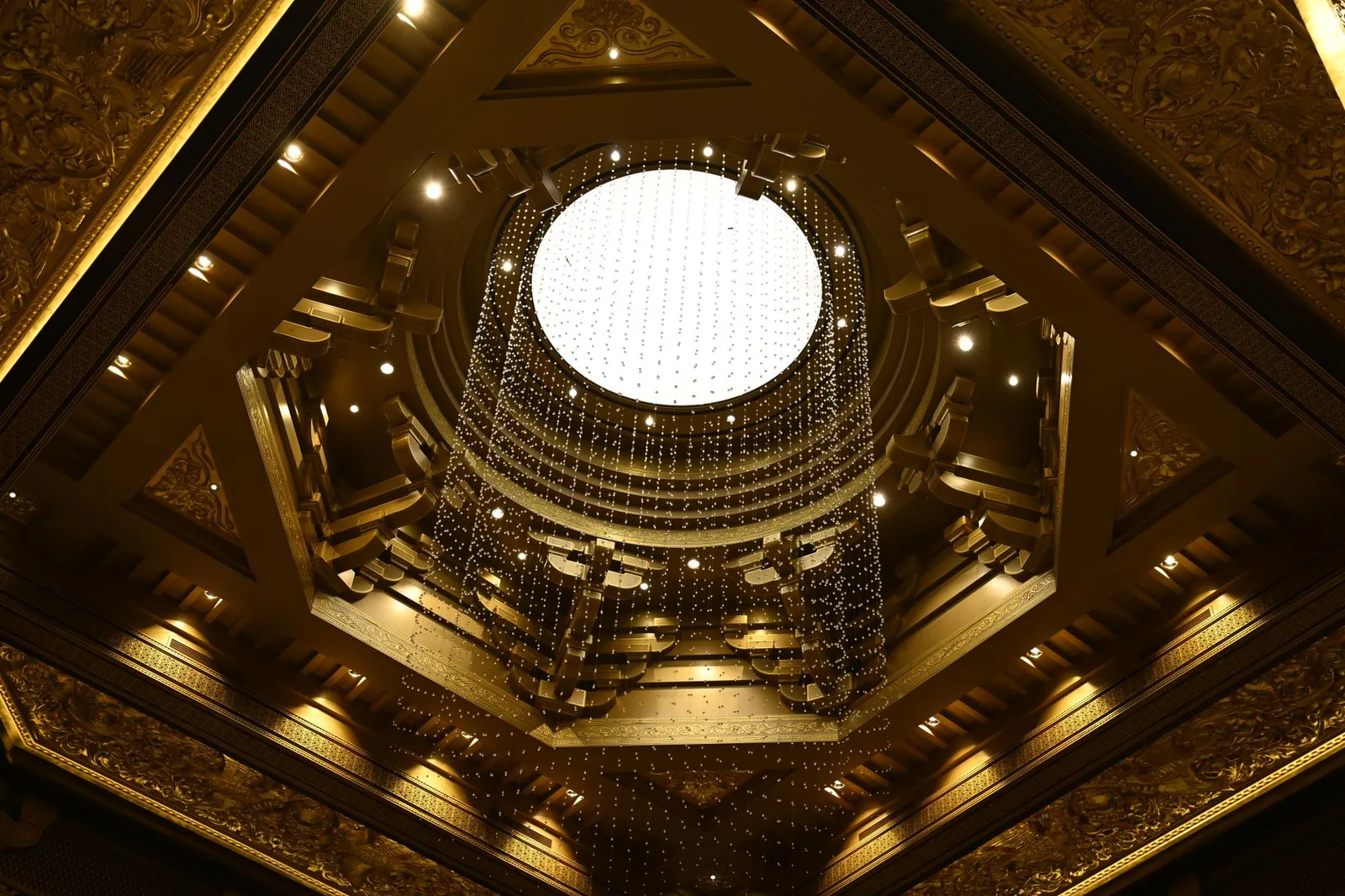
Art Deco interior design is one of the most immediately recognizable and thoroughly glamorous aesthetics in the history of decorative arts. Born in the Paris of the 1920s and reaching its full expression through the 1930s, it combined the bold geometry of cubism with the luxury material sensibility of the Belle Époque and the optimism of the machine age — producing an aesthetic that has never fully left residential and hospitality interiors and is experiencing a conspicuous revival in 2026.
What distinguishes Art Deco from adjacent styles is its specific combination of commitments: to opulence without clutter, to geometry without coldness, to modernity without minimalism. Understanding these commitments is the key to applying it successfully rather than assembling a collection of deco-adjacent objects that fail to cohere.
The Historical Context That Explains the Aesthetic
Art Deco emerged in 1920s Paris from the wreckage of World War I and the exhaustion of Art Nouveau's sinuous, organic complexity. Where Art Nouveau had looked to nature for its forms — vines, flowers, female figures with flowing hair — Art Deco looked to the machine, to ancient Egypt (newly electrified by the discovery of Tutankhamun's tomb in 1922), to the streamlined forms of Art Deco travel (ocean liners, locomotive design), and to the geometric abstractions of cubist painting.
The style was explicitly glamorous, explicitly modern, and explicitly wealthy. It celebrated new materials — lacquered panels, chrome, bakelite, mirrored glass — alongside ancient luxuries like ivory, tortoiseshell, and rare exotic timbers. It applied to everything from radio housings to cinema interiors to private apartments, and its most celebrated expressions — the Chrysler Building's lobby, the Savoy Hotel's interiors, the great ocean liner Normandie's dining saloon — remain among the most extraordinary designed environments of the 20th century.
The Visual Vocabulary of Art Deco
Geometry: The Primary Language
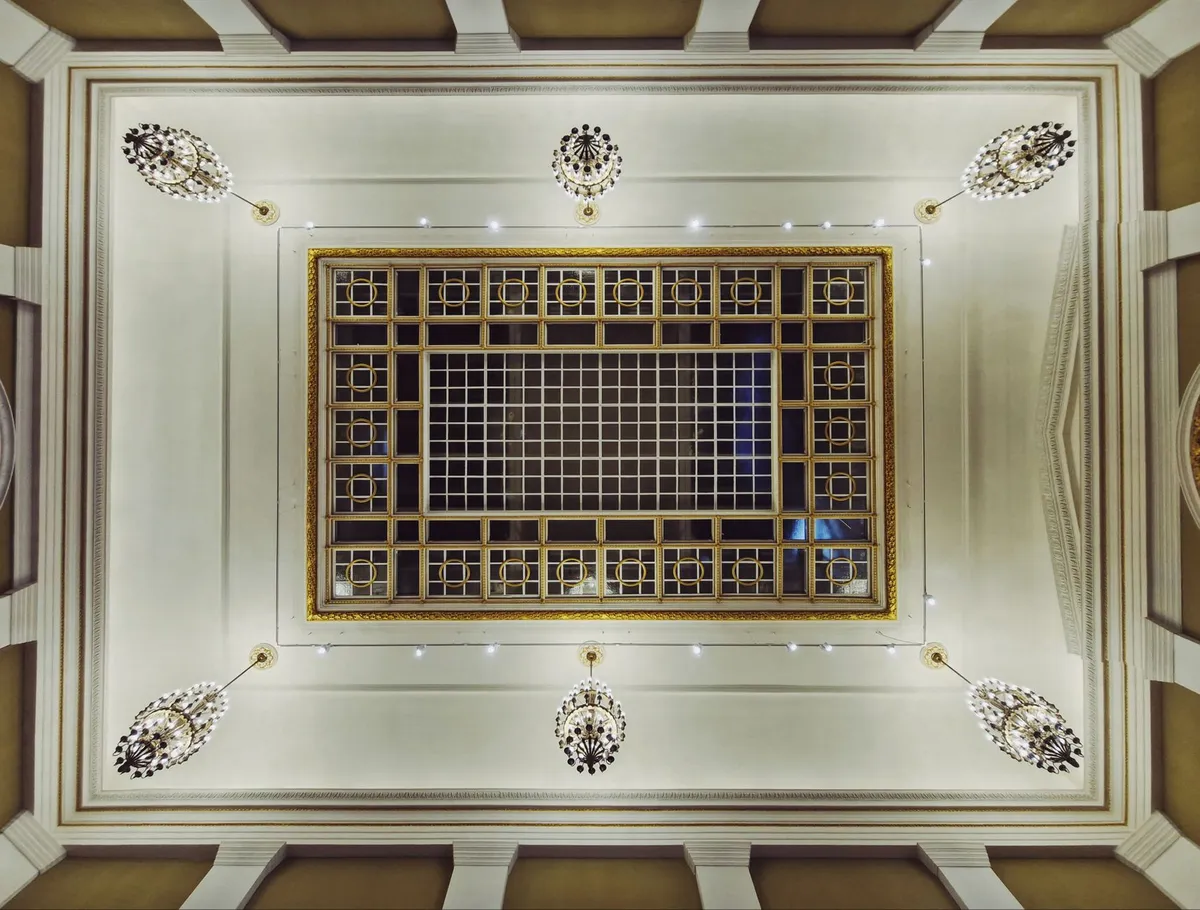
Art Deco geometry has a specific character: it is bold, angular, and often sunburst or fan-shaped, but it is never cold or purely rational in the way that Bauhaus geometry is. Chevron patterns, stepped pyramidal forms, sunburst radiations, stylized floral geometrics, and interlocking angular shapes all belong to the vocabulary. The geometry appears in everything from carpet patterns to fireplace surrounds to marquetry woodwork to metalwork grilles.
The key application principle: geometry in Art Deco is always decorative as well as formal. Unlike Modernism, where geometric form follows function, Art Deco geometry adds visual complexity for the pleasure of it. Ornament is not a crime in this aesthetic — it is the point.
The Deco Color Palette
Art Deco interiors have not one palette but several, deployed to different atmospheric ends:
- The classic glamour palette: Black lacquer, gold or gilded surfaces, ivory or cream upholstery, with accents in deep jewel tones — sapphire, emerald, ruby. This is the Hollywood Regency interpretation of Deco and is the most immediately recognizable.
- The warm sunlit palette: Warm creams and taupes with amber, golden yellow, and terracotta accents — more residential and approachable than the full glamour palette but equally period-authentic.
- The cool architectural palette: Platinum, silver, pale gray, and ice blue with chrome and mirrored glass — associated more with the streamlined Deco of the mid-1930s and the machine age aesthetic.
- The exotic palette: Deep turquoise, burnt sienna, and metallic gold drawn from the Egyptian Revival influence — most suitable in concentrated application rather than as a room's overall color scheme.
Materials and Surfaces
Art Deco is among the most material-rich design traditions in residential history. The signature surfaces:
- Lacquer: High-gloss lacquered panels, often in black but also in deep green, navy, and vermillion — applied to furniture, wall panels, and cabinetry. Lacquer's depth and reflectivity are essential to the Deco aesthetic.
- Exotic veneers: Zebrawood, macassar ebony, burl walnut, amboyna, and other richly figured timbers used as veneers in bold geometrical arrangements — book-matched panels, chevron patterns, contrasting inlays.
- Mirrored glass: Mirror is ubiquitous in Art Deco interiors — as wall panels, furniture surfaces, table tops, and architectural accents. Antiqued mirror (slightly silvered and distressed) adds period authenticity and warmth that bright modern mirror lacks.
- Metals: Gilded, chrome, and hammered metals in fixtures, furniture hardware, grilles, and decorative details. Brass and gold leaf for warmth; chrome and nickel for the cooler, more streamlined direction.
- Stone: Marble — particularly white Carrara, green Serpentine, and black Belgian marble — and travertine appeared extensively in Art Deco architectural interiors.
- Upholstery: Velvet in deep jewel tones, silk in the warmer palette, and patent leather or faux leather for the streamlined direction.
Room-by-Room Art Deco Application
Living Room
The Art Deco living room is organized around drama and symmetry. A bold geometric rug anchors the seating zone; a low sofa in velvet or silk-effect fabric — deep teal, emerald, or cognac — faces a pair of lacquered side chairs or club chairs. A mirrored or lacquered cocktail cabinet provides storage and serves as a sculptural centerpiece. Wall sconces in gilded or chrome fixtures flank a fireplace or art display. A statement chandelier in tiered crystal or geometric chrome completes the ceiling.
The walls in a residential Deco living room are typically not busy — a strong pale base (cream, warm white, or pale taupe) allows the furniture and objects to carry the design. Wall panels or a feature wall in a bold color or mirrored finish adds depth without crowding.
Bedroom
The Art Deco bedroom makes its statement through the bed: an upholstered headboard in a geometric or fan-shaped profile, either in a single fabric or with decorative tufting, is the period-defining piece. Flanking the bed with matching lacquered or mirrored bedside tables, topped with low table lamps in a period-appropriate shade (amber, bronze, or geometric glass), creates the symmetrical arrangement that Deco bedrooms demand.
Vanity tables — a significant furniture form in the 1930s — make for authentic and functionally satisfying Deco bedroom additions. A mirrored triptych vanity with a coordinating upholstered stool is both practical and deeply period-correct.
Bathroom
Art Deco bathrooms are among the most distinctive and achievable in design history. The key elements: black and white geometric tile (hexagon, octagon, or chevron patterns on the floor), chrome fixtures with a streamlined profile, a pedestal sink with column legs, and either black or deep-toned wall tile as a wainscoting. Period-authentic accessories — chrome towel rings, mirrored cabinet with geometric frame, wall-mounted soap dispensers in black or chrome — complete the setting.
Modern renovation interpretations translate well: an existing bathroom can acquire Deco character through a new floor tile pattern, replacing old fixtures with chrome streamlined alternatives, adding black hex tile as a shower feature, and swapping basic mirrors for Art Deco-profiled replacements.
Art Deco in 2026: The Contemporary Interpretation
The current revival of Art Deco in residential interiors is not historically literalist. Contemporary Deco interpretation takes the geometry, materiality, and palette commitments but applies them more selectively and often in combination with cleaner architectural backdrops than the period used:
- A single Art Deco-inspired piece — a fan-back chair, a lacquered sideboard, a sunburst mirror — functions as a focused accent within an otherwise neutral contemporary room
- The geometry is often more restrained: chevron woodwork or a geometric tile pattern rather than the comprehensive surface decoration of original Deco rooms
- The materials are often interpreted rather than replicated: high-quality metallic paint rather than gold leaf, luxury vinyl tile with a geometric pattern rather than original encaustic tile, performance velvet in period colors rather than period silk
- The color palette runs toward the more approachable warm palette (cream, amber, sage, gold) rather than the full black-and-chrome glamour version
Budget Realities for an Art Deco Interior in 2026
Art Deco styling spans an enormous budget range because the materials it celebrates — lacquer, exotic veneer, genuine gold leaf, marble — are some of the most expensive in residential design. However, the visual character of the style is achievable at significantly lower cost through strategic selection:
- Focused investment: One significant piece — a genuine lacquered cabinet, an authentic 1930s sunburst mirror, a quality velvet sofa — does more for an Art Deco room than a collection of cheap decorative items
- Paint as lacquer alternative: High-gloss paint on furniture and cabinetry ($40–$80 in materials for a cabinet) approximates lacquer's visual quality at a fraction of the cost
- Metallic accents affordably: Spray-paint and metallic wax finishes can transform inexpensive frames and accessories into convincingly Deco objects for very little outlay
- Vintage and secondhand: Original Art Deco pieces still appear regularly at estate sales, auction houses, and antique dealers at accessible prices; a 1930s cocktail cabinet or vanity table from a regional sale often costs $200–$800
A starting Art Deco accent approach (one signature piece, geometric accessories, metallic lighting) is achievable for $500–$2,000. A fully committed Deco living room ranges from $8,000 for a skillful budget interpretation to $40,000+ for a historically rigorous execution with genuine period materials.
Visualize Your Art Deco Transformation
Art Deco is one of the design styles most dramatically improved by AI visualization before purchase, because the combination of dark lacquer, mirror, metallic accents, and bold geometry either comes together brilliantly or overwhelms a specific room's proportions and light conditions in ways that are hard to predict from mood boards. Use RoomRenovation.AI's free render tool to test a Deco direction in your actual room, then iterate. See the gallery for other high-drama transformations. For a counterpoint direction, the modern minimalist preset shows how the same room reads without ornament. Renders start at a few dollars — far less than a single Deco-inspired throw pillow from a premium retailer.
FAQ
Is Art Deco the same as Art Nouveau? No — they are distinct movements with opposing aesthetics. Art Nouveau (roughly 1890–1910) draws on organic, natural, flowing forms. Art Deco (roughly 1920–1940) is geometric, angular, and machine-influenced. The two are sequential rather than parallel and are easily distinguished once the difference is understood.
Can Art Deco work in a small apartment? Yes, concentrated in specific rooms. A small powder room in full Art Deco treatment — geometric floor tile, chrome fixtures, mirrored cabinet, bold wallpaper — is actually ideal: the scale is contained, the commitment is concentrated, and the drama reads well without overwhelming a space you occupy for hours at a time.
What lighting is most authentic to Art Deco? Geometric metal pendants, tiered crystal chandeliers, frosted glass globe sconces, and torchiere floor lamps are all authentic to the period. The bulb choice should be warm (2700K or below) to complement the amber and gold tones of the palette. Modern Edison-style bulbs in period-appropriate fixtures achieve the right ambience.
How do I avoid the "theatrical" or "gaudy" trap in Art Deco design? Restraint in quantity combined with quality in individual pieces. One sunburst mirror, not seven. One lacquered surface, not all of them. A single jewel-toned chair in a room of neutrals rather than jewel tones everywhere. Art Deco's glamour comes from confidence and specificity, not from accumulation.
What wall treatment works best in an Art Deco interior? Geometric wallpaper in period patterns (available from specialist Art Deco wallpaper suppliers as well as major manufacturers' archive collections) is the most committed approach. A painted bold-toned feature wall behind the sofa or bed achieves a simpler Deco reference. Lacquered panel inserts framed by painted moldings replicate the period wall treatment at a cost-accessible level.