
12 Small Living Room Layout Ideas That Make It Look Bigger
Smart small living room layout ideas for 2026: furniture arrangement, color, lighting, and AI visualization tricks that make a tight space feel open and bigger.
RoomRenovation.AI Team
Updated June 8, 2026
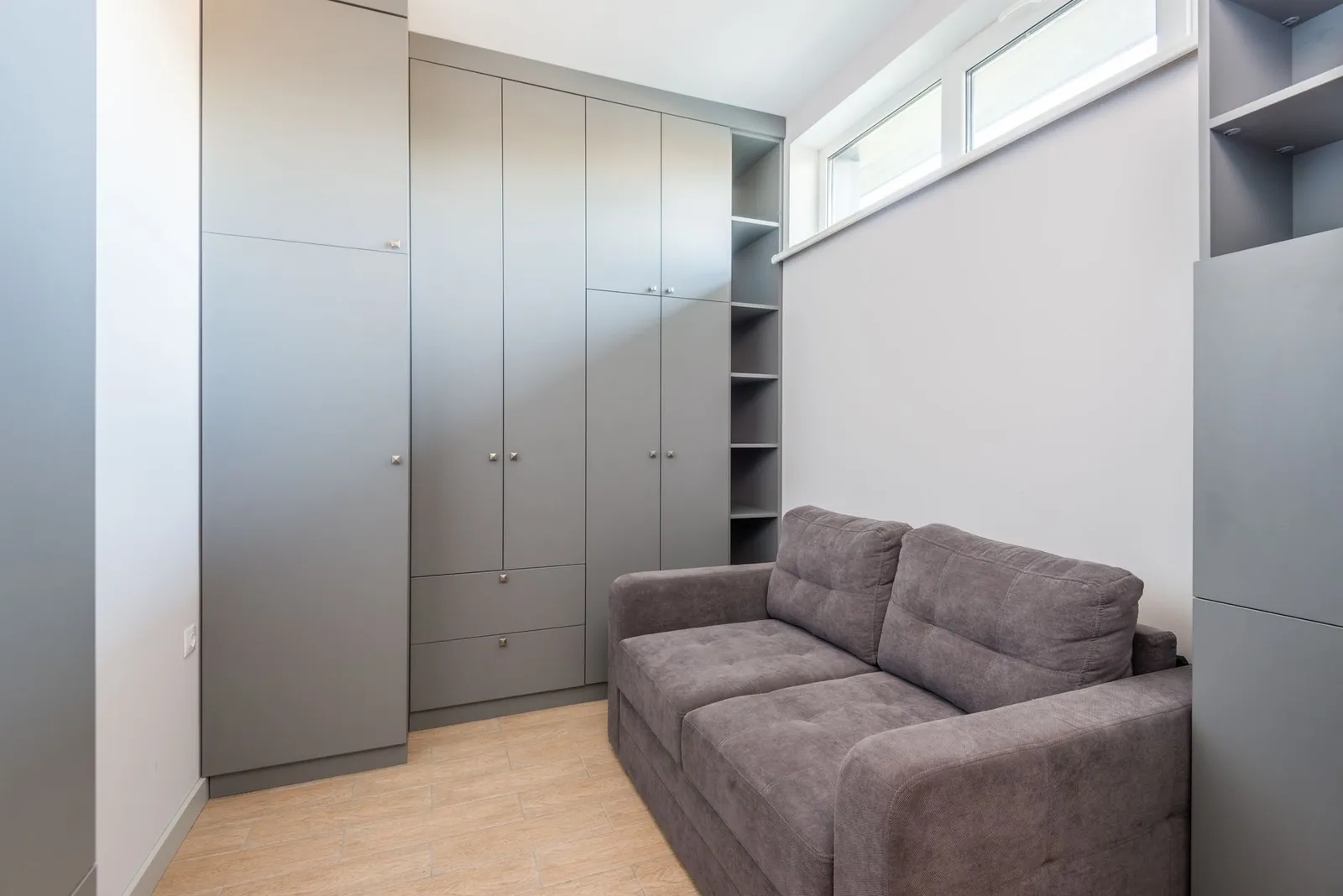
A small living room layout doesn't have to feel like a compromise. The rooms that read as generously proportioned — even when they're not — share a common trait: every furniture placement decision was made deliberately, with spatial flow and sight lines in mind rather than habit. Whether you're working with a 10×12 apartment living room or a 14×16 open-plan corner, these twelve layout strategies address the specific challenges of compact spaces: too-small furniture that makes rooms look smaller, oversized pieces that block movement, and the visual clutter that comes from having no clear organizing principle. See the full living room design guide for complementary advice on materials and palette choices that extend the same principles.
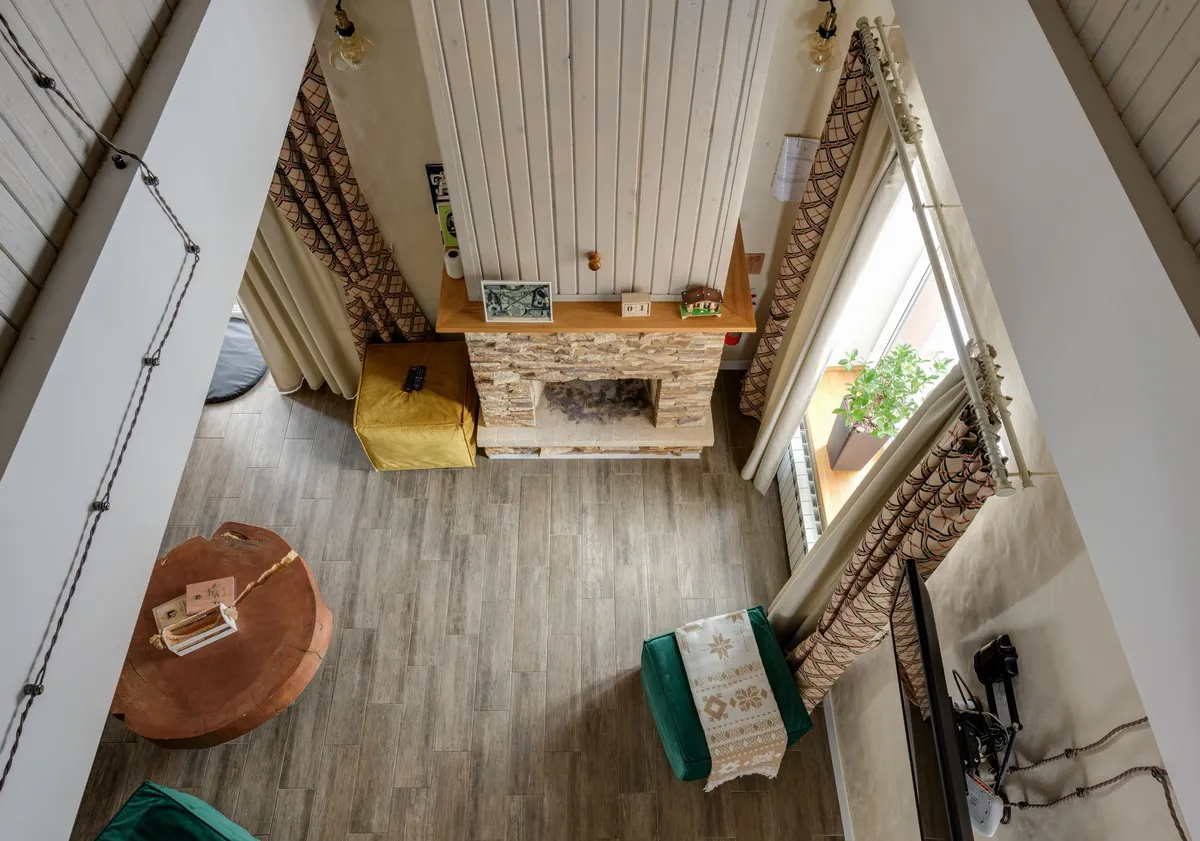
Foundational Rules Before the Layouts
Before any of the twelve strategies below, two rules consistently determine whether a small living room succeeds or struggles:
- Float furniture away from walls. Pushing every piece against a wall is the most common small-room instinct and one of the worst decisions. A sofa pulled 6–12 inches from the wall creates a sense of depth and makes the room feel designed rather than defensive.
- Scale furniture to the room, not the furniture catalog. A 96-inch sofa in a 10×12 room isn't cozy — it's a wall. A well-scaled 80-inch sofa leaves enough breathing room to make the other pieces work.
12 Small Living Room Layout Strategies
1. The Angled Sofa
Place your sofa at a 45-degree angle to the room's dominant wall rather than parallel to it. This breaks the boxy predictability of a rectangular floor plan and creates diagonal sight lines that read as longer than the room's actual dimensions. Works especially well in square rooms that feel like dead ends. Pair with a small round coffee table to maintain clear pathways.
2. Single-Sofa, Two Chairs
Replace a sofa-plus-loveseat combination with one scaled sofa and two armchairs. The chairs take up less floor space, can be turned to face different conversation partners, and don't create the closed-off feeling of two parallel sofas facing each other across a tiny coffee table. Position one chair slightly angled toward the sofa rather than dead-opposite to keep the arrangement fluid.
3. The Conversation Zone Within a Larger Space
In open-plan apartments where the living area bleeds into a kitchen or dining space, define the living zone with a rug that terminates clearly at the sofa's back edge. This creates a room-within-a-room without walls, making both areas feel purposeful rather than ambiguous. The rug is doing the work that a wall normally would.
4. Wall-Mounted Entertainment Unit
A floor-standing media console occupies visual weight even when it's low-profile. Mounting the television and a floating media shelf frees the floor plane, visually extending it and allowing furniture to be arranged closer to the media wall without physical obstruction. This strategy alone can recover 18–24 inches of perceived depth in a room.
5. Daybed or Sleeper Sofa as Primary Seating
In genuinely small spaces — under 130 square feet of living area — a well-chosen daybed functions as both sofa and occasional guest bed without the footprint of a separate sofa plus a folding situation. Modern daybeds with clean-lined frames and a few substantial throw pillows read as intentional seating, not improvised sleeping.
6. Nested Tables Instead of a Coffee Table
A single coffee table in a small room can block movement paths and make the space feel congested. Nested tables (two or three tables that stack under each other when not in use) provide the same surface function with dramatically more flexibility — pull one out when someone needs a drink surface, push them all back under the sofa when floor space matters. Budget options start around $150; well-made versions with metal or solid wood run $350–$800.
7. Vertical Storage Up the Walls
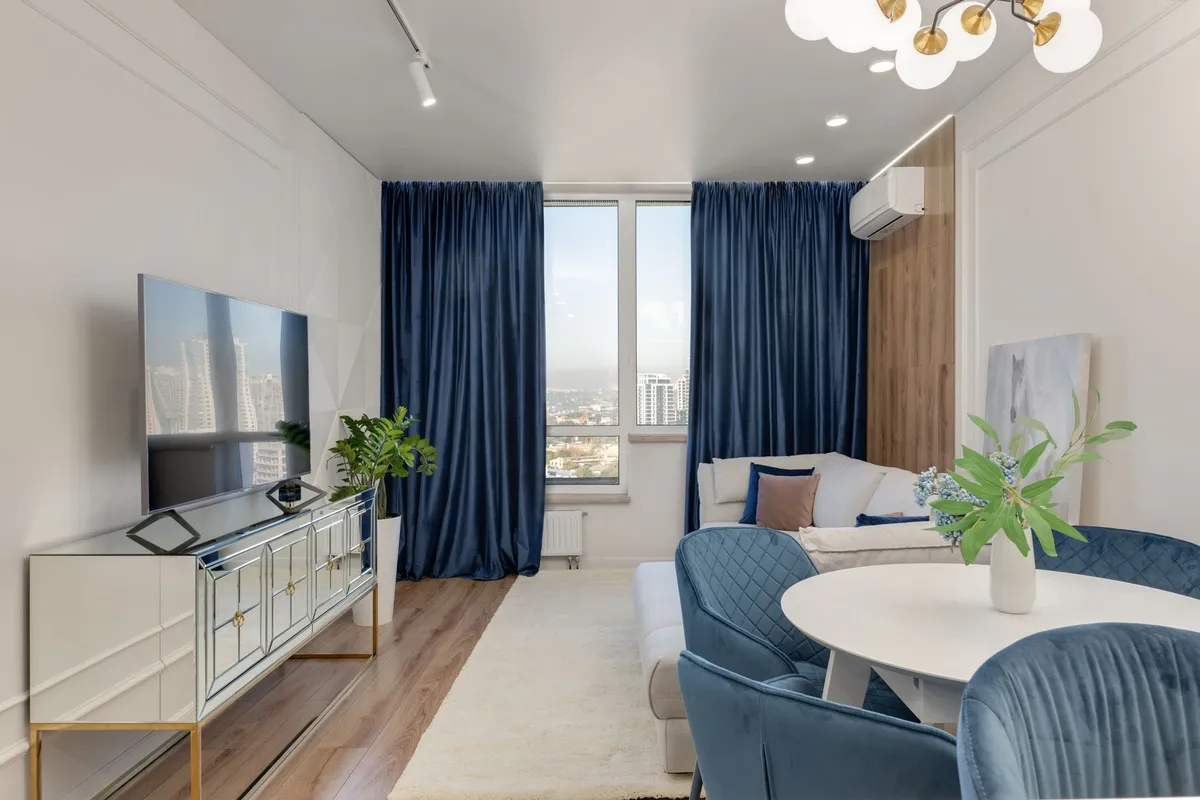
When floor space is scarce, the answer is almost always to go vertical. A floor-to-ceiling bookcase on one wall creates enormous visual impact, provides genuine storage, and draws the eye upward — making ceilings feel higher. This only works if the shelves are curated rather than packed: approximately 60% books and objects, 40% negative space.
8. One Statement Piece, Everything Else Quiet
Small rooms suffer most from competing visual demands. Resolve this by choosing one piece — a sofa in a strong color or a distinctive armchair — as the room's anchor, and keeping everything else in the supporting cast: neutral upholstery, simple lines, restrained pattern. The eye settles rather than scanning frantically for somewhere to land.
9. Transparent Furniture for Visual Air
Acrylic or glass occasional tables, wire-frame chairs, and lucite side tables take up physical space without occupying visual space. In a room where every square foot is contested, a transparent coffee table or a ghost chair beside the sofa creates breathing room even when the actual footprint hasn't changed. This is not a trick — it's honest optical physics.
10. Mirror Placement as a Spatial Tool
A large mirror (at least 24×36 inches, ideally larger) positioned to reflect the room's primary light source — a window, a lamp, the most open wall — effectively doubles the perceived depth of the space. Position it opposite or adjacent to the primary window, not opposite the sofa where it will only reflect the backs of seated guests' heads. Lean it rather than hang it for a more contemporary effect.
11. Dual-Purpose Furniture Throughout
In a small living room, every piece that serves only one function is a luxury you may not be able to afford spatially. An ottoman that opens for storage and doubles as a coffee table. A console behind the sofa that functions as a desk. A bench at the entry that stores throw blankets. The more functions any given piece handles, the less total furniture the room requires.
12. Purposeful Negative Space
The most counterintuitive strategy: leave some areas deliberately empty. A clear path from the entry to the window, an unoccupied corner that gives the room "room to breathe" — these empty zones are what make a small space feel calm rather than cluttered. The instinct is to fill every corner; resist it. Some of the most successful small living rooms are defined as much by what isn't in them as by what is.
Layout Mistakes That Make Small Rooms Feel Smaller
- Pushing all furniture against walls. Creates a perimeter of pieces with an awkward dead zone in the center.
- Undersized rugs. A rug that doesn't extend under the front legs of the sofa floats disconnected in the center of the room, chopping the space into fragments.
- Too many small decorative objects. Visual clutter reads as spatial clutter. Twenty small objects scattered on surfaces create more chaos than two large ones.
- Blocking natural light paths. A tall bookcase positioned to intercept window light trades natural illumination for storage, usually a bad deal in small rooms.
- Ignoring traffic flow. Any furniture arrangement that requires turning sideways to pass through the room will feel wrong every single day.
Seeing the Layout Before You Move Anything
The fastest way to evaluate a layout strategy before rearranging heavy furniture — or committing to a new sofa purchase — is to see it rendered in your actual space. RoomRenovation.AI's free room render tool lets you upload a photo of your living room and visualize different layouts, furniture configurations, and design approaches in seconds. Test three or four of the strategies above before moving anything; then move with confidence rather than guesswork. Explore completed examples of small living room transformations in the design examples gallery or start directly from your design dashboard.
Frequently Asked Questions
What is the best sofa size for a small living room? As a general rule, your sofa should not exceed 60–65% of the wall it faces or sits against. For rooms under 150 square feet, an 80-inch (6.5-foot) sofa is typically the maximum. In very small spaces (under 120 sq ft), consider a loveseat (56–64 inches) or a daybed configuration. Depth matters as much as width — a sofa deeper than 38 inches will feel oversized in a compact room regardless of width.
Should furniture float in a small room or go against the walls? Float it. Furniture pushed hard against walls makes a room feel like a waiting room — all perimeter, no center. Pulling a sofa even 6–8 inches from the wall creates implied depth and makes the arrangement feel designed. The exception is furniture that physically needs a wall (console tables, bookshelves) — anchor those, and float the seating pieces.
How do I make a small living room feel taller? Vertical lines and elevated focal points do most of the work. Floor-to-ceiling bookshelves or drapery panels hung near the ceiling (even if the window is shorter) draw the eye upward. Avoid horizontal banding — busy wallpaper patterns, low picture rails, or furniture arrangements that create a strong horizontal line across the room — which compresses perceived ceiling height.
What rug size works best in a small living room? Larger than you think. The front legs of every piece of seating should sit on the rug — or ideally, all four legs of every piece. A rug that's too small (with furniture floating off its edges) makes the room look smaller, not larger. In a 12×14 living room, a 8×10 rug is usually the minimum; a 9×12 is often better.