
Accent Wall Ideas, Cost & Inspiration for 2026
Accent wall ideas for every room, what an accent wall costs in 2026, and how to preview paint, wood, and tile accent walls with AI before you commit.
RoomRenovation.AI Team
Updated June 7, 2026
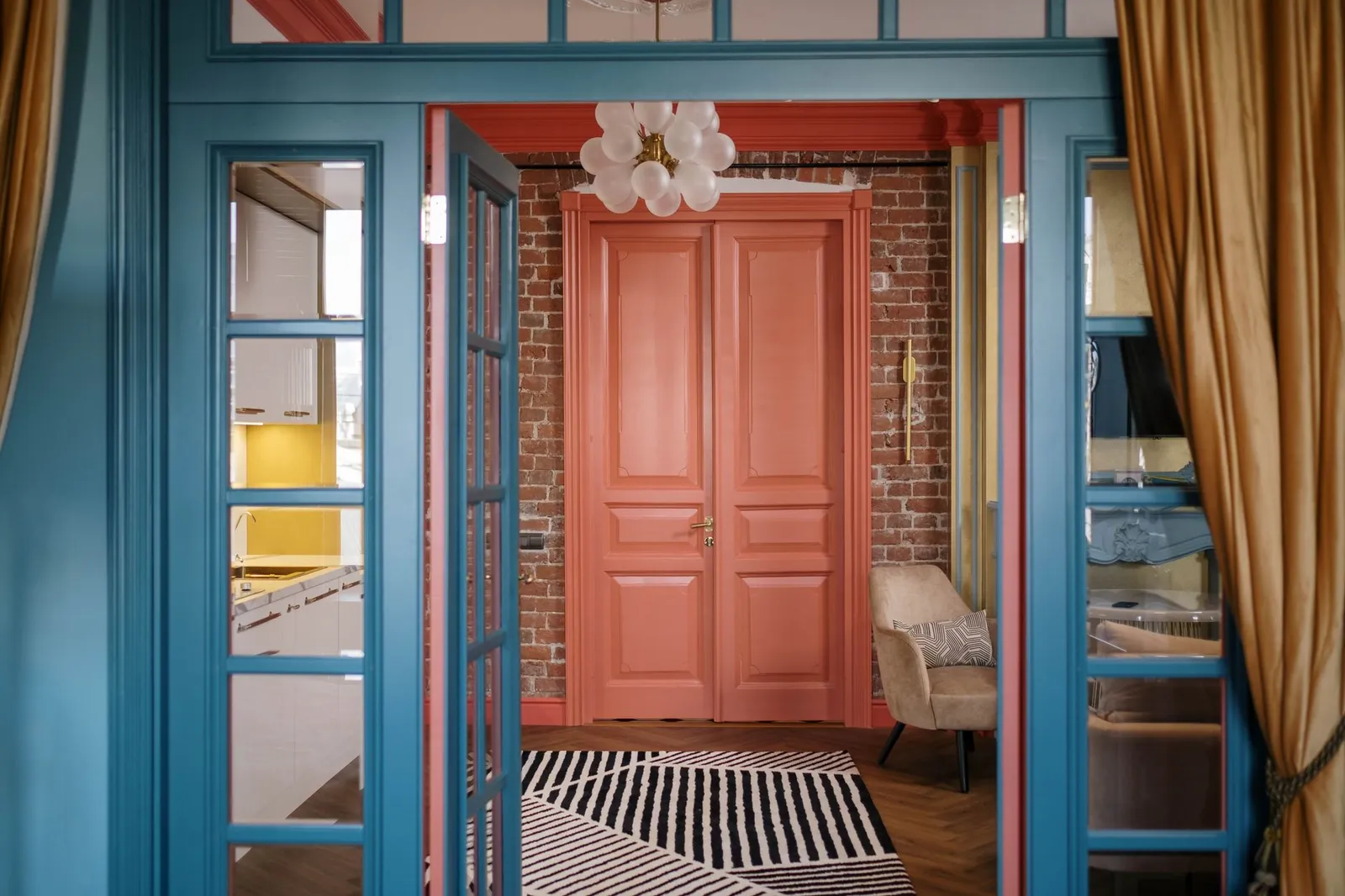
An accent wall is one of the most cost-effective design moves in a room renovation. Done well, a single treated wall can shift the entire character of a space — defining the focal point, adding depth, and providing the visual anchor that ties the room's palette together. Done poorly, it looks like an afterthought. The difference between the two usually comes down to choosing the right wall, the right treatment, and the right scale relationship with the rest of the room — not just picking a color you like and painting one wall.
What Makes a Good Accent Wall
Before choosing a treatment, identify the correct wall. The accent wall should be the natural focal point of the room — the wall you see immediately upon entering, the wall the dominant furniture faces, or the wall that contains the room's architectural highlight like a fireplace or window grouping. In a bedroom, it is almost always the headboard wall. In a living room, it is typically the wall facing the main seating area or the fireplace wall. In a dining room, it is the wall the table is positioned against.
Avoid selecting an accent wall arbitrarily or by default. Painting the wall with a window or the wall behind the door creates a visual conflict — you break up the natural light source or emphasize a transitional element rather than a focal one.
Paint Accent Walls: The Most Accessible Option
A single wall in a contrasting or deeper color is the lowest-cost, highest-flexibility accent wall approach. Paint costs $40–$80 per gallon for quality options, and a single bedroom or living room wall typically requires 1–2 gallons including primer. Total cost: $100–$250 in materials, plus $200–$400 in labor if hiring a painter.
Color Strategy for Paint Accent Walls
The strongest paint accent walls work with the room's existing palette rather than against it. If the room's base is warm white, the accent wall performs better in a saturated warm tone — terracotta, ochre, forest green, deep navy — than in a cool or neutral shade that competes without contrasting. The accent wall color should appear in at least one or two other elements in the room (a cushion, a rug accent, a piece of art) so it reads as intentional rather than isolated.
Deep, matte finishes (flat or eggshell) are the current professional preference for accent walls. They absorb light rather than reflecting it, which makes the color appear richer and reduces the "painted-on" look that semi-gloss finishes create on feature walls.
Wallpaper Accent Walls: Pattern and Texture
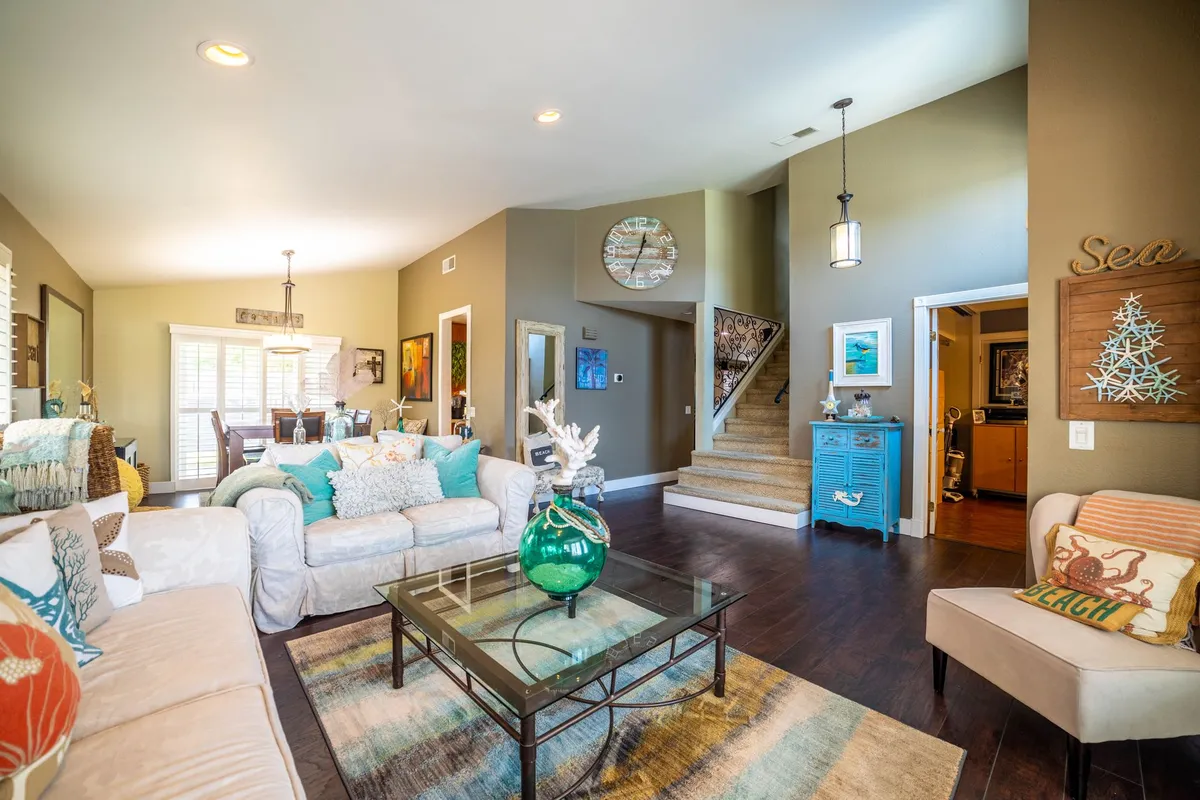
Wallpaper on a single accent wall delivers visual complexity and texture that paint cannot. A patterned wallpaper creates a focal point with genuine design depth — botanical prints, geometric patterns, abstract texture, architectural trompe l'oeil — without committing to pattern throughout the room.
Cost range for wallpaper accent walls:
- Non-woven wallpaper (DIY-friendly): $40–$120 per roll; a standard bedroom headboard wall (12x9 feet) requires 4–6 rolls depending on pattern repeat. Total materials: $160–$720.
- Grasscloth or natural fiber: $80–$200 per roll; requires professional installation. Total installed cost: $800–$2,500 for a single wall.
- Designer and hand-printed paper: $150–$400 per roll plus professional installation. Total: $1,500–$5,000 for a feature wall.
Removable peel-and-stick wallpaper ($30–$80 per roll) is a practical option for renters or commitment-averse homeowners. Quality has improved significantly — current leading brands like Chasing Paper and Tempaper are usable in real interior applications, though durability remains shorter than traditional wallpapers in high-humidity areas.
Wood Paneling and Shiplap Accent Walls
Dimensional wall treatments — shiplap, board and batten, vertical planks, and paneling — add tactile depth and architectural character that flat finishes cannot. These treatments have dominated the interior design conversation for several years and show no sign of declining because they photograph extremely well and translate the cost-per-impression equation favorably compared to more expensive renovations.
Cost ranges:
- Shiplap (MDF or poplar, painted): $3–$7 per square foot installed. A 12x9-foot feature wall: $320–$760 installed.
- Board and batten (vertical MDF): $4–$8 per square foot installed. Similar wall: $430–$860.
- Real wood planks (white oak, pine, cedar): $8–$20 per square foot installed. Premium finish for primary bedrooms and living areas where the material quality is appreciated up close.
- 3D wall panels (fluted, geometric, rippled MDF): $15–$35 per square foot installed. High visual impact, increasingly popular in primary bedroom and home office contexts.
Brick, Stone, and Masonry Accent Walls
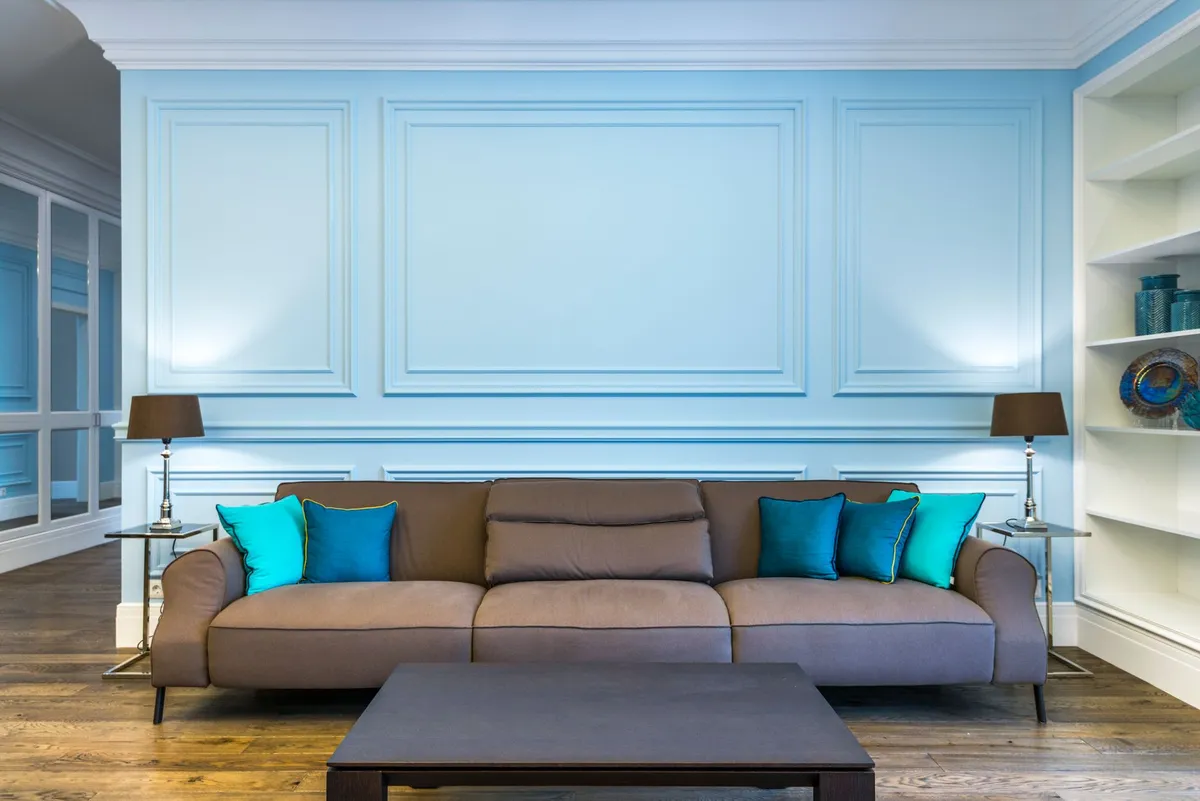
Exposed brick is most effective when it is actual brick that has been uncovered during renovation rather than applied veneer. If your home has brick behind drywall (common in pre-1960 construction), stripping back to the original masonry creates an authentic material feature. If it does not, thin brick veneer panels are the most convincing alternative — not brick wallpaper or foam panels that look unconvincing at close range.
Thin brick veneer (real clay brick slices) runs $8–$20 per square foot installed. A living room fireplace wall treated with thin brick: $1,500–$4,000 depending on size and complexity. Stone veneer (real or manufactured) runs $12–$30 per square foot installed.
Plaster, Limewash, and Venetian Plaster
Plaster finishes are having a significant design moment in 2026. Limewash creates an aged, mottled surface with genuine depth — no two sections look identical, which is the point. Venetian plaster (polished marble powder in tinted lime putty) creates a high-sheen surface with depth that resembles stone. Both require skilled application to look right.
- Limewash application (DIY-friendly if careful): $100–$300 in materials for a single wall; professional application $500–$1,200.
- Venetian plaster: Requires professional application. $10–$20 per square foot installed — $1,000–$2,200 for a living room feature wall.
Accent Wall by Room
Living Room
The fireplace wall is the natural candidate. Deep paint color (navy, charcoal, forest green), limewash plaster, or floor-to-ceiling built-in shelving with a painted back panel are all strong directions. See the living room design guide and the minimalist style gallery for scale references.
Bedroom
The headboard wall. Wallpaper, a large-format panel mural, fabric-wrapped panels, or fluted wood paneling all work well. This wall is typically seen from bed at a reading distance — invest in texture and quality. The bedroom design guide has specific examples.
Dining Room
A bold wallpaper or a deep paint color on the wall the table faces. Dining rooms benefit from the most dramatic color choices in a home because the low ambient light of evening dining and candlelight suit saturated, dark tones that would feel oppressive in a daytime living room.
Using AI to Test Accent Wall Ideas Before Painting
Paint color is the renovation decision most likely to look different from the inspiration photo on your phone. The chip looks one way under showroom lighting; it behaves completely differently in your room with your specific light angle, ceiling height, and flooring tone.
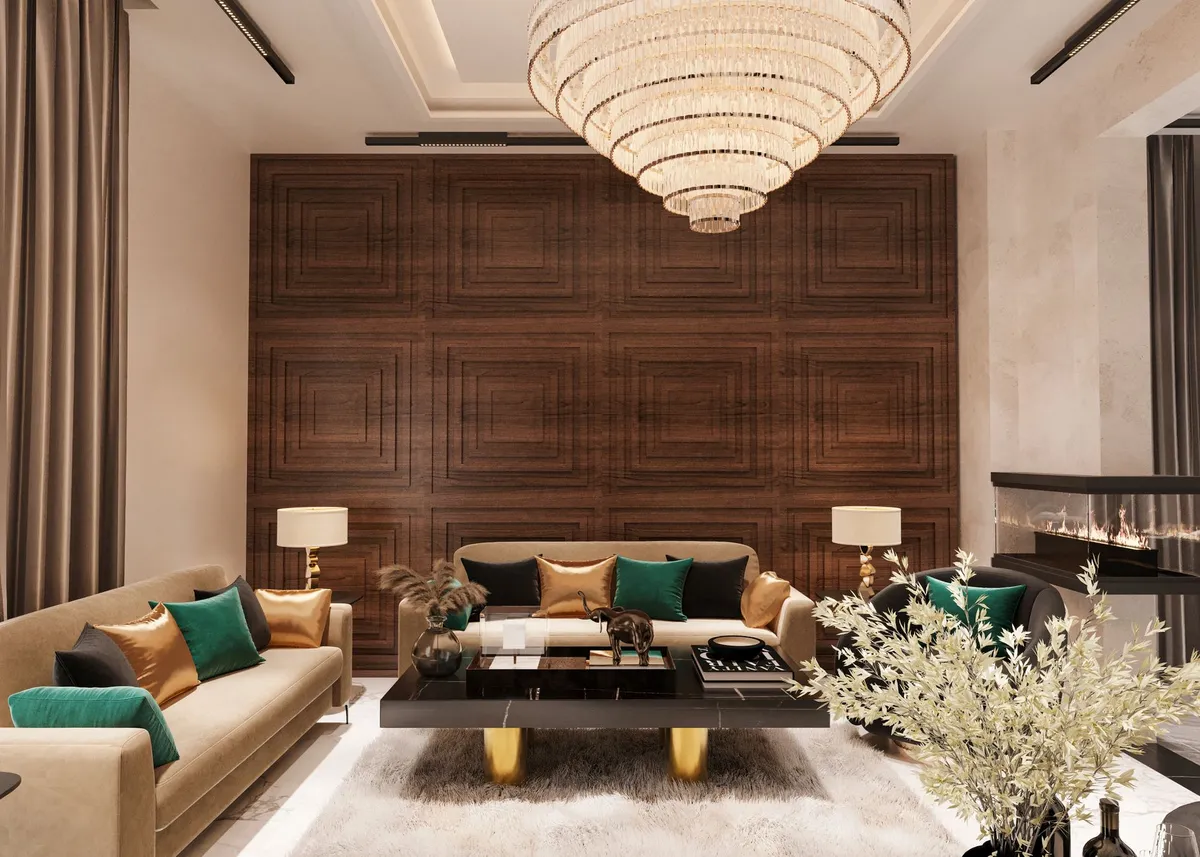
AI room visualization solves this by rendering your actual room with the accent wall treatment you are considering. Upload a photo of your space to the free render tool and see how a deep green, a warm terracotta, or a patterned wallpaper reads in your specific conditions. The full design dashboard lets you compare multiple color and treatment options in the same room before committing to purchase. This is significantly more informative than paint samples on a wall — you see the whole room relationship, not just a 4x4 inch patch.
Check the pricing guide for render options, and browse the examples gallery for accent wall inspiration across multiple room types and styles.
FAQ
Should the accent wall be darker or lighter than the other walls? Darker is more common and typically more effective. A darker accent wall creates depth and makes the room feel more intentional. A lighter accent wall can work as an architectural highlight (a white plaster wall against warm gray surroundings) but requires more precision in execution to avoid looking unfinished.
What is the most popular accent wall treatment in 2026? Fluted and ribbed MDF wall panels (vertical channels creating a fabric-like dimensional surface) and limewash paint are both extremely popular. Both photograph well, which drives social media visibility and perpetuates demand.
How do I know which wall to accent? The focal point wall — the one the main seating faces in a living room, or the headboard wall in a bedroom. If no wall feels like the obvious focal point, the accent wall treatment itself can create the focal point, but it needs to be supported by the furniture arrangement pointing toward it.
Can I do an accent wall in a small room? Yes, and often it improves the perception of the room. A darker accent wall on the far wall of a narrow room makes the room feel shorter (more square), which can be desirable. A lighter accent on a short end can make the room feel longer. Test both in an AI render before deciding.
How long does a paint accent wall take to complete? With proper preparation (clean, primed surface, taped edges), a single-wall paint application takes 4–6 hours including drying time between coats. A professional painter completes the same work in 2–3 hours. Total project timeline from purchase to finished wall: one weekend day.